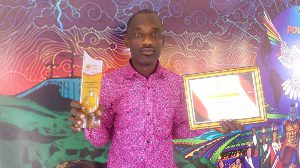
Convener of Energy News Africa Limited, Michael Creg Afful, has noted that both the opposition National Democratic Congress (NDC) and the ruling New Patriotic Party (NPP) have all contributed to Ghana’s energy sector.
He stated that Ghanaians must appreciate the contributions of the NDC in investing to improve the energy sector despite being voted out of office in 2016.
He noted that the NPP under President Akufo-Addo has also contributed to the sector because if his administration had not made any significant contribution, we would be facing some challenges or encountering an unstable power supply.
He said no government can provide a 100 percent performance in the energy sector but usually puts in some effort and must be commended where necessary and criticised if need be.
Touching on the policy direction of the NPP, he said they have made some gains, but we are still faced with some challenges.
In ranking them, he said, in my candid opinion, that I would rate their performance at 65 percent. I cannot say they have achieved 100 percent performance. We still have challenges.
He explained that Vice President Dr. Mahamudu Bawumia has acknowledged that we have inadequate infrastructure in the energy sector, and it was something he was prepared to address if elected president.
Speaking on Frontline on Rainbow Radio 87.5FM, he posited that Dr. Bawumia also admits to insufficient investment in the sector, which he has promised to address, as well as distribution challenges, transmission infrastructure, and power losses, among other challenges.
Michael Creg Afful said the promise to also increase electricity access to achieve universal coverage or access to electricity is a positive idea of a policy initiative.
‘’When you examine the manifesto of the NPP, they have planned to increase access to electricity, so by 2028 we will achieve universal access. But in terms of the United Nations’s definition of universal access, once you hit 90 percent, it is classified as universal. So it is left with about one percent for us to achieve universal access to electricity. That is also a positive thing to do.’’
The decision to allow the Independent Power Producers to purchase their own fuel to power their homes is a good step because, if implemented, it will lessen the financial burden placed on the government by the IPPs.
He also argued that it will ensure that the government gets a cheaper power supply from the power producers.
He also raised concerns over the inability of the Electricity Company of Ghana to distribute funds from the Cash Waterfall Mechanism (CWM) as required by law.
The CWM is a system designed to distribute the revenues from electricity sales proportionately among the relevant market players in the energy sector involved in the electricity supply chain.
However, the mechanism was not functioning effectively, to the point that the Public Utility Regulatory Commission had to request an update and compliance with the mechanism.He said the plan to digitise the CWM was also an appropriate plan to ensure compliance.Meanwhile, he has stated there is a need to wait for the NDC to launch its manifesto so experts can do a comparative analysis of the two and outline what can and cannot work.Mr. Creg Afful added that the pledge or vision by Bawumia to reduce the cost of electricity by investing in solar energy was not all that bad.
Dr. Bawumia has announced that his administration will invest in 2,000 megawatts of solar power, which would contribute to a substantial decrease in electricity prices, benefiting everyone in the country.
However, Mr. Creg Afful responded, stating, “As we speak, in Ghana, all lands are good for food planting, and when you talk about solar, you have to destroy the living organisms in our arable or vegetative lands before you can invest in solar infrastructure.” You would have to damage plant life, because building one megawatt of solar requires at least four acres of land. If it’s on the roof, it shouldn’t be too difficult. So one megawatt would require a considerable amount of land, and 2,000 megawatts would necessitate the destruction of even more vegetative lands, posing a significant threat to the sustainable environment,” he told host Kwabena Agyapong.
He said we already have solar in the system. Bui has 200 megawatts and connected it to the grid, which is a floating one. It has also bought land in Yendi and is putting up another one there. There are also discussions with GPHA about investing in a wind farm on the sea in Tema. VRA has a solar project in Kaleo, Lawra, and Navrongo. So if it is rooftop solar, it would not be a problem. But we cannot deny arable land for the huge number of solar projects. We also don’t have any solar manufacturing companies in Ghana, so we have to import them, and when importing, one megawatt requires about 5,000 panels, which means we would be bettering the economies of the countries that manufacture them. That is a major problem.
By: Rainbowradioonline.com/Ghana