

The Ghana Health Service (GHS) has dispatched its National Case Management Rapid Response Team to the Oti Region following a concerning increase in reported typhoid fever cases.
Working in partnership with the Oti Regional Coordinating Council (RCC) and under the guidance of the Ministry of Health, the GHS is addressing this public health issue.
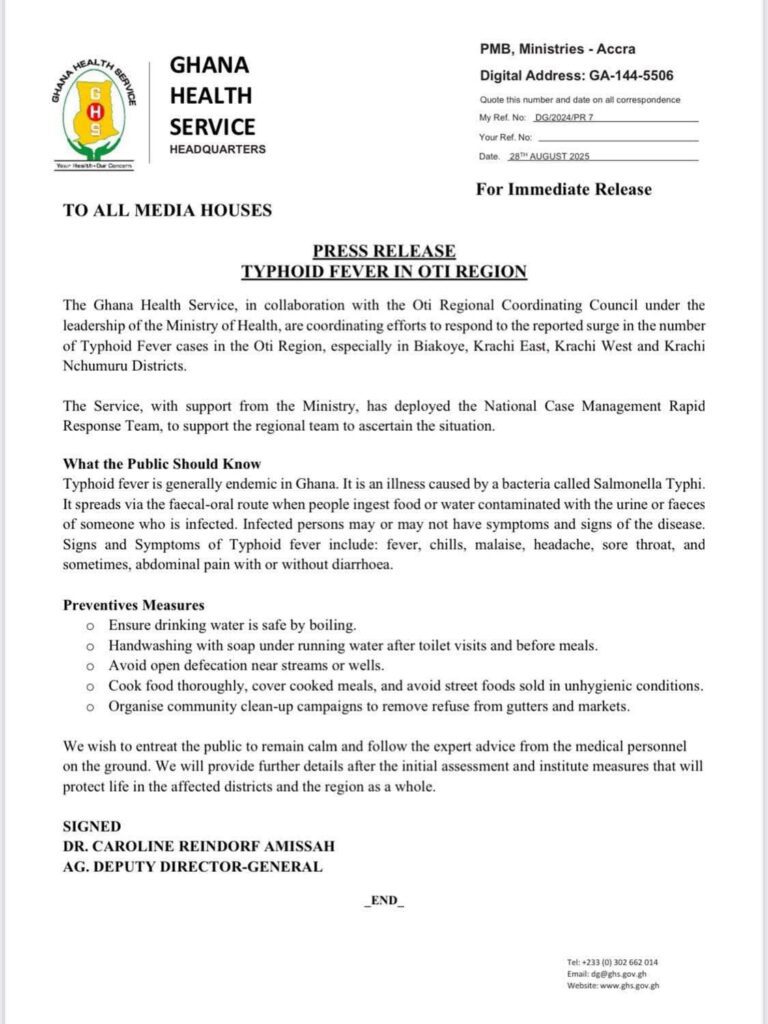
In a statement released on Thursday, August 28, 2025, the Service characterized the rise in cases as a serious public health concern and detailed the measures being taken to assist regional health teams.
The affected areas—Biakoye, Krachi East, Krachi West, and Krachi Nchumuru—are the focus of health authorities, who are actively working to assess the situation and coordinate a suitable response.
The statement said: “The Service, with support from the Ministry, has deployed the National Case Management Rapid Response Team to support the regional team to ascertain the situation.”
The GHS urged residents in the affected areas and throughout the country to remain calm and follow the health and hygiene recommendations provided by local health workers.
“We wish to entreat the public to remain calm and follow expert advice from the medical personnel on the ground,” the statement, signed by Dr. Caroline Reindorf Amissah, the Acting Deputy Director-General of the GHS, added.
Typhoid fever is a common illness in Ghana, caused by the bacterium Salmonella Typhiod.
It spreads through the consumption of food or water contaminated with the feces of an infected person.
Symptoms of the disease can include fever, chills, headache, a general feeling of being unwell, sore throat, and abdominal pain, sometimes with diarrhea.
Meanwhile, the GHS has advised the public to take the following precautionary measures:
- Boil drinking water before use.
- Wash hands with soap under running water, especially after using the toilet and before meals.
- Avoid open defecation near water sources such as streams and wells.
- Cook food thoroughly and cover it properly.
- Refrain from consuming food sold under unhygienic conditions.
- Participate in community clean-up activities to reduce the risk of contamination.

By: Rainbowradioonline.com/Ghana