
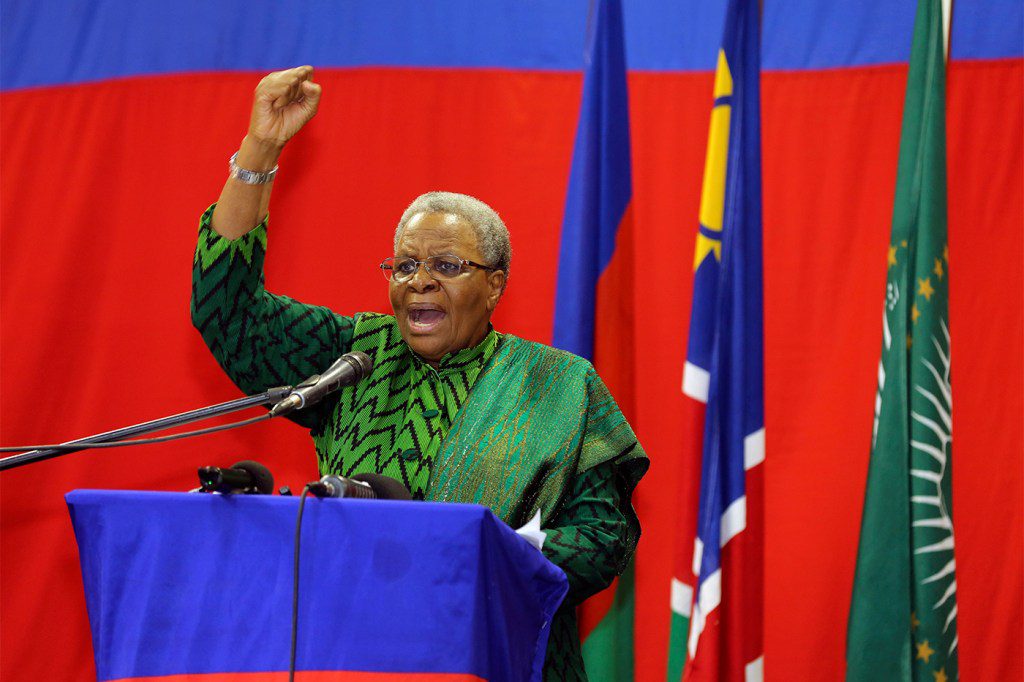
The President of Namibia, Dr. Netumbo Nandi-Ndaitwah, has stated that the Next Steps Conference on Reparatory Justice, which is being organised under the directive of Ghanaian President John Dramani Mahama, is deeply personal for them.
She stated that while the discussion of the gathering focuses on the transatlantic slave trade, it also speaks to the broader African journey towards restorative justice.
According to her, in 2006, the Namibian government passed a motion on genocide, apology, and reparations, and further directed the government to engage the German government that committed the genocide in Namibia against the Herero and Nama people between 1904 and 1908, which became the first genocide of the 20th century.
She said subsequently, for the past nine years, the Namibian government on behalf of the people has been engaging the German government on the matter.
Delivering her address at the gathering held on Thursday, June 18, 2026, she noted that the process of negotiation has not always been easy.
She said the process requires patience, resilience, and an unwavering commitment to dialogue.
One lesson she revealed they had learned is that, “Justice is not really a straightforward road. It is often slow and uncomfortable.”
She, however, stressed that Namibia remains optimistic in finding a solution toward the sins of the past.
She said that for many Namibians, the genocide did not end in 1908 but continues to this day.
She lamented that the remains of their departed citizens killed during the genocide were removed and transported to Germany, where they have become objects of study, research, display, and collection.
She added that as part of healing the wounds of genocide, “our parliament has passed a motion declaring 28 May a genocide remembrance day and a public holiday.”
Dr. Netumbo Nandi-Ndaitwah further stated that Africa is not asking the world to carry the pain for us, but we are simply asking that our pain be heard, understood, and respected on its own terms.
She said no people should have to convince us that our suffering was real, and that true reconciliation begins when people are allowed to tell their own story and those stories are accepted with honesty.
The Namibian President went on to state that to advance this cause, we must learn lessons from our history and avoid allowing division to take root among us.
To strengthen our solidarity as Africans, she stressed the need for unity, adding, “we might come from different countries and speak different languages but our collective future depends on our ability to stand together around a common purpose.” In that spirit, she pledged that Namibia extends its hand to our brothers and sisters in the Diaspora.
By: Rainbowradioonline.com/Ghana