
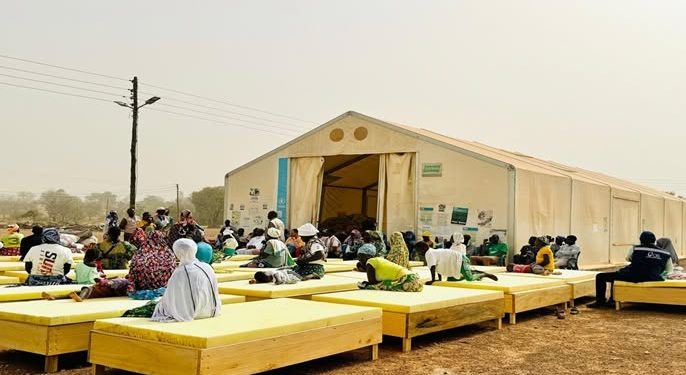
Ghana has introduced a new agricultural integration initiative aimed at supporting livelihoods while easing pressure on host communities as part of efforts to deepen its humanitarian response to the growing increase of Burkinabe asylum seekers.
Data provided by World Vision Ghana shows that more than 10,000 asylum seekers from Burkina Faso had sought refuge in Ghana as of May 2025.
These individuals fled armed conflict, extremist violence and climate-induced shocks.
The displaced persons are currently being hosted in several communities across northern Ghana, including Tarikom, Zini, Fielmuo, Bansi and Issakatinga.
Speaking on the matter at a press conference on Tuesday, 23 June 2026, Interior Minister Muntaka Mubarak stated that the government has allocated parcels of land for the refugees to engage in farming as part of efforts to promote self-reliance and sustainable livelihoods.
According to him, the initiative, named the Ghana Refugee Agriculture Project Support Programme, is designed to integrate refugees into productive economic activity while reducing potential competition for land with host farming communities, which could otherwise trigger tensions.
“With the Ghana Refugee Board, we are doing what we call the Ghana Refugee Agriculture Project Support Programme. So instead of them coming to compete with our communities for land for grazing or cultivation, we have got the Ghana Refugee Board to acquire land, and now we have done about 10,000 hectares,” he said stva press conference on Tuesday, 23 June.
He stated that the programme is structured to promote harmony and shared prosperity, ensuring that both refugees and local farmers can coexist without resource-based misunderstandings.
He added that preliminary engagements suggest strong interest from the refugee population in participating in the agricultural scheme, describing their willingness as a positive signal for the programme’s success.
“The interesting thing about the Burkinabe is that they are interested in tilling the land, and so we are supporting them to be able to get the land, and get them input so that they will cultivate so that they will be able to feed themselves,” he added.
By: Rainbowradioonline.com/Ghana