
In my candid opinion, I think Ghanaian politicians must wake up and smell the coffee
As a public relations consultant, I have become increasingly fascinated and sometimes concerned by how some Ghanaian politicians communicate in this day and age. Quite frankly, some still communicate as though we are living in the pre-2000 era, when information was scarce, verification was difficult and the politician could make a claim and move on before anyone had the means to challenge it.
Take it or leave it, those days are gone.
Today, every statement made by a politician is potentially searchable, recordable, shareable and verifiable within minutes. A politician can say something at a rally in Tamale in the morning and, before lunch, someone can pull out a video, newspaper report, parliamentary record or social media post from five years ago showing that the same politician said something entirely different.
And this is where I think some politicians and their communication teams need to wake up and smell the coffee.
You can no longer communicate effectively by simply making a claim loudly enough, repeating it often enough or having sympathetic media platforms amplify it. The modern information environment demands evidence and some credibility.
As PR practitioners, we have always understood that reputation is built over time but can be damaged in a moment. What has changed is the speed at which that moment of damage can arrive. The digital environment has essentially given citizens their own fact-checking infrastructure. They don’t have to wait for tomorrow’s newspaper or the 6:00pm news bulletin. They can verify your claim while you are still speaking.
More importantly, today’s citizen is not merely an audience. They are also a publisher, archivist, commentator and fact-checker and this has profound implications for political public relations.
Today, if you tell the public that something never happened, someone will produce the evidence that it did. If you claim you said something you did not say, someone will produce the recording. If you promise something today and contradict yourself tomorrow, someone will put both statements side by side. And if you attempt to dismiss an inconvenient fact, the attempt itself can become the story.
This is why I believe political public relations in Ghana needs a fundamental shift from message management to credibility management.
The job of a political communicator should not simply be to find clever ways of defending everything a politician says. Sometimes the most strategic communication advice a politician can receive is “don’t say it if it isn’t true” or “don’t deny it if the evidence exists”. And we should not dare to make a promise we know you cannot keep.
PR is not magic. It cannot permanently manufacture credibility where there is none. It cannot make an inconsistent politician appear consistent indefinitely. It cannot keep rescuing statements that are demonstrably contradicted by facts.
What it can do is help political actors understand their audiences, communicate honestly, anticipate issues, explain difficult decisions, manage expectations and protect relationships with stakeholders.
And perhaps most importantly, political leaders need to understand that the public is becoming much better at detecting communication that treats them as gullible.
The Ghanaian politician needs to understand that we are no longer communicating with the Ghanaian electorate of twenty or thirty years ago. We are communicating with a digitally connected citizenry that has access to information from multiple sources and increasingly expects accountability.
The old communication playbook has become obsolete. You cannot keep communicating as though nobody will check because someone will check and in today’s Ghana, they will probably check before your press conference is over.
So, from the perspective of someone who has spent years studying and practising public relations, my advice to our political class is simple – wake up and smell the coffee. The information environment has changed. And political public relations must change with it.
#TheNutsugah
#ThatPRguy
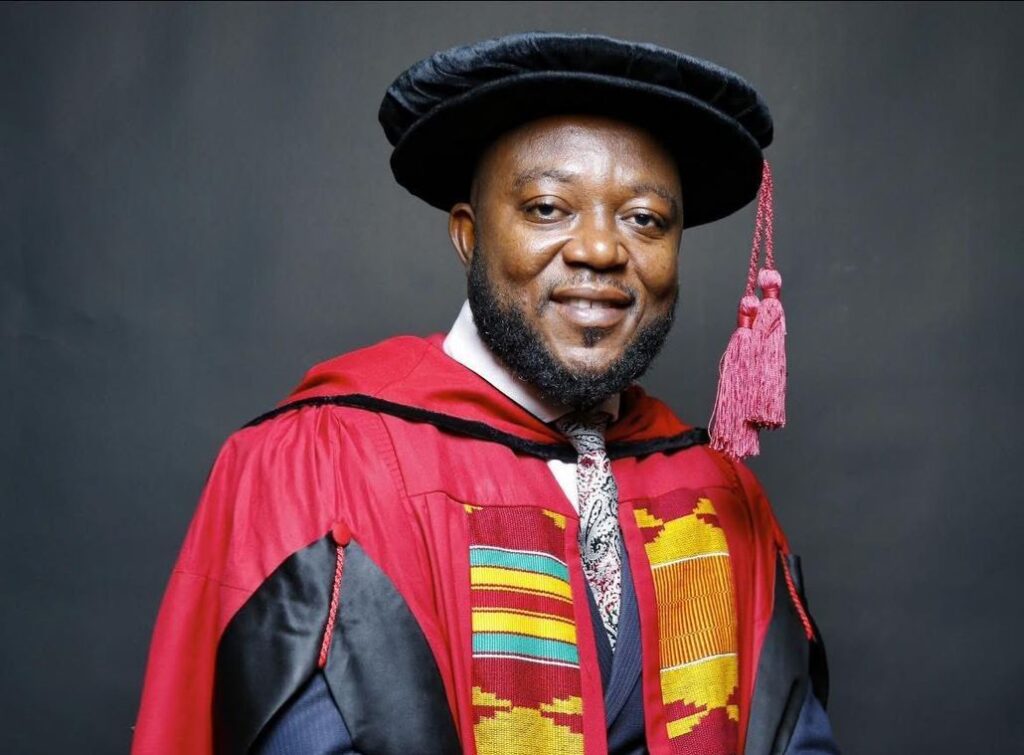
By Dr Noel Nutsugah
The writer is a Senior Lecturer at the University of Media, Arts and Communication (UniMAC) and Head of the Department of Advertising and Marketing at the Institute of Journalism (IJ)
UniMAC is a public university birthed out of the merger of the former Ghana Institute of Journalism (GIJ), Ghana Institute of Languages (GIL) and National Film and Television Institute (NAFTI).