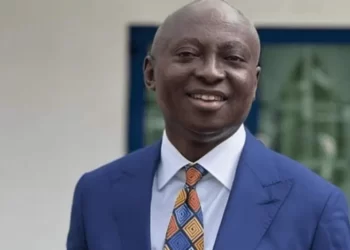
Ghanaians will now be forced to pay directly for their waste management rather than relying on state funds, Local Government Minister Mahama Ayariga has declared.
Speaking during a working visit to Zoomlion’s Tema dumping site to inspect the waste management firm’s operations, the Minister insisted that citizens must take financial responsibility for the waste they generate.
He argued that allocating monies from the District Assemblies Common Fund (DACF) to clear garbage is unsustainable, stating that individuals and businesses must bear the true cost of sanitation services.
“Those who generate waste must pay for the management of the waste,” Ayariga asserted. “The Ministry will insist that Ghanaians pay what is required to address the country’s sanitation challenges.”
The Minister added that diverting local assembly development funds to pay for private waste disposal deprives communities of essential infrastructure like schools and clinics. Under the proposed enforcement, local authorities will strictly implement user-fee models, making property owners and households directly accountable for their refuse collection bills.
“You cannot choose to come and live in Accra and the Common Fund that should come to me in Nadoli will be used to pay for your lifestyle in Accra. If you are living in Accra, pay for your waste in Accra,” he said.
He explained that collecting all local revenue—such as property rates, market tolls, and basic rates—would make sanitation manageable.
“All these factories that are standing there, all the structures that are standing are supposed to be paying to the assemblies because it is their physical presence here that is causing the waste,” he noted.
Launching a campaign against poor sanitation and indiscipline, the Minister stressed that refusing to pay rates is as disciplined as an assembly failing to make payment accessible.
He added that assemblies must use collected funds for basic infrastructure, including waste management, lighting, roads, green spaces, and security.
“My tenure as Minister for Local Government is not going to be an easy one. I’m not engaged in a popularity contest. If I get popular, I want to be popular for making sure that everybody is uncomfortable doing the wrong things,” he stated.
Noting that these long-overdue interventions require urgent action, he urged the media to support the initiative while holding authorities accountable for how resources are spent.
“This is a very serious problem but I am hundred percent convinced that even though it’s a serious problem it is not an insurmountable problem. We can surmount it if we work together,” he added.
By: Rainbowradioonline.com/Ghana