
Financial backers and accomplices behind the controversial online network of UK-based TikTok operator Barbara Asantewaa Koduah, known as “Ghana Jolof,” are now in the crosshairs of the Ghana Police Service.
Investigators uncovered transaction records and digital evidence pointing to high-profile funding aimed at spreading inflammatory content and false reports, including a fabricated claim of an attempted coup d’état at the Jubilee House.
Working alongside the National Signals Bureau, the Criminal Investigation Department (CID) launched a forensic audit of mobile money logs, audio and video files, and communication records.
The probe led directly to the September 17, 2026, arrest of Techiman-based nurse Salomey Awittey Bafoe. Charged with abetment of crime related to the publication of false news, Bafoe was remanded in police custody and will reappear in court on September 30.
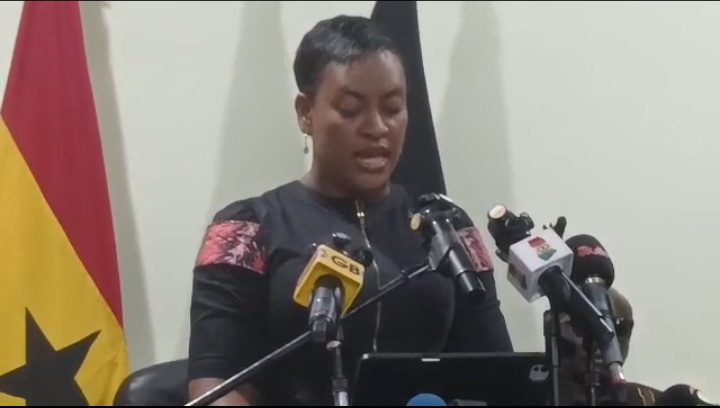
Director-General of the CID, Commissioner of Police Lydia Donkor, detailed the network’s inner workings during a briefing at the CID headquarters in Accra on Friday, September 18.
COP Donkor explained that intelligence identified Koduah as the primary creator behind the handle, using the platform to post videos capable of inciting violence. Phone records revealed that Bafoe acted as an aide, using her connection with Koduah to recruit others to redistribute the material across multiple digital platforms.
Financial trails show a two-way flow of funds. The police discovered that “highly influential persons” transferred substantial sums to Bafoe, who then distributed the money to Koduah and other circle members handling content propagation. Remittances were also sent from the UK by Koduah back to Bafoe in Ghana to finance local distribution efforts.
Investigators retrieved critical data from Bafoe’s phone, voice signatures, and call logs that will serve as evidence in court as the search for additional accomplices and financial sponsors continues.
Highlighting the CID’s commitment to transparency, COP Donkor reminded citizens that online activities remain subject to national legislation, specifically citing the Electronic Transactions Act, 2008 (Act 772) and the Criminal Offences Act, 1960 (Act 29).
Police warned the public against illegal digital conduct and reaffirmed their determination to uphold law and order across both physical and online spaces.
By: Rainbowradioonline.com/Ghana