
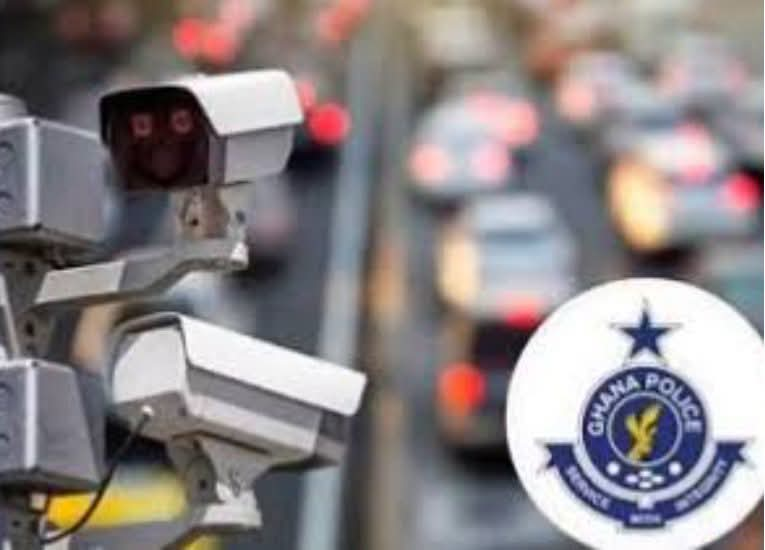
A communications team member of the governing National Democratic Congress (NDC), Edward Akwetey Quaye, has called for an immediate improvement in public education surrounding the TraffiTech-GH initiative, noting that despite the system’s immense potential to save lives, poor official communication is fueling public confusion.
Speaking on air, Mr Akwetey Quaye stressed that while automated traffic enforcement is vital for curtailing speed-related crashes and enforcing road discipline, managing public awareness properly remains the key to its success.
TraffiTech-GH is an automated traffic law enforcement platform developed by the Ghana Police Service through the Motor Traffic and Transport Department (MTTD) to detect regulations breaches and enhance public safety. Under Regulation 242 of the Road Traffic Regulations, 2026 (L.I. 2519), the system officially went live on 1st November 2026.
The initiative employs fixed roadside cameras, mobile and in-vehicle units, and laser speed detectors to record violations such as speeding, running red lights, improper overtaking, driving without seatbelts, operating uninsured vehicles, and using expired licenses. Police authorities are currently focusing initial operations strictly on speeding infractions before expanding monitoring to other offenses.
However, poor communication from officials has sparked strong resistance among commercial and private motorists, many of whom view the digital fines as a punitive cash-grab designed to extort money from the public.
Addressing the controversy, Mr Akwetey Quaye clarified that the operational concept was originally drawn up under the previous New Patriotic Party (NPP) administration, with President John Dramani Mahama’s government coming in to execute the policy.
“I want to put it on record that the new technology implemented under President John Dramani Mahama is something he inherited. The initial concept was formulated by the NPP, and we always give credit where it is due. We thank them for this initiative, but we also appeal to Ghanaians to exercise patience. The system is a solid idea that we must all support because it will help reduce road crashes, make our highways safer, and limit excessive speeding. I urge Ghanaians not to reject it, as patience will help everyone understand how it operates,” he stated.
In an interview with host Kwabena Agyapong, the NDC communicator stressed that the primary hurdle facing the program is inadequate and misplaced public outreach.
“To the authorities managing the system, they must roll out proper education. In fact, I am wondering where they are currently conducting these sensitisation exercises, because the people who actually need the information are not getting it. Instead, the education is being targeted at those who will only politicise it. If possible, officials should move from station to station and engage directly with drivers. Manage the communication around the system effectively, as many people are genuinely confused and need explanations,” he urged.
He further recommended that the platform be expanded into a comprehensive nationwide exercise rather than being confined to selected regions, while advising drivers to practice self-discipline and continuously monitor their speed limits.
Reacting to the discussion, Alexander Ofori-Atta, a communicator for the NPP, accused the administration of rushing the rollout and prioritizing revenue collection over stakeholder engagement.
He stated that statutory authorities should have taken time to explain the operational details to key transport unions before implementation. Reminded that the framework was introduced during the NPP’s tenure, Mr Ofori-Atta maintained that the current government acted too hastily. He argued that public safety is paramount, but stressed that the government seemed more focused on collecting penalties than educating drivers, calling on current officials to consult the previous administration’s blueprint for proper execution.
By: Rainbowradioonline.com/Ghana