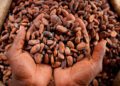
The government has unveiled an ambitious roadmap to completely halt the export of raw cocoa beans by 2030, outlining a phased transition that will see at least 50 percent of the nation’s cocoa processed locally by the close of 2028.
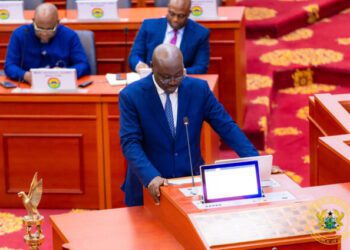
Presenting the 2027 Budget Statement and Economic Policy to Parliament, the Minister for Finance, Dr Cassiel Ato Forson, explained that the policy marks a decisive shift away from simply exporting raw agricultural commodities toward building a robust domestic manufacturing economy.
Under the new directive, local processing facilities will expand well beyond basic grinding to manufacture higher-value goods, including cocoa liquor, butter, cake, powder, chocolate, cosmetics, and other finished consumer products.
Addressing lawmakers on the economic rationale behind the policy, Dr Forson insisted that “a country that grows the bean must retain a far greater share of the value created around it,” ensuring that local enterprises, researchers, indigenous brands, and skilled workers are positioned at the centre of the value chain.
The Finance Minister stated that the strategy is designed to transform agriculture into a commercially viable venture, positioning agro-processing and heavy industry as the primary engines of economic expansion while cementing national food security.
To turn these targets into reality, Dr Forson assured the House that the administration is backing its rhetoric with concrete infrastructure, pledging to put “irrigation beneath its ambition, finance behind farms, factories behind fields and reliable markets ahead of production.”
He concluded that the broader economic payoff of domestic value addition would be felt across the country, noting that when Ghana “grows more of what it eats, processes more of what it grows and exports more of what it makes,” the nation will experience stronger rural prosperity, more manageable inflation rates, and reduced migration pressure on major urban centres.
By: Rainbowradioonline.com/Ghana