The Minister for Gender, Children and Social Protection, Dr. Agnes Naa Momo Lartey, has called for stronger coordination among state institutions, families, schools, and local communities to effectively end violence against children.
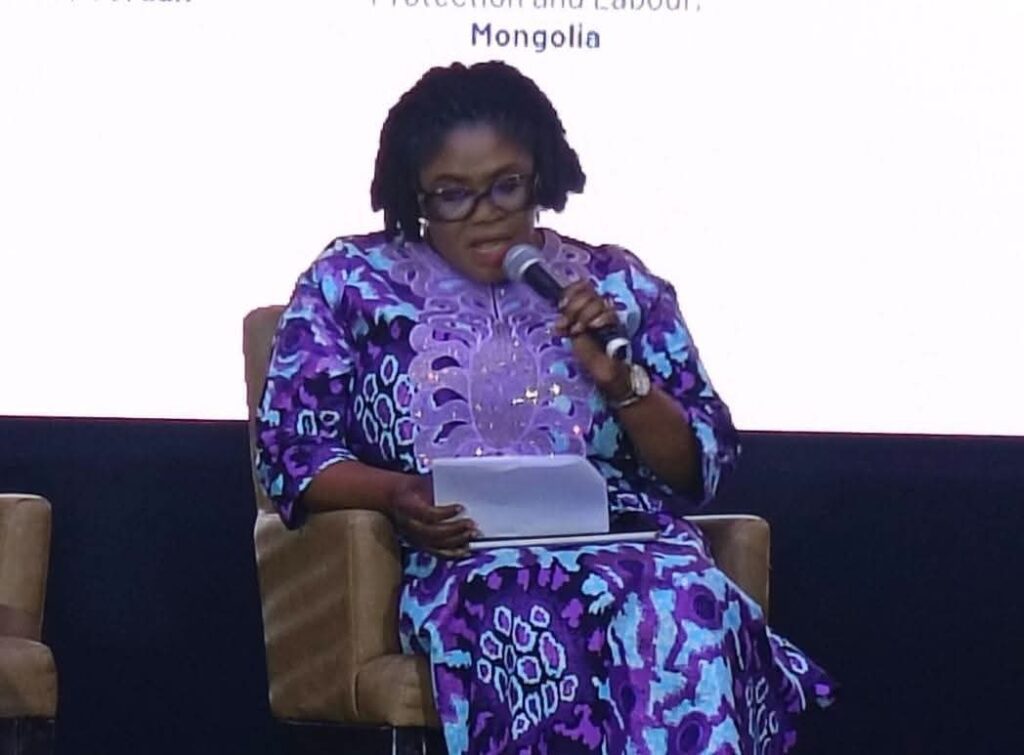
Speaking at the Second Global Ministerial Conference in Manila, Philippines, Dr. Lartey stressed that isolated interventions are no longer sufficient to tackle child abuse, noting that sustainable protection requires functional systems capable of responding swiftly to the needs of vulnerable children.
Addressing a session themed “Strengthening Child Protection Systems: A Multi-Sectoral Approach to Prevention and Responses – Scaling Prevention of Violence Against Children through the 3 Breakthroughs,” the Minister underscored the need for parental support, safe school environments, and reliable response mechanisms to work in tandem.
She maintained that whenever children report abuse or violence, functional structures must be readily available to provide immediate care and justice.
Touching on Ghana’s milestones in child welfare, Dr. Lartey revealed that the government’s Integrated Social Services initiative has been scaled up to cover all 261 districts across the country.
The programme unites actors across social welfare, health, education, justice, and social protection to streamline case management and referrals.
She added that 5,375 social workers, police officers, and judicial personnel have received specialised training, alongside ongoing efforts to tighten child protection laws and professionalise the social service workforce.
The Minister also highlighted community-level interventions, including the National Parenting Strategy and nationwide prevention campaigns that have reached over 3.5 million citizens.
Within the educational sector, she disclosed that all public senior high schools now have trained Safe Space Focal Persons, with steps underway to link school reporting channels directly to district social welfare offices.
Despite these strides, Dr. Lartey admitted that the sector continues to grapple with workforce deficits, fragmented data systems, and a heavy reliance on donor funding.
She consequently urged governments to ramp up domestic financing, enforce stricter accountability, and deepen institutional collaboration to guarantee the quality and sustainability of child protection services.
Sharing key takeaways from Ghana’s model, she advised stakeholders to centre service delivery around the child rather than institutional silos, strengthen existing state structures, and invest concurrently in human resources and data management.
Dr. Lartey concluded that safeguarding children remains a shared responsibility that demands sustained commitment to turn preventive policies into lasting safety and well-being for every child.

By: Rainbowradioonline.com/Ghana