
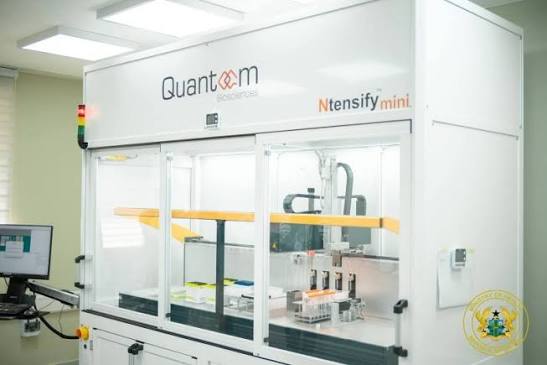
The General Secretary of the Ghana Association of Medical Laboratory Scientists, Mr. Paul Ntiamoah, has clarified that Ghana was already conducting DNA testing prior to the recent commissioning of a new DNA laboratory at the Noguchi Memorial Institute for Medical Research by President John Dramani Mahama.
Speaking in an interview on Rainbow Radio 87.5FM’s Nyankonton Mu Nsem, Mr. Ntiamoah explained that the government’s latest intervention represents a major technological upgrade to existing facilities rather than the country’s first foray into DNA diagnostics.
He noted that the modernised equipment will significantly enhance the efficiency and precision of laboratory scientists across the country, enabling them to deliver faster and more dependable results in their routine operations.
“Ghana has been conducting DNA testing long before now, so what the government has done is a major advancement in the kind of equipment we use,” Mr. Ntiamoah stated. “These new machines will improve the quality of our work and make it much faster for us to find better solutions in our daily activities.”
Touching on past operational hurdles, Mr. Ntiamoah revealed that older systems often struggled to process compromised specimens, a limitation that the upgraded facility is expected to eliminate.
“Previously, we were unable to identify samples that were completely damaged, which affected some of our outcomes. However, with this current equipment, we will be able to carry out far more accurate and reliable work,” he explained.
Mr. Ntiamoah added that the delay in acquiring such high-end machinery was understandable given the steep financial outlay required not only to procure the technology, but also to keep it running.
“I am not surprised it took us until now to acquire these advanced DNA-testing machines because of the huge cost involved. Laboratory equipment is very expensive, and even when you manage to purchase it, maintenance is another major cost that must be borne,” he said.
Beyond improving local diagnostics, the General Secretary observed that the investment will strengthen academic research, boost medical training, and position Ghana as a hub for medical tourism within the sub-region, attracting patients and researchers from neighbouring countries that lack comparable infrastructure.
He commended the government for prioritising the health sector with the acquisition, stressing that building local capacity for complex testing will ultimately save the nation substantial foreign exchange.
“This investment will not only enhance research, learning, and medical tourism for Ghana, as other countries without such facilities will want to come here, but it will also save us a lot of money as a country,” Mr. Ntiamoah concluded.
By: Rainbowradioonline.com/Ghana