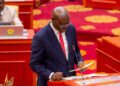
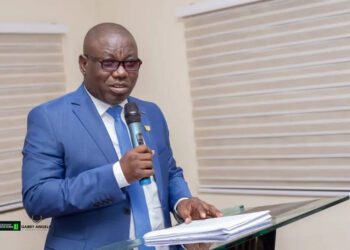
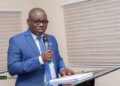
Debate over the 2027 Budget has intensified in Parliament, with the Member of Parliament for Bolgatanga Central, Hon. Isaac Adongo, hailing the financial statement as one of the finest in the Fourth Republic, while his colleague from Bantama, Hon. Francis Asenso-Boakye, dismissed government’s macroeconomic claims as disconnected from the daily struggles of Ghanaians.
Mr. Adongo maintained that the 2027 fiscal policy moves beyond mere economic expansion to tackle deep-seated structural bottlenecks. Reflecting on previous administrations, he noted that whilst President Kufuor’s Poverty Reduction Programme, Professor Mills’s Ghana Shared Growth and Development Agenda, and even the Akufo-Addo administration recorded periods of economic expansion, raw figures alone cannot drive national transformation.
“But to develop as a country, growth must be accompanied by fundamental changes in the structure of the economy,” he said.
He emphasised that the current policy blueprint is deliberately engineered to overhaul the country’s economic foundation under what the government terms the new economy.
“It is addressing the fundamental challenges with the economy,” Mr. Adongo said.
Conversely, Mr. Asenso-Boakye argued that official figures pointing to declining inflation offer little comfort to citizens grappling with stagnant wages and soaring living expenses. He contended that genuine disinflation ought to translate into price stability at the marketplace rather than continuous hikes in rent and basic commodities.
“Inflation is high. It means that prices must be stable. When you say inflation is low, what it means is that prices must be stable. But unfortunately when you go to the market, prices are rising. Prices of goods are rising. Rent is rising. The salaries are the same,” he said.
Drawing on feedback from his Bantama constituency, the former Minister pointed to widespread frustration over youth unemployment, noting that numerous graduates remain without jobs.
“What it means is that for the last two years, the government has failed to improve the lot of the ordinary people,” he added.
Turning to decentralisation, the Bantama legislator acknowledged the upward adjustment in the District Assemblies Common Fund from GH¢8.9 billion to GH¢10.8 billion, yet cautioned that budgetary figures mean very little without timely disbursements.
“These increases, annual increases are coming. Every year we get some increase. The real deal however is to make sure that these releases, these allocations go to the bank account of the district assemblies,” he said.
He further reminded the House of the Finance Minister’s unfulfilled pledge from the previous year to ensure 80 per cent of the statutory funds reached the local assemblies directly.
“He did his best but unfortunately he couldn’t meet the target,” Mr. Asenso-Boakye said.
By: Rainbowradioonline.com/Ghana