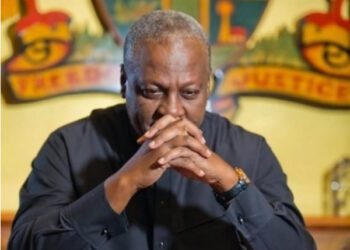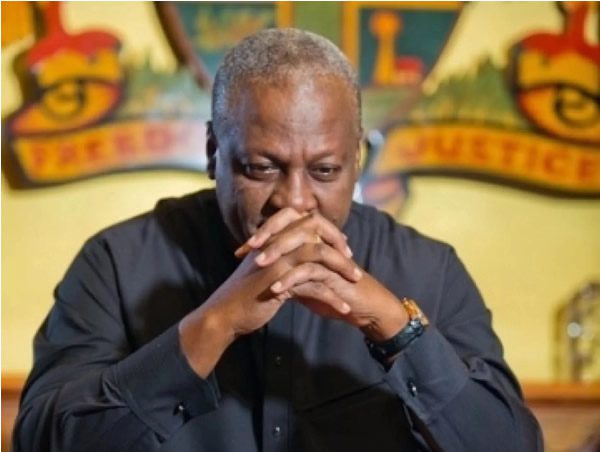
President John Dramani Mahama has expressed deep concern over the alarming surge in hate speech, abusive online content, and toxic digital communication across the country.
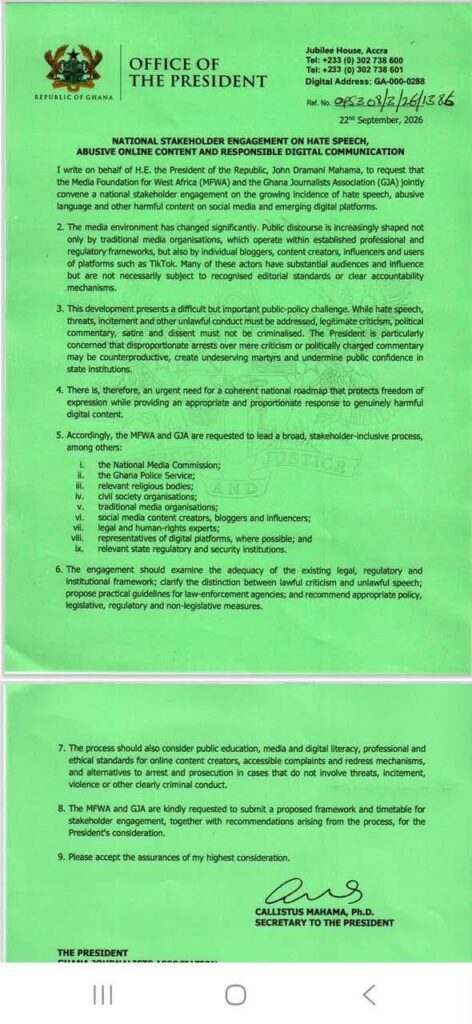
The President highlighted the rapid shift in Ghana’s media landscape, noting that public discourse is no longer shaped solely by traditional media outlets that operate under regulatory frameworks. Instead, individual bloggers, content creators, influencers, and users on digital platforms such as TikTok now command massive audiences without being subject to established editorial standards or accountability mechanisms.
While acknowledging the complex public policy challenge this poses, President Mahama warned against disproportionate police arrests targeting individuals over routine criticism or politically sensitive commentary.
He noted that heavy-handed actions against mere political dissent could be counterproductive, risk creating undeserving martyrs, and erode public confidence in state institutions.
To address the situation, the President has directed the Media Foundation for West Africa (MFWA) and the Ghana Journalists Association (GJA) to jointly convene a broad-based national stakeholder engagement.
The initiative aims to construct a coherent national roadmap that safeguards freedom of expression while establishing proportionate measures against genuinely harmful digital content.
The directive was contained in an official letter signed by the Secretary to the President, Dr Callistus Mahama.
The proposed national dialogue is expected to bring together key institutions, including the National Media Commission, Ghana Police Service, religious bodies, civil society groups, traditional media organisations, legal and human rights experts, regulatory bodies, security agencies, and social media influencers.
Stakeholders participating in the exercise will evaluate the existing legal and institutional mechanisms, clearly define the boundaries between lawful political commentary and illegal speech, and establish concrete operational guidelines for law enforcement agencies.
Furthermore, the process will explore alternative measures to arrest and prosecution for non-criminal conduct, alongside public digital literacy campaigns, ethical training for content creators, and the establishment of accessible complaints mechanisms.
By: Rainbowradioonline.com/Ghana