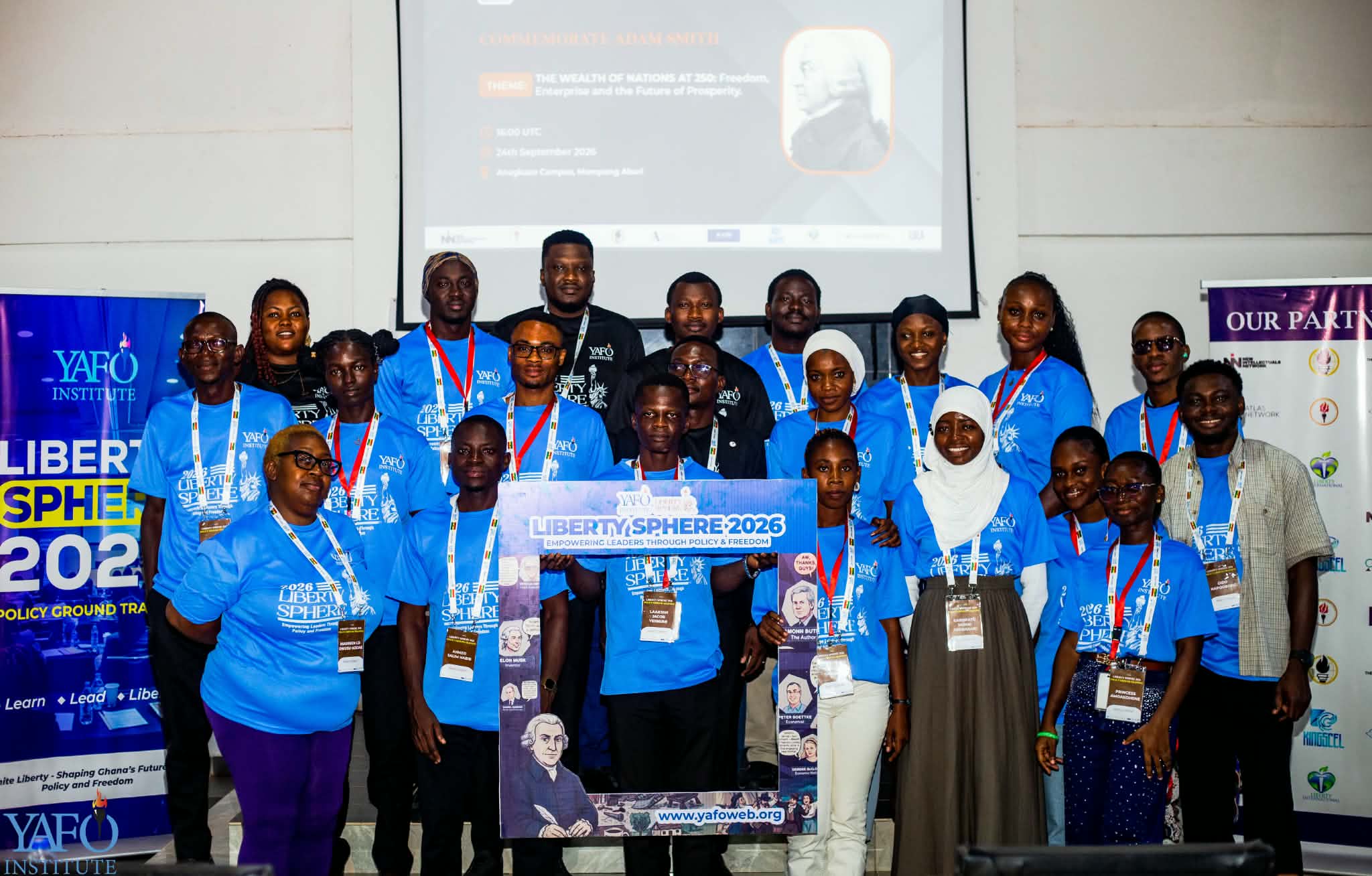
Two hundred and fifty years after Scottish philosopher Adam Smith published An Inquiry into the Nature and Causes of the Wealth of Nations, economic experts and think tanks in Accra are revisiting his foundational theories to address contemporary development hurdles across Africa.
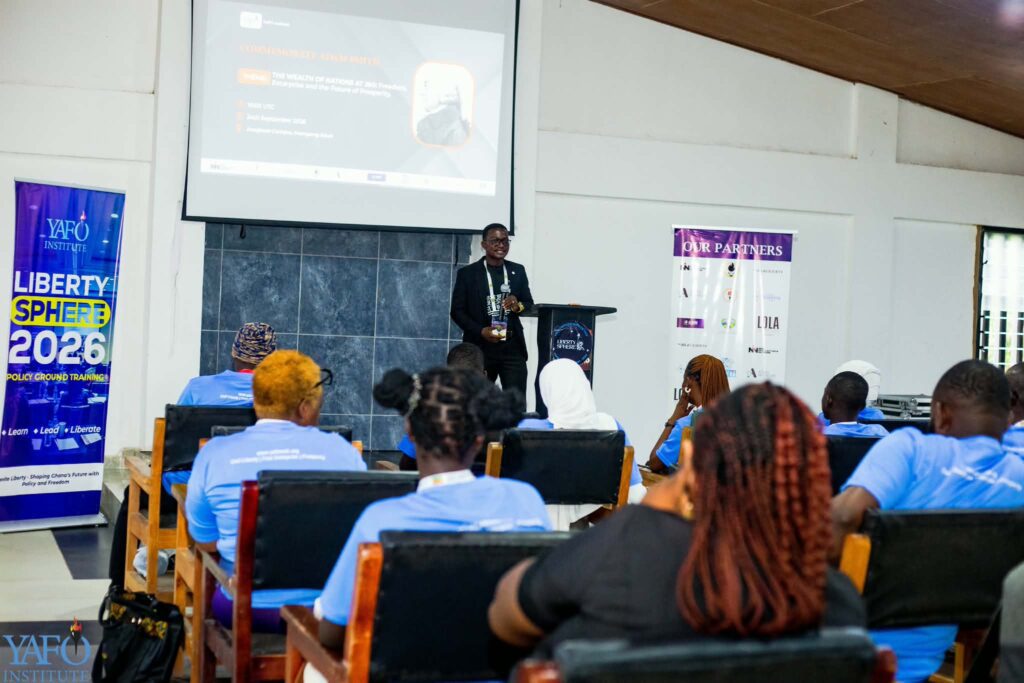
Speaking at the Liberty Sphere 2026 symposium organised by the YAFO Institute under the theme “Freedom, Enterprise and the Future of Prosperity,” policy analysts challenged traditional interpretations of Smith’s work, arguing that his insights offer vital lessons for Ghanaian enterprise, economic diversification, and institutional reform.
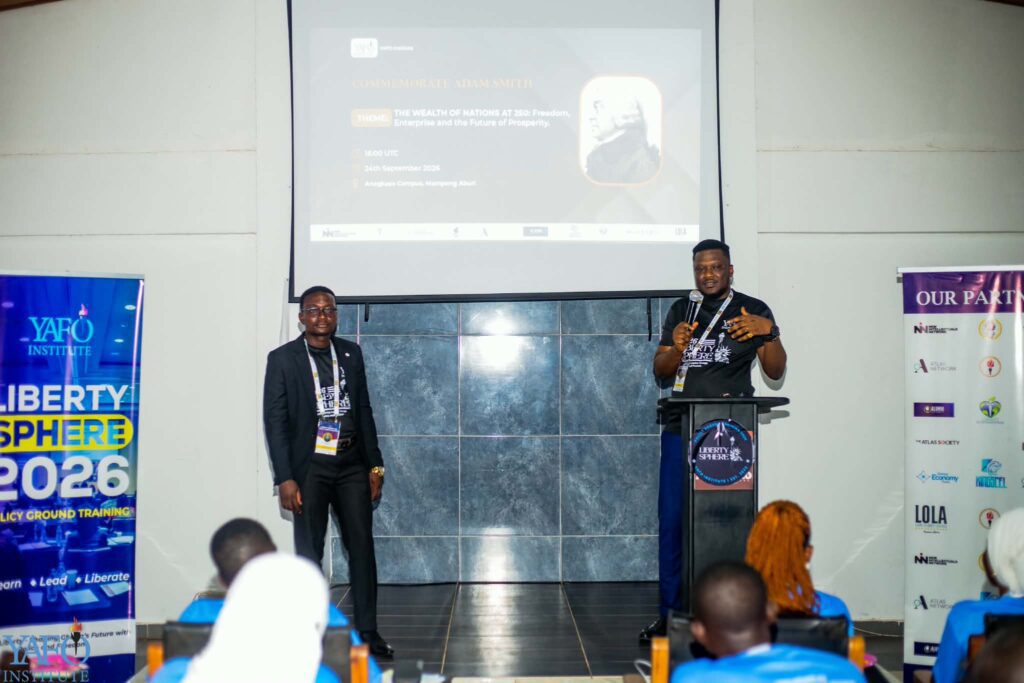
The discussion, led by Ebenezer Tackie Oblie, Executive Director of the Institute for New Policy Thinking, and Nathaniel Dwamena, President of the YAFO Institute, sought to move beyond viewing Smith solely as an advocate of unbridled free markets.
Reassessing Smith’s seminal texts, panel members stressed that his economic framework was deeply intertwined with moral philosophy.
Seventeen years prior to The Wealth of Nations, Smith published The Theory of Moral Sentiments, which explored human empathy, justice, and the social contracts necessary for orderly trade. Participants noted that the famous concept of the “invisible hand” appears only once in The Wealth of Nations, cautioning against reducing his legacy to a simple justification for unchecked self-interest.
For African economies, speakers argued, market forces cannot operate effectively without strong social and legal structures, including reliable contract enforcement, secure property rights, and impartiality within the judiciary.
Addressing Ghana’s reliance on raw commodity exports, the symposium highlighted Smith’s famous pin factory illustration to demonstrate the power of the division of labour and specialisation.
Analysts noted that true national wealth lies in productive capacity and innovation rather than the mere accumulation of natural resources.
To build long-term prosperity, African nations must transition from primary resource extraction toward processing, advanced manufacturing, and high-value service sectors.
Contrary to the view that Smith favoured complete state inaction, the forum pointed to his explicit support for public governance in key areas.
In Book V of his treatise, Smith outlined three fundamental roles for government: maintaining national defence, administering justice, and funding public infrastructure and civic education that private markets might underprovide. Speakers highlighted this balance as a blueprint for modern governance, stressing that public institutions must facilitate enterprise rather than impede economic growth.
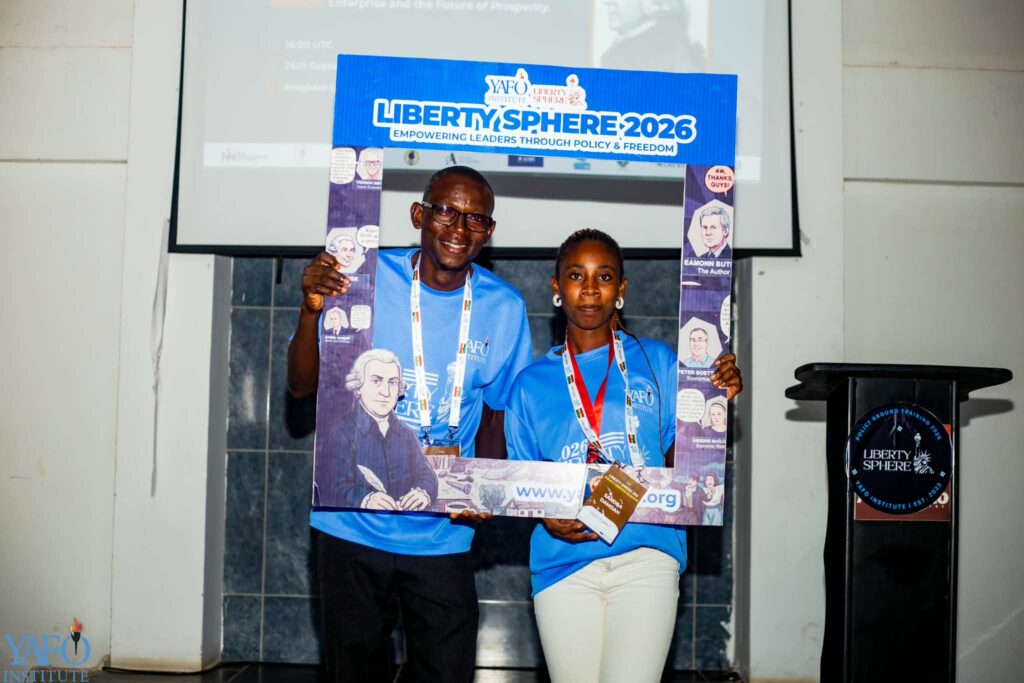
Marking the anniversary with a practical literacy drive, the YAFO Institute announced progress on its Liberty Anansesem Project, an initiative aimed at translating Eamonn Butler’s Adam Smith’s The Wealth of Nations – A Graphic Novel into Asante Twi.

Having secured official copyright waivers from the rights holders, the institute plans to distribute the translated graphic novel to schools, community libraries, and local entrepreneurs across Ghana.
Organisers emphasized that economic literacy remains constrained when key concepts are confined to academic English, adding that publishing in local languages will democratise discussions on enterprise, trade, and economic freedom.
As African markets navigate complex global trade dynamics, policy advocates at the event concluded that Smith’s enduring relevance rests not in rigid eighteenth-century formulas, but in his rigorous inquiry into how institutions, productivity, and human cooperation intersect to build lasting societal prosperity.
By: Rainbowradioonline.com/Ghana