The ruling National Democratic Congress (NDC) Free Primary Healthcare (FPHC) program will be delivered through the country’s existing Community-Based Health Planning and Services (CHPS) zones.
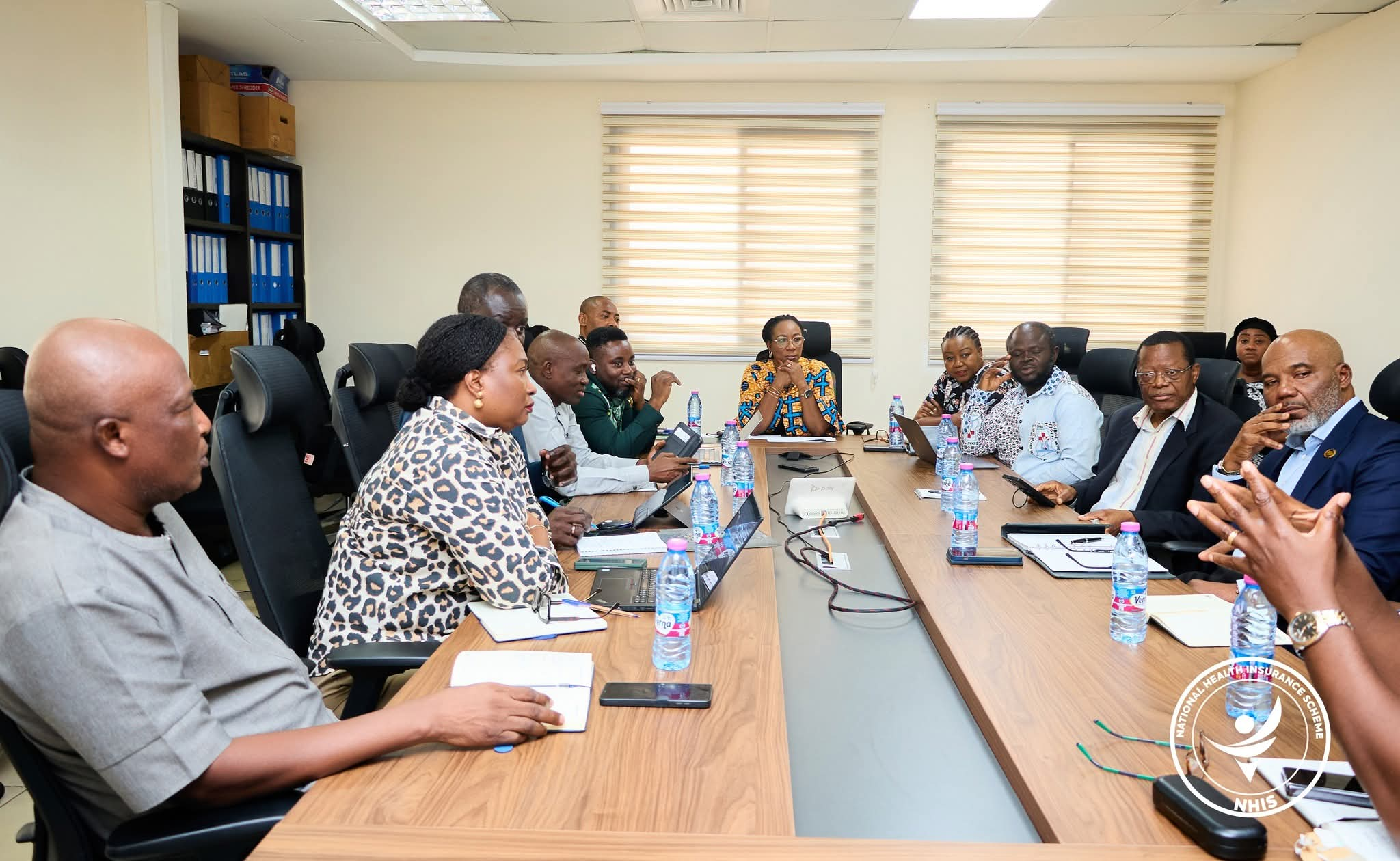
The decision was revealed at a high-level sub-technical committee meeting held at the National Health Insurance Authority (NHIA) head office.
The meeting brought together key representatives from the Ghana Health Service (GHS), the National Health Insurance Authority (NHIA), and the Christian Health Association of Ghana (CHAG) to finalize implementation strategies for the new policy.
Dr. Caroline Reindorf Amissah, Acting Deputy Director-General of the GHS, stated that the discussions centered on preparations for a rapid nationwide assessment to gauge readiness.
“Last week, we discussed the need for some form of rapid assessment to see what is happening on the ground. We are dividing the country into three zones, and the teams will go around to assess readiness,” she explained.
Dr. Anthony Gingong, NHIA Senior Director for Special Initiatives and the FPHC focal person, clarified that the FPHC program will not replace but rather expand the services already offered by the CHPS zones.
“We are not changing any of the services when it comes to CHPS; we are only adding preventive and promotive services,” he said.
During the meeting, Dr. Chris Atim, Senior Technical Advisor to the NHIA Chief Executive, urged the communications sub-group to refine its public messaging. This sentiment was echoed by Franklin Asiedu-Bekoe, Director of Public Health at GHS, who stressed the importance of identifying facilities operating as CHPS to prevent public confusion.
“Communication must focus on where we have facilities labelled as CHPS,” he noted.
On the critical issue of data management, Salamatu Nantogma, Director of Policy Planning, Monitoring, and Evaluation (PPME) at GHS, emphasized the need for close collaboration with the NHIA to ensure service users have accurate, unique identifiers.
In response, Stephen Bewong, Deputy Director of the NHIA’s MIS Directorate, confirmed that a system is in place to capture individuals without formal identification.
“For those without any form of ID, we will generate a unique code, and for those with a Ghana Card or NHIS card — active or inactive — a code will also be generated for them to access free primary healthcare services,” he explained.
The Free Primary Healthcare policy is a cornerstone of Ghana’s broader objective to achieve universal health coverage and ensure equitable access to essential health services for all citizens.