
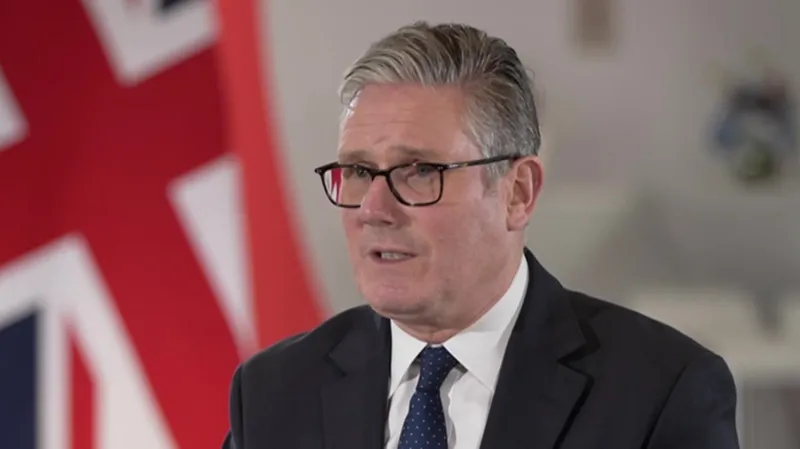
Prime Minister Sir Keir Starmer has said China has lifted “all restrictions” on six current members of the British Parliament, after talks with President Xi Jinping.
Speaking to the BBC in Shanghai, Sir Keir said a travel ban and other sanctions “no longer apply” to those parliamentarians, which includes four Conservative MPs and two peers in the House of Lords.
The PM argued the outcome “vindicated” his approach and said he hoped President Xi would come to the UK when it hosts a G20 summit in 2027.
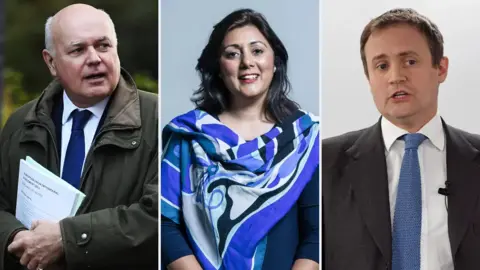
But in a statement, the sitting MPs and peers targeted said they “take no comfort” from the decision, which leaves others under sanction, adding that they “will not be silenced”.

When asked about comments made by Donald Trump, who said seeking closer relations with China was “very dangerous”, Sir Keir said he thought the US president was mostly directing his criticism at Canada rather than the UK.
Hitting back at critics such as the Conservatives, who have accused Sir Keir of “kowtowing” to China, the prime minister said “it would be foolhardy to sit with your head in the sand and refuse to engage”.
“By engaging, we’ve taken advantage of opportunities and raised difficult and sensitive issues,” Sir Keir said.
He said an agreement to halve import taxes on British whisky would come into force on Monday next week, but added the start date for a deal on visa-free travel for British citizens to China had not yet been agreed.
Downing Street regards the lifting of the sanctions as an example of what they call the “clear wins” they have secured on this trip.
China imposed the sanctions in 2021 and Conservative MPs Sir Iain Duncan Smith, Nusrat Ghani, Tom Tugendhat, Neil O’Brien, Tim Loughton – who is no longer in Parliament – were among those targeted.
Labour peer Baroness Kennedy and crossbencher Lord Alton, who are all members of the Inter-Parliamentary Alliance on China, were also sanctioned.
They were banned from entering China, Hong Kong and Macau, their property in China was frozen and Chinese citizens and institutions were prohibited from doing business with them.
The group are vocal critics of China and have accused the country of human rights abuses.
The UK has confirmed it has not lifted sanctions on any Chinese individuals, but it is not known if restrictions have been lifted on other people sanctioned by China, including Loughton who stood down at the general election in 2024.
The lawyer Sir Geoffrey Nice KC, the chair of the Uyghur Tribunal, which is investigating atrocities against the minority group, was also sanctioned, as was the Newcastle University academic Jo Smith Finley, whose research focuses on the Uyghurs.
In a new statement, the six current parliamentarians said they learned about the sanctions changes though media reporting and called for “clear assurances that UK sanctions against the four Chinese government officials responsible for genocide remain firmly in place”.
They added: “The selective lifting of sanctions solely on sitting parliamentarians is wrong.
“Parliament exists to represent and defend the people of the United Kingdom — Seeking or accepting preferential treatment for current MPs and peers sends a damaging signal that some are more deserving of protection than others.”
They added that they would “take no comfort” in China’s decision while pro-democracy campaigner Jimmy Lai, a British citizen, remains imprisoned and Uyghurs continue to suffer atrocity crimes.
China has been accused of committing crimes against humanity against the Uyghur population and other mostly-Muslim ethnic groups in the north-western region of Xinjiang.
The Chinese government has denied all allegations of human rights abuses in Xinjiang.
Warmer relations
Commenting on the decision to lift sanctions, the Chinese foreign ministry said: “The two sides agreed in principle to resume normal exchanges between the legislatures of the two countries.
“China welcomes British parliamentarians who have the willingness to visit China more and experience the real China.”
Sir Keir’s three-day trip to China – the first by a British prime minister since 2018 – is an attempt to thaw relations with the country, which is the second-biggest economy in the world behind the US.
The prime minister said the UK’s relationship with China was in a “good, strong place” following his talks with Xi at the Great Hall of the People in Beijing on Thursday.
Sir Keir said he knew the sanctions on MPs and peers were “a cause of concern, which is why I did raise it”.
He said the lifting of those restrictions “rather vindicates my approach because it’s only because we’re here that we have had the engagement and that has provided the opportunity for a leader-to-leader discussion on sensitive issues”.
But there is disquiet among critics of China who argue the country has a poor record on human rights and poses a threat to the UK’s national security.
The Conservatives have argued Sir Keir should not have visited the country and that the trip was not in the national interest.
“Keir Starmer went to China from a position of weakness and got absolutely nothing in return,” Conservative leader Kemi Badenoch said.
“He has gone to China with a begging bowl because his entire economic policy is dependent on China.”
Reform UK leader Nigel Farage called on the prime minister to reject trade deals with China until Jimmy Lai is released from prison.
“This is a British citizen. It’s the job of the British government to stand up and defend him, so before we sign anything let’s free people like him,” he added.
In the interview, Sir Keir was also asked about President Trump’s comments about his trip to China.
The prime minister suggested the remarks “look to me as though they were directed more at the Canadians than us” and said the UK had discussed the China trip with the Trump administration.
Earlier this week, the US president threatened to impose tariffs on Canada if it went through with economic deals struck with China on a recent visit to Beijing by its Prime Minister, Mark Carney.
Trump has agreed to visit Beijing in April and has invited President Xi for a state visit to the US later this year.
On his trip, Sir Keir struck a number of deals with China, including an agreement aimed at tackling organised crime and illegal immigration will see the UK and China share intelligence to identify the supply routes of people smugglers.
Other deals include agreement to co-operate on reducing red tape for UK exporters and collaborate on health challenges such as antimicrobial resistance.
Sir Keir arrived in Shanghai on Friday morning, his last stop in China before leaving for Tokyo to meet his Japanese counterpart, Sanae Takaichi, for a working dinner.
Source:BBC