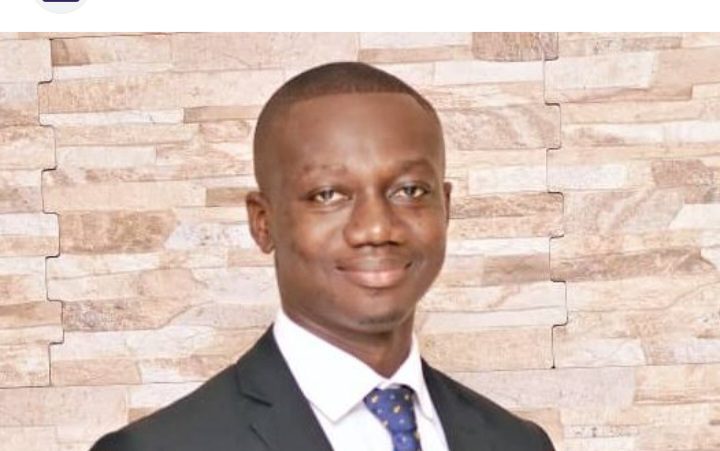
A private legal practitioner, Richard Nii Armah, has reiterated the necessity of decoupling the Office of the Attorney-General from the Ministry of Justice.
The lawyer noted that for years, he has consistently called for this agenda to be prioritised if the nation is serious about its fight against corruption.
Mr Armah’s remarks follow a High Court directive instructing the Attorney-General to take over cases previously handled by the Office of the Special Prosecutor (OSP). In its ruling, the court declared cases prosecuted by the OSP “null and void,” further asserting that the OSP must seek prior authorisation from the Attorney-General’s Department for its legal proceedings.
Commenting on the ruling, Mr Armah asserted that the court’s decision effectively nullifies all cases investigated by the OSP, potentially opening the floodgates for compensation claims and judgement debts.
He opined that the OSP should not be required to obtain authorisation from the Attorney-General’s Department to prosecute.
He explained that the Ghana Police Service, the Ghana Immigration Service, the Ghana Revenue Authority, and the Economic and Organised Crime Office (EOCO) all maintain independent legal departments. These institutions regularly bring offenders before the court without seeking external authorisation, making the demand for the OSP to do so appear inconsistent.
Speaking in an interview on Nyankonton Mu Nsem on Rainbow Radio 87.5FM, Richard Nii Armah stressed the urgency of separating the two offices. He proposed that a non-political figure should be appointed as the Attorney-General, while the government of the day retains the right to appoint its own representative as the Minister of Justice.
He observed that successive governments have failed to prosecute their own officials for corruption, a failure that has deepened the “cancer” within the public sector.
To illustrate this, he cited the era of the late John Evans Atta Mills, during which the then Attorney-General and Minister of Justice, Martin Amidu, was removed from office for refusing to halt the prosecution of businessman Alfred Agbesi Woyome.
Mr Armah added that a successful anti-corruption drive requires a bold constitutional amendment to Article 88, suggesting a referendum to legally separate the two roles.
“We need the strict application of anti-corruption laws in the country to help reduce the cancer. The current state of corruption makes a case for the Attorney-General to be decoupled from the Ministry of Justice in order to give the Attorney-General the power to deal with corrupt appointees. Such a practice will prevent any political influence from the Executive and have all individuals, whether in government or not, be prosecuted for their crimes.”
“I have over the years pushed the proposal to separate the Attorney-General’s Department from the Ministry of Justice by doubling our efforts in fighting corruption,” he added.
By: Rainbowradioonline.com/Ghana