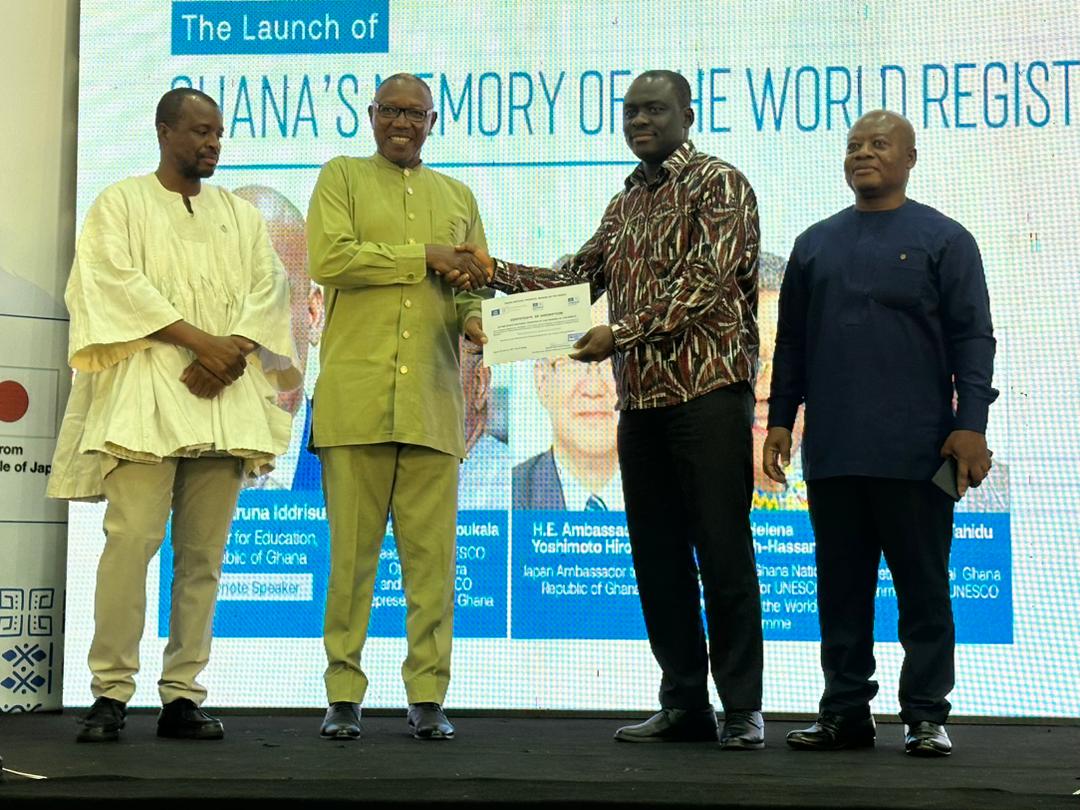
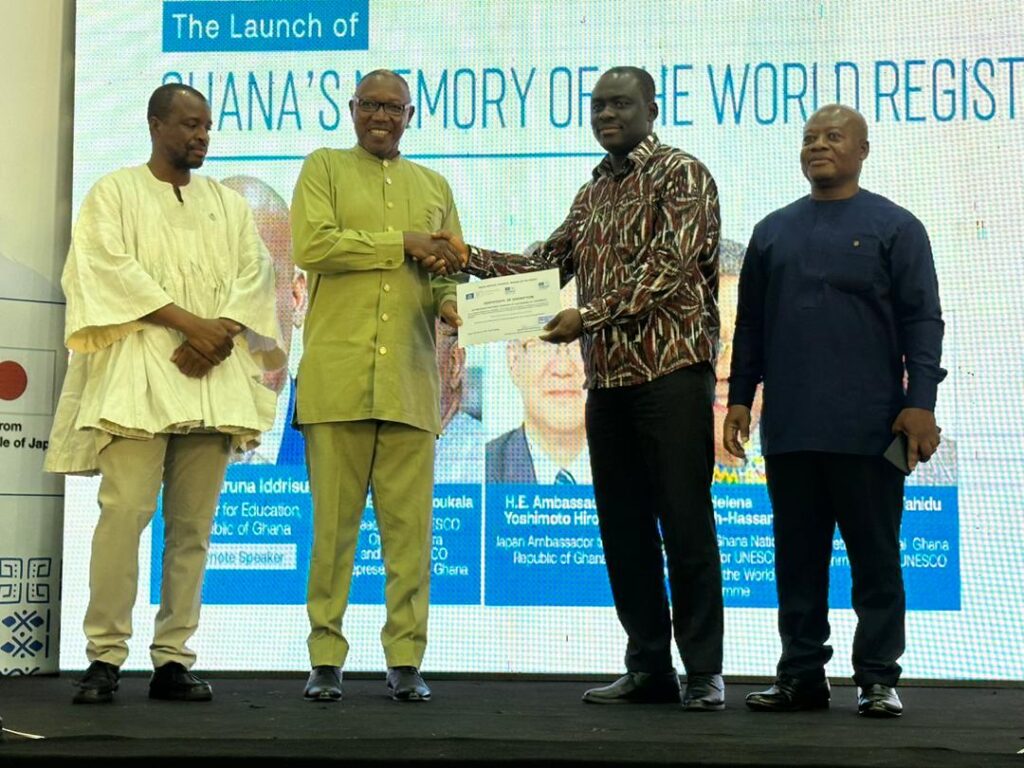
The Government of Ghana has taken a decisive step towards safeguarding the nation’s historical narrative with the official launch of the Documentary Heritage National Register.
At a high-profile ceremony held in the capital on Wednesday, the Deputy Minister for Education underscored the urgent need to protect the country’s archives from the dual threats of physical deterioration and historical neglect.
Speaking under the global framework of UNESCO’s Memory of the World Programme, the Deputy Minister described the initiative as a vital bulwark against “collective amnesia.”
The newly established register provides a formal framework to identify and catalogue a vast array of records, including ancient manuscripts, photographs, and audiovisual materials that document Ghana’s evolution from traditional kingdoms to a modern independent state.

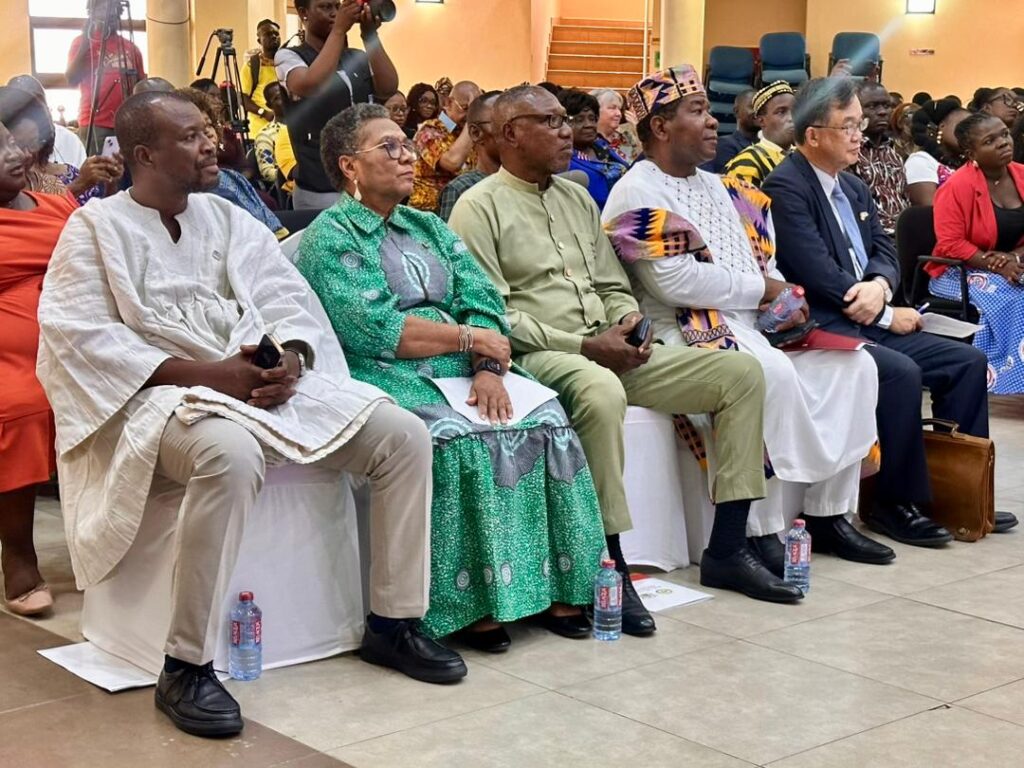
“Ghana’s story must be preserved,” the Minister told an audience of diplomats, including the Japanese Ambassador and representatives from UNESCO.
“Each record carries a voice from the past and offers insight into who we are and where we come from.
This register reflects our commitment not only to preserving the past but also to building a stronger future shaped by its lessons.”
The launch comes at a pivotal moment as Ghana aggressively pursues a digital transformation across public services.

The Ministry emphasised that digitisation must go hand-in-hand with archival preservation, noting that archives are not merely stagnant collections of paper but “living memory” essential for transparency and evidence-based governance.
By securing these records, the government aims to protect citizens’ rights and provide researchers with the raw materials needed for national development.
However, the path to total preservation is fraught with environmental and logistical hurdles.
The Minister was candid about the obstacles facing the sector, noting that many invaluable records are currently at risk. “We must confront real challenges,” the Minister remarked.
“Many records are deteriorating, resources remain limited, and environmental risks continue to threaten our collections.
These realities call for innovation and stronger collaboration.”
The National Register is a culmination of several years of intensive cooperation with international bodies.
Following the establishment of the Ghana National Committee for UNESCO’s Memory of the World Programme in 2021, and the hosting of a major international training workshop in Accra last year, Ghana is now positioned to nominate its most significant collections for global recognition.

A particular focus has been placed on documenting the often-overlooked contributions of women to African history.
Commending the Public Records and Archives Administration Department (PRAAD) for its stewardship, the Minister pledged continued state investment in digital infrastructure and professional training.
The government’s strategy involves modernising archival systems to ensure they remain accessible to the public and resilient against the passage of time.

The Deputy Minister urged both public and private institutions to contribute to the register, framing the task as a patriotic duty.
“Documentary heritage is a powerful tool for learning,” the Minister concluded. “Through this National Register, we preserve our collective memory and connect our heritage to the broader story of humanity.”

By: Rainbowradioonline.com/Ghana