
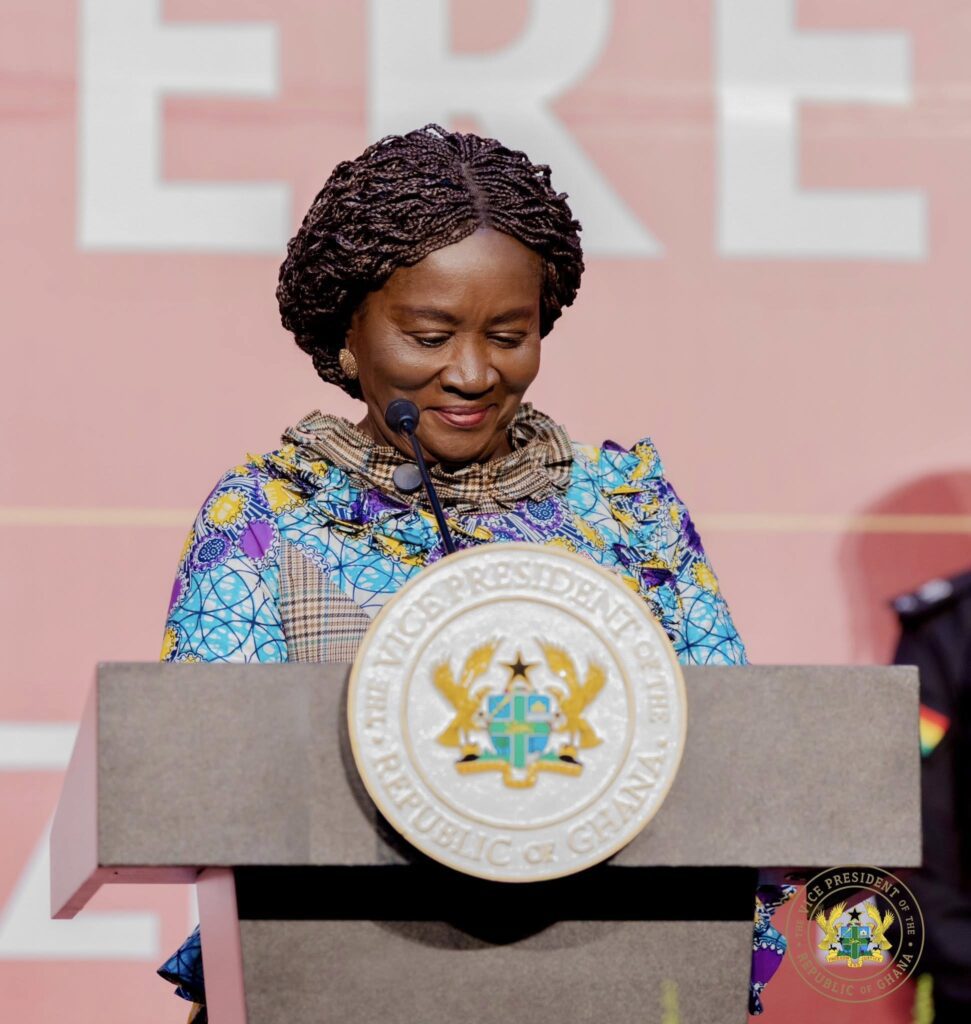
Vice Professor Jane Naana Opoku-Agyemang has called for a decisive shift from policy rhetoric to tangible investment in Africa’s medical personnel, asserting that the continent’s health sovereignty depends entirely on the strength and retention of its workforce.
Opening the 2nd Africa Health Workforce Investment Forum in the capital, the Vice President addressed a high-level gathering of policymakers and development partners under the theme “Africa’s Health Workforce: From Words to Action. Plan, Train, Retain.”
Her address served as a candid assessment of the continent’s current medical landscape, acknowledging notable gains in life expectancy and maternal care while highlighting the persistent barriers to quality services that millions of Africans still encounter.
Central to the Vice President’s message was the “Accra Reset Agenda,” a governance framework designed to place citizens at the heart of resilient and equitable systems.
She argued that true health independence for African nations requires the internal capacity to define priorities, secure sustainable financing, and foster institutions that can both train and protect their professional talent.
During the forum, Prof. Opoku-Agyemang detailed specific government interventions aimed at dismantling financial hurdles for the vulnerable.
She pointed to the recent introduction of Free Primary Healthcare and the establishment of the Ghana Medical Trust Fund, also known as “MahamaCares.”
This fund is specifically engineered to provide a safety net for citizens burdened by chronic and high-cost illnesses, ensuring that life-saving treatment is not a privilege reserved for the wealthy.
Addressing the critical issue of the “brain drain” and staffing shortages, the Vice President confirmed that the government has authorised the recruitment of approximately 16,000 health workers this year.
This mass recruitment drive is intended to address the equitable distribution of staff across the country, ensuring that rural populations receive the same standard of care as those in urban centres.
Prof. Opoku-Agyemang concluded by urging stakeholders to move beyond declarations and focus on the “dignified retention” of staff. She noted that when health professionals are supported through purposeful training and sustainable employment, the result is a direct boost to national productivity and economic resilience.
The Forum is expected to produce a framework for more robust regional collaboration, aimed at ensuring that Africa no longer merely plans for a better future but actively builds one through its most valuable resource: its people.
By: Rainbowradioonline.com/Ghana