
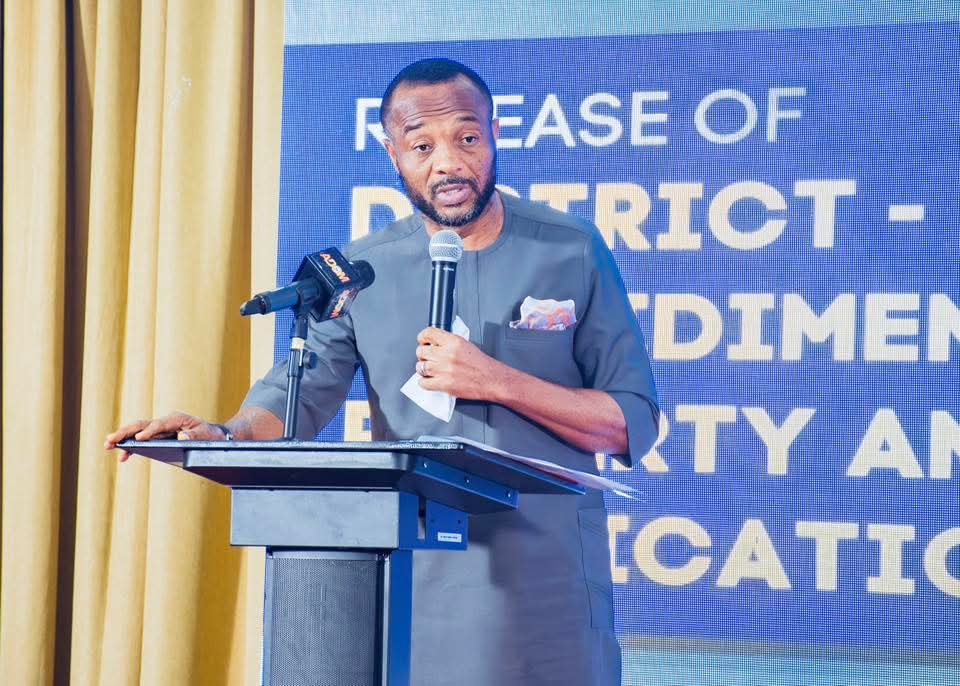
Hon. Jerry Ahmed Shaib, Member of Parliament for Weija Gbawe and Second Deputy Minority Whip, has urged policymakers to act swiftly on the findings of the Ghana Statistical Service’s newly released District-Level Multidimensional Poverty and Ranking Publication.
Speaking on behalf of the Minority Leader in Parliament, Osahen Hon. Alexander Kwamena Afenyo-Markin, at the launch of the report earlier today, Shaib said the data laid bare the disparities affecting communities across Ghana and called for a more deliberate approach to addressing them.
“The report highlights critical realities facing many communities across the country and underscores the urgent need for responsive leadership, targeted social interventions, and inclusive economic policies that leave no district behind,” Shaib stated.
He noted that the findings should serve as a wake-up call for both the executive and the legislature to move beyond broad national statistics and focus on the specific needs of districts where poverty remains entrenched. According to him, effective development requires policies that reflect the lived experiences of people at the local level.
“As leaders, we must continue to advocate for policies that reduce poverty, create opportunities for the youth, and ensure fair distribution of national resources for the benefit of all Ghanaians,” he added.
The GSS District-Level Multidimensional Poverty and Ranking Publication measures deprivation across several dimensions, including health, education, living standards, and economic activity, to provide a more nuanced picture of poverty than income alone.
Hon. Shaib emphasised that translating the data into action would require stronger collaboration between central government, local assemblies, and development partners. He said Parliament’s minority caucus would continue to push for budgetary allocations and legislative measures that prioritise underserved districts.
The launch event brought together government officials, development partners, civil society groups, and traditional leaders, all of whom acknowledged the importance of evidence-based planning in tackling poverty.
Shaib concluded by reaffirming the opposition’s commitment to holding government accountable for equitable resource distribution and to championing interventions that create tangible opportunities for Ghana’s youth.
By: Rainbowradioonline.com/Ghana