

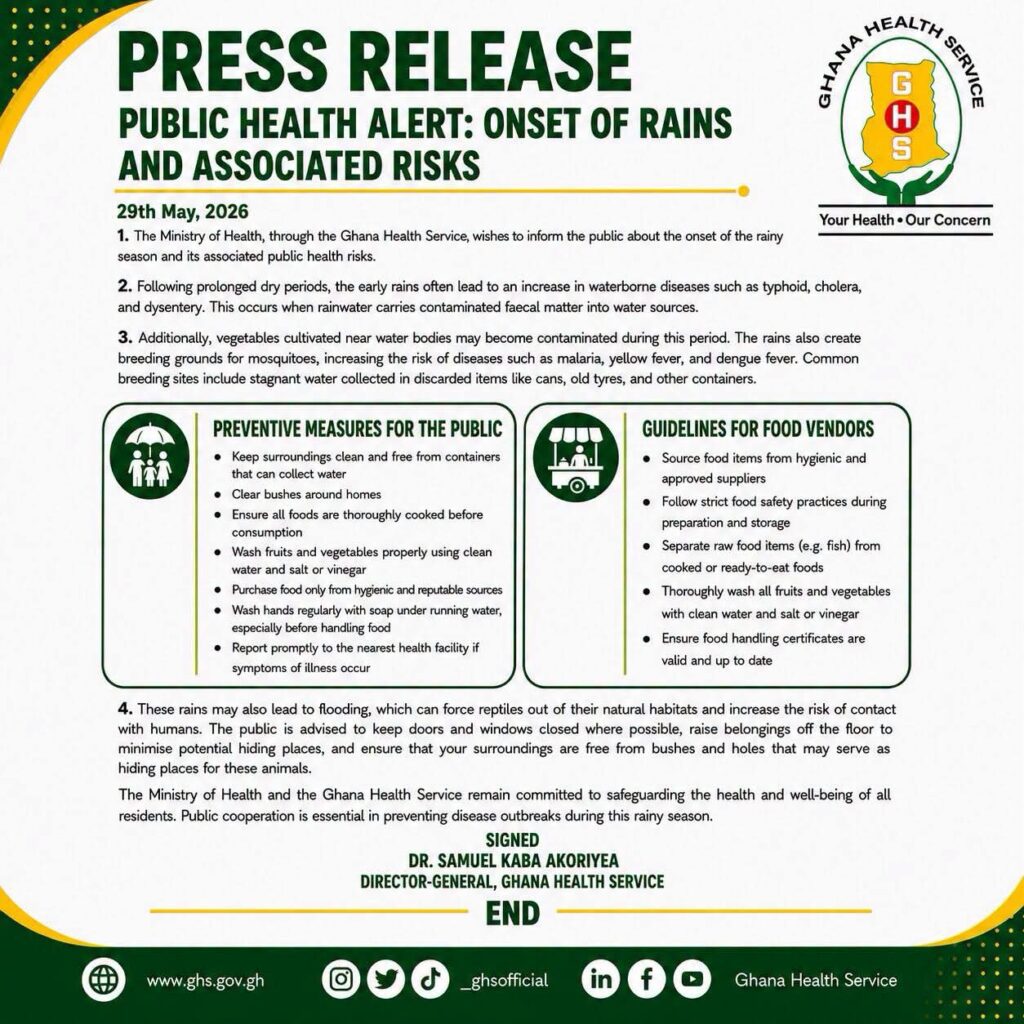
The Ministry of Health, acting through the Ghana Health Service (GHS), has issued an urgent public health alert following the onset of the rainy season, warning citizens of heightened risks of waterborne diseases, flooding, and reptile displacement.
Health authorities noted that the transition from a prolonged dry spell to early rainfall significantly elevates the threat of waterborne illnesses.
“Following prolonged dry periods, the early rains often lead to an increase in waterborne diseases such as typhoid, cholera, and dysentery,” the GHS stated, explaining that heavy downpours frequently wash contaminated faecal matter directly into public water sources. There are also growing concerns regarding agricultural safety, as vegetables cultivated near open water bodies risk contamination during this period.
Beyond water quality issues, the GHS cautioned that the wet weather creates ideal breeding conditions for mosquitoes, threatening a rise in vector-borne diseases including malaria, yellow fever, and dengue fever.
The public has been advised to clear stagnant water from discarded items such as old tyres and cans, maintain clean surroundings, and ensure all food is thoroughly cooked or washed with clean water and salt or vinegar.
The alert also highlighted seasonal environmental hazards, particularly the danger of localized flooding forcing wildlife into residential areas.
“These rains may also lead to flooding, which can force reptiles out of their natural habitats and increase the risk of contact with humans,” the directive warned.
To mitigate this danger, residents are urged to keep doors and windows shut where possible, seal structural holes, and elevate household belongings to minimise potential hiding places for displaced animals.
Food vendors have additionally been handed strict operational guidelines, requiring them to source ingredients exclusively from approved suppliers, maintain valid food handling certificates, and rigorously separate raw foods from ready-to-eat items.
Signalling a need for collective action, the Director-General of the Ghana Health Service, Dr Samuel Kaba Akoriyea, emphasised that institutional efforts alone would not suffice.
“The Ministry of Health and the Ghana Health Service remain committed to safeguarding the health and well-being of all residents,” Dr Akoriyea noted, adding that “public cooperation is essential in preventing disease outbreaks during this rainy season.”

By: Rainbowradioonline.com/Ghana