
The Chief Executive Officer of the Ghana Railway Development Authority (GRDA), Dr Frederick Appoh, has clarified that he has not undermined the vital passenger train services provided for the country, stressing instead that freight operations must be prioritised to make the sector self-sustaining.
According to him, building a sustainable railway sector requires moving away from a sole dependency on passenger services and focusing heavily on freight operations, particularly along the Western Railway Line.
He argued that passenger rail services generally require heavy subsidies, whereas freight operations generate the vital revenue necessary to sustain the entire sector.
He noted that passenger services virtually do not make a profit, despite the massive investments channelled into them, as the operational costs remain incredibly high.
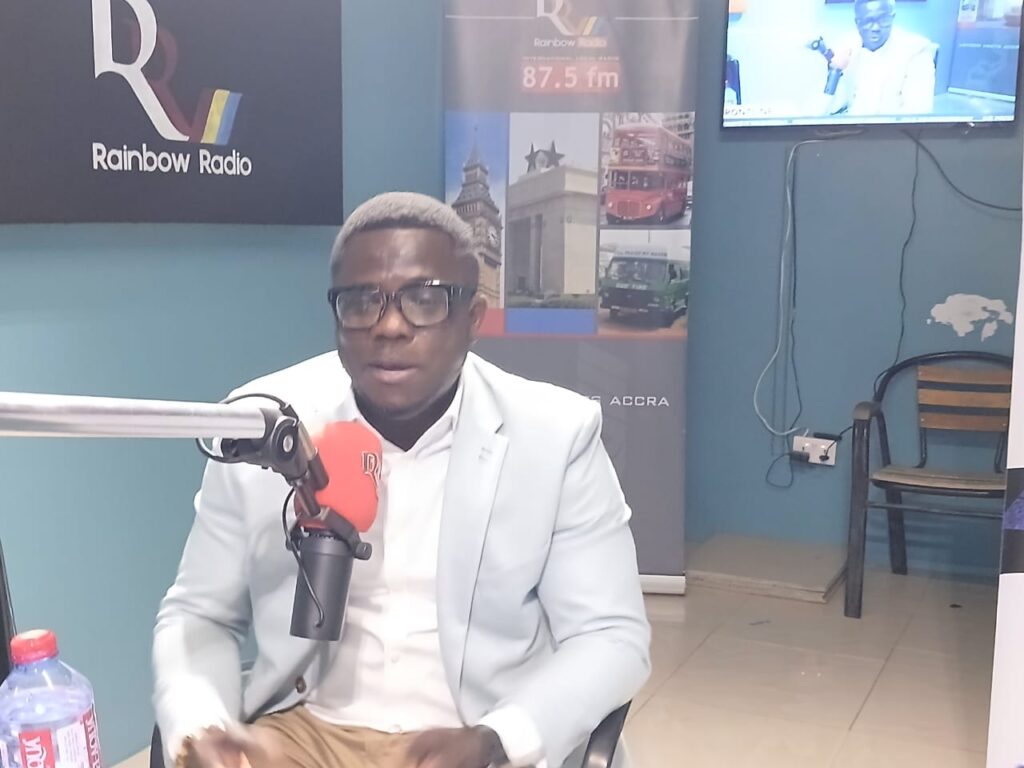
Speaking in an interview on Frontline on Rainbow Radio 87.5FM, Dr Appoh explained that introducing freight operations on the Tema–Mpakadan railway corridor through the purchase of new locomotives was a step in the right direction.
He reiterated that because passenger services are heavily subsidised, the government is constantly required to provide the necessary funding to keep them running.
“I have not said anywhere that passenger service is not important. It is important. However, the government is supposed to provide the funds needed to run it. The fuel cost alone is expensive. At the moment, passenger services provide convenience to passengers and do not make profits.”
He further revealed the stark financial imbalance facing the corridor, noting that the government allocated GH¢28 million to run the Tema–Mpakadan line since October last year, yet it has generated only GH¢1.2 million.
This return, he pointed out, is not even enough to cover fuel costs and salaries, which is why he maintains that it will be through container services that the authority will finally achieve profitability.
Dr Appoh estimate that the authority is highly likely to generate GH¢15,000 per day once the container services are fully operational.
He noted that the locomotives purchased by the government cost the nation GH¢37.6 million, and it is expected that within two years, the freight operations will generate enough revenue to pay off the cost of these locomotives and secure surplus profits to reinvest in additional fleet.
Expressing strong confidence in the sector’s financial outlook, he urged Ghanaians to support the initiative, stating that the return on investment through container services is highly positive. He added that the GRDA will initially utilise two locomotives and 20 wagons to move 300 containers a day, with plans to scale up to 600 containers daily as operations expand.
To support this boost in traffic, the authority plans to implement a 24-hour economy system by August, starting with a two-shift system before transitioning to a full three-shift system once daily container traffic successfully increases from 300 to 600.
By: Rainbowradioonline.com/Ghana