
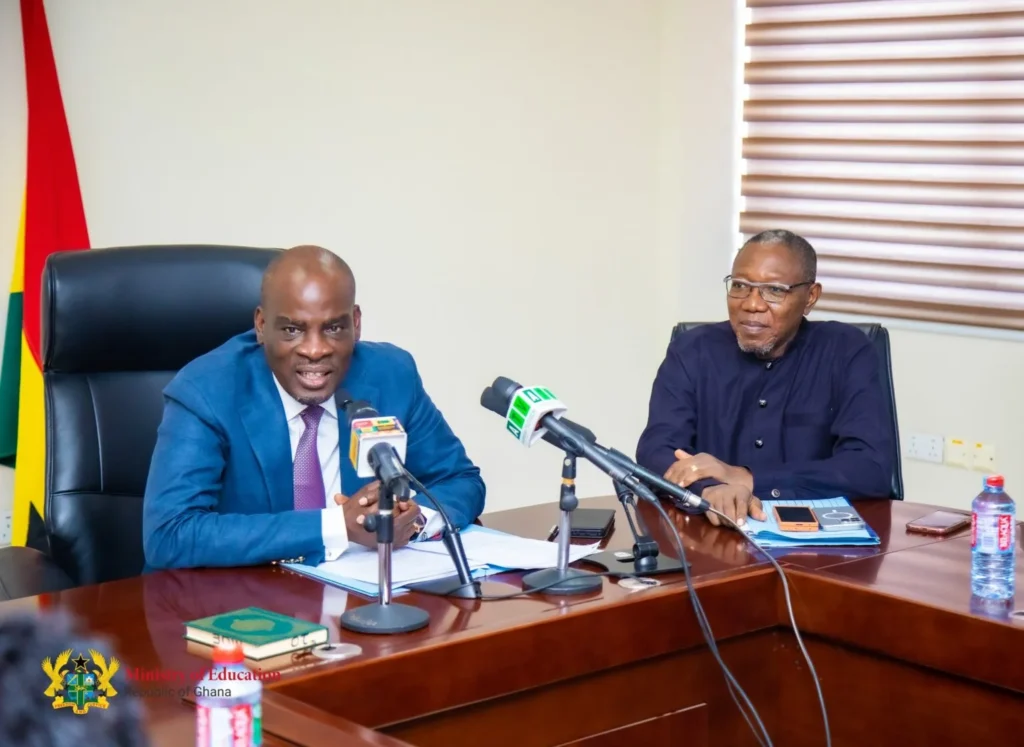
The Ministry of Education has dismissed reports circulating in the public domain that it plans to make the teaching and learning of the Arabic language compulsory in basic schools across the country.
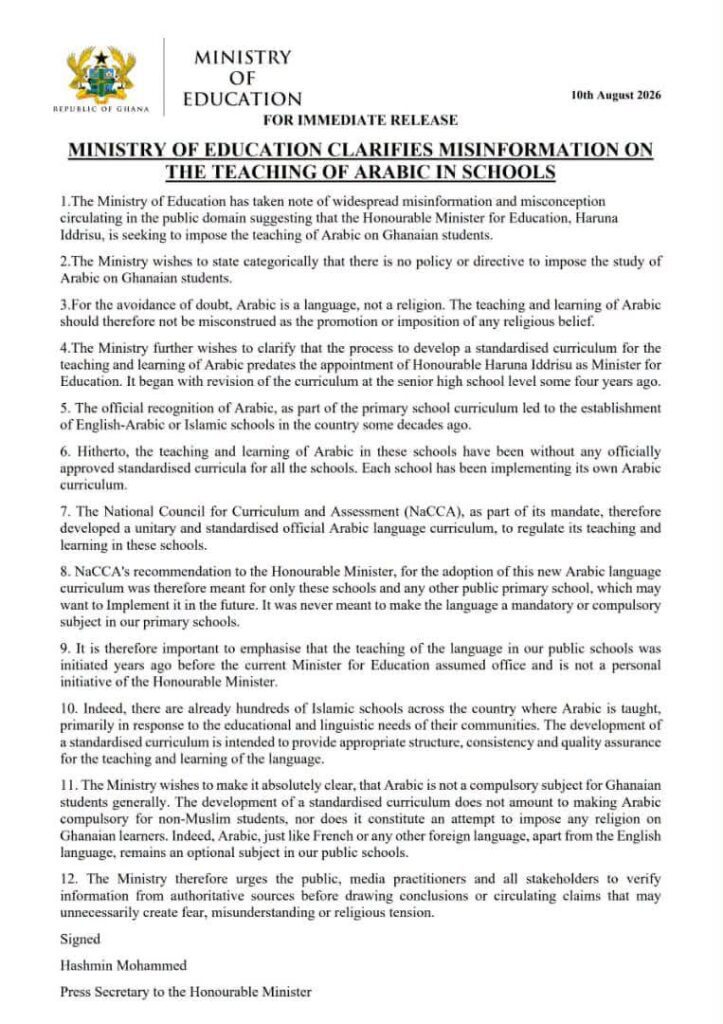
In a press statement issued on Monday, 10th August 2026, the Ministry described the assertions as widespread misinformation and clarified that no directive exists to impose Arabic on Ghanaian students.
According to the Ministry, the process to standardize the Arabic curriculum predates the appointment of the Minister for Education, Haruna Iddrisu, having commenced four years ago with revisions at the Senior High School level.
“The Ministry wishes to state categorically that there is no policy or directive to impose the study of Arabic on Ghanaian students. For the avoidance of doubt, Arabic is a language, not a religion,” the statement read.
Addressing the background of the policy, the Ministry explained that while English-Arabic and Islamic schools have operated in Ghana for decades, they previously functioned without a unified syllabus.
To resolve this, the National Council for Curriculum and Assessment (NaCCA) developed a standardized curriculum specifically to regulate instruction in these existing institutions and any public primary school that chooses to adopt it voluntarily.
“NaCCA’s recommendation to the Honourable Minister… was therefore meant for only these schools and any other public primary school which may want to implement it in the future. It was never meant to make the language a mandatory or compulsory subject in our primary schools,” the statement added.
The Ministry emphasized that Arabic remains an optional subject alongside French and other foreign languages, reassuring the public that the standardized framework is merely intended to ensure quality assurance and academic consistency.
It further urged media practitioners and the general public to verify information from official sources to avoid spreading claims that could incite unnecessary religious tension or misunderstanding.

By: Rainbowradioonline.com/Ghana