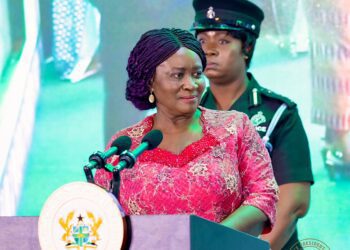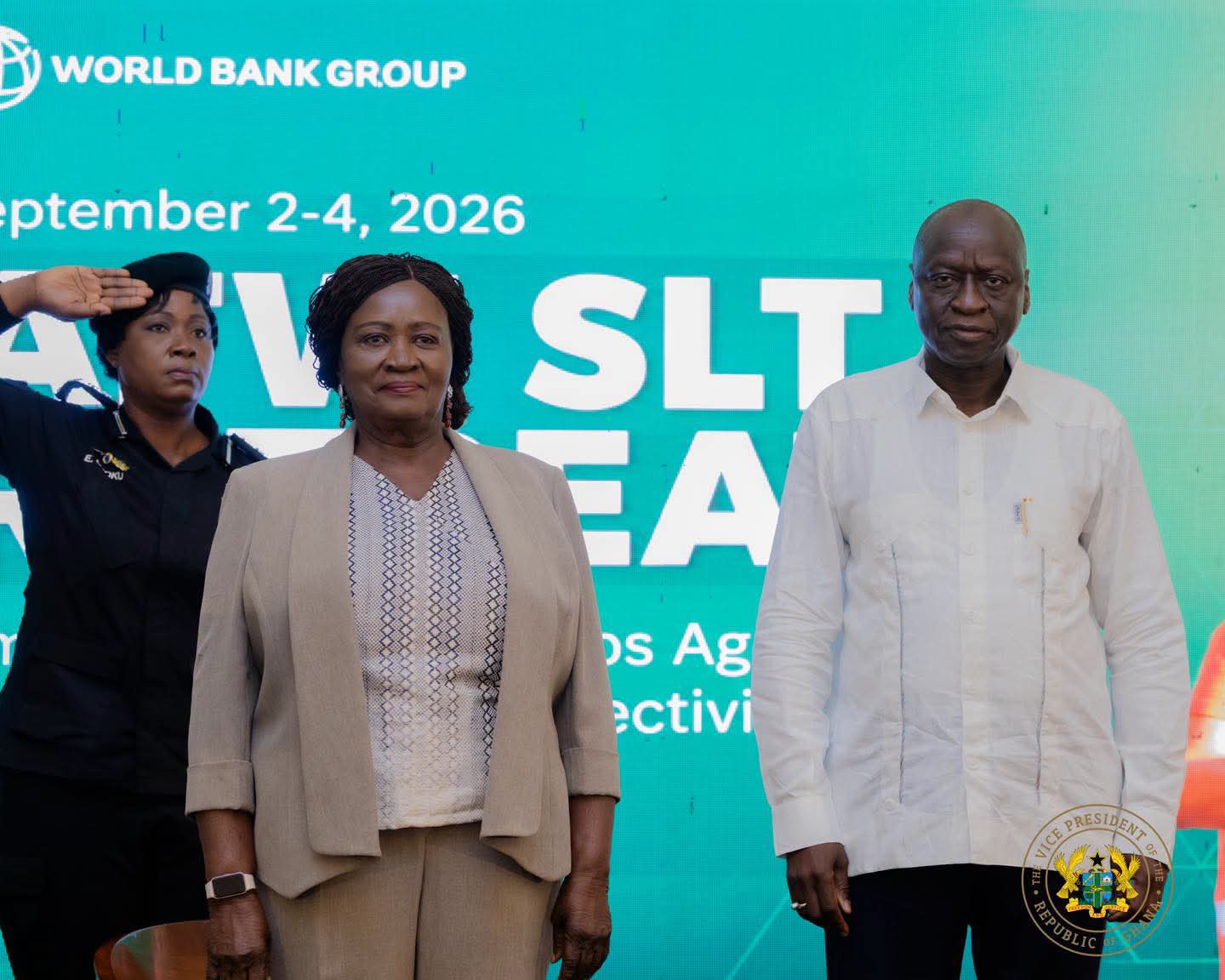
Accra played host to the World Bank Western and Central Africa Senior Leadership Team Retreat yesterday (Thursday, September 3, 2026), where Vice President Professor Naana Jane Opoku-Agyemang delivered a passionate call for strategic economic reforms aimed at driving sustainable job creation across the continent.
Addressing delegates in the capital, the Vice President underscored the urgent necessity of expanding economic opportunities for Africa’s rapidly expanding working-age population, warning that the public sector alone can no longer shoulder the burden of employment.
Speaking at the high-level gathering, Professor Opoku-Agyemang highlighted the vital role of the private sector, emphasising that government efforts must focus on building a stable economy, strengthening institutions, and aligning the education system with current and future labor market needs.
She pointed out that sustainable employment depends on cultivating an environment where local businesses can start, scale, compete, and ultimately hire more people.
Access to affordable capital emerged as a central theme of her address. The Vice President lamented that too many high-potential Ghanaian enterprises remain constrained by a lack of financing, with female entrepreneurs facing particularly severe hurdles.
To address this structural imbalance, she reiterated the government’s commitment to the establishment of the Women’s Development Bank, an initiative designed to help women-owned enterprises transition from small ventures into robust, job-creating businesses.
Professor Opoku-Agyemang also stressed the imperative of linking educational outcomes directly to economic productivity.
Pointing to key national interventions such as the One Million Coders Programme and revamped technical and vocational education frameworks, she noted that success must be measured by the practical capacity of young people to find employment, build enterprises, and innovate. She added that the burgeoning digital economy offers Ghana a unique path to plug local talent directly into global demand without forcing youth to seek opportunities abroad.
On industrial capacity and trade, the Vice President advocated for purposeful local production, arguing that Ghana and the wider continent must move away from exporting raw materials and focus heavily on value addition. In agriculture, she urged for stronger support across the value chain so that local farmers, processors, and transporters retain a higher share of the wealth generated.
While describing the African Continental Free Trade Area as a monumental opportunity, she cautioned that a market of 1.4 billion people would yield little benefit unless African nations aggressively build the underlying financial, infrastructural, and technical capacity required to compete globally.
By: Rainbowradioonline.com/Ghana