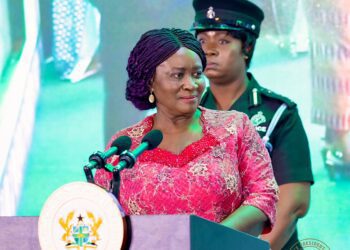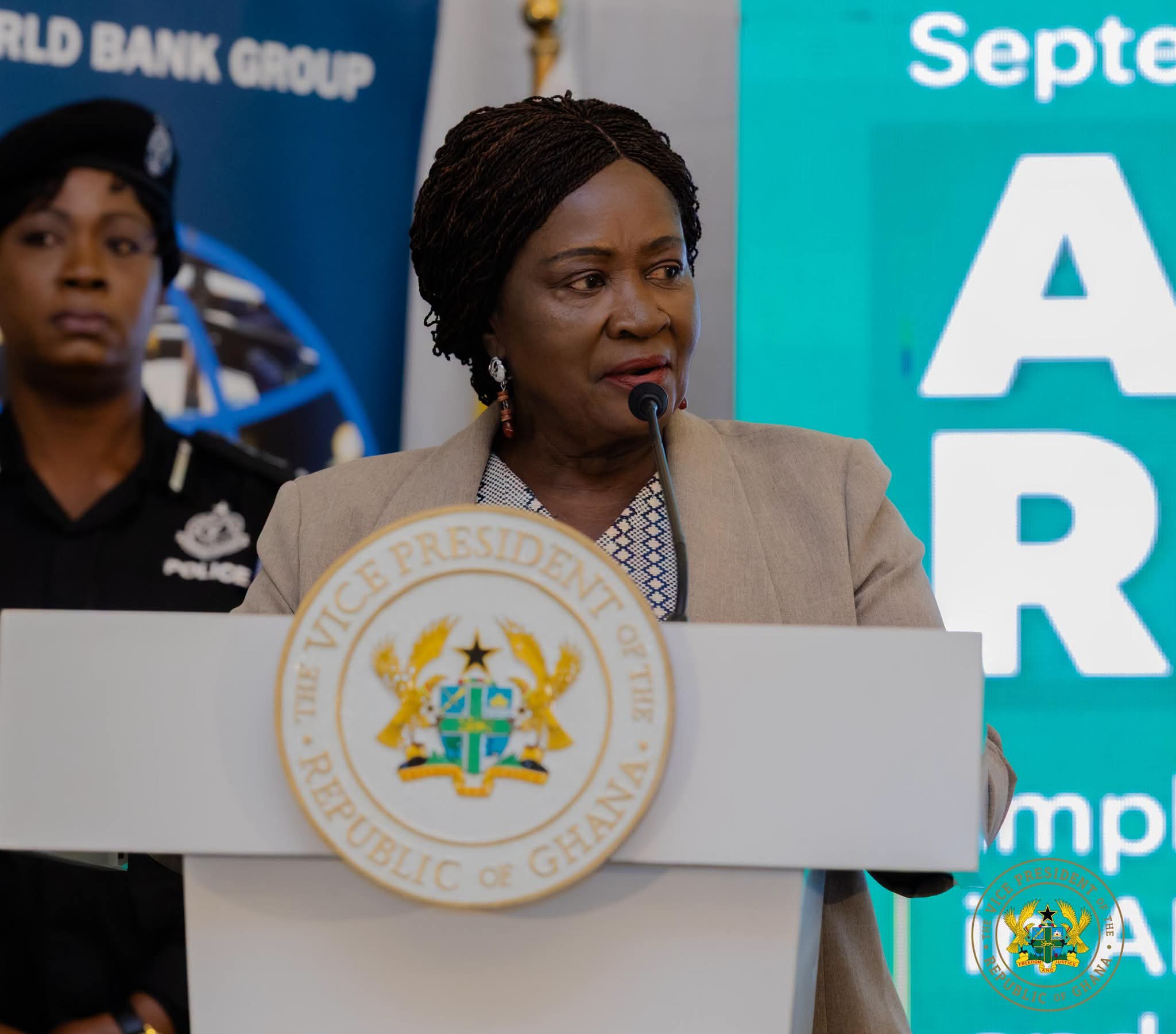
Vice-President Professor Naana Jane Opoku-Agyemang has underscored Ghana’s solemn duty to safeguard and faithfully present its historical forts, castles, and landmarks connected to the transatlantic slave trade.
She emphasized that maintaining these physical structures remains vital for future generations to grasp the vast magnitude of the historical atrocity alongside the resilience, resistance, and survival of victimized Africans.
“Cape Coast Castle and other forts, castles and sites must be fully preserved and honestly interpreted,” Prof. Opoku-Agyemang stated.
Addressing a ceremony in Accra following the passage of UN General Assembly Resolution 82/50—which formally designated the trafficking and chattel enslavement of Africans as history’s gravest crime against humanity—she noted that Ghana anchors many of the world’s most critical surviving slave trade monuments.
She stressed that custodianship extends past structural maintenance to encompass the accurate preservation and transmission of the narratives tied to these landmarks.
“Our responsibility is equally important here at home,” she declared.
The Vice-President further highlighted lesser-known Ghanaian communities bearing profound memories of anti-slavery resistance, citing Assin Manso, Sankana, and Golu.
She observed that evidence of this legacy persists through landscape features, defensive architecture, oral traditions, indigenous healing practices, and written archives.
Reflecting on her encounters with fortified caves and defensive walls erected against slave raiders, she argued that such locations embody a frequently ignored chapter of the historic struggle.
“Africans were more than the people to whom enslavement happened. They also resisted capture, defended their communities, escaped, organized and fought to preserve their freedom,” she stated.
Prof. Opoku-Agyemang maintained that heritage conservation efforts must equally reflect both the immense human suffering inflicted by the trade and the courageous defiance of African populations. She added that protecting these historic landmarks reinforces the broader campaign for reparatory justice while deepening connections between Africa and its global diaspora.
By: Rainbowradioonline.com/Ghana