
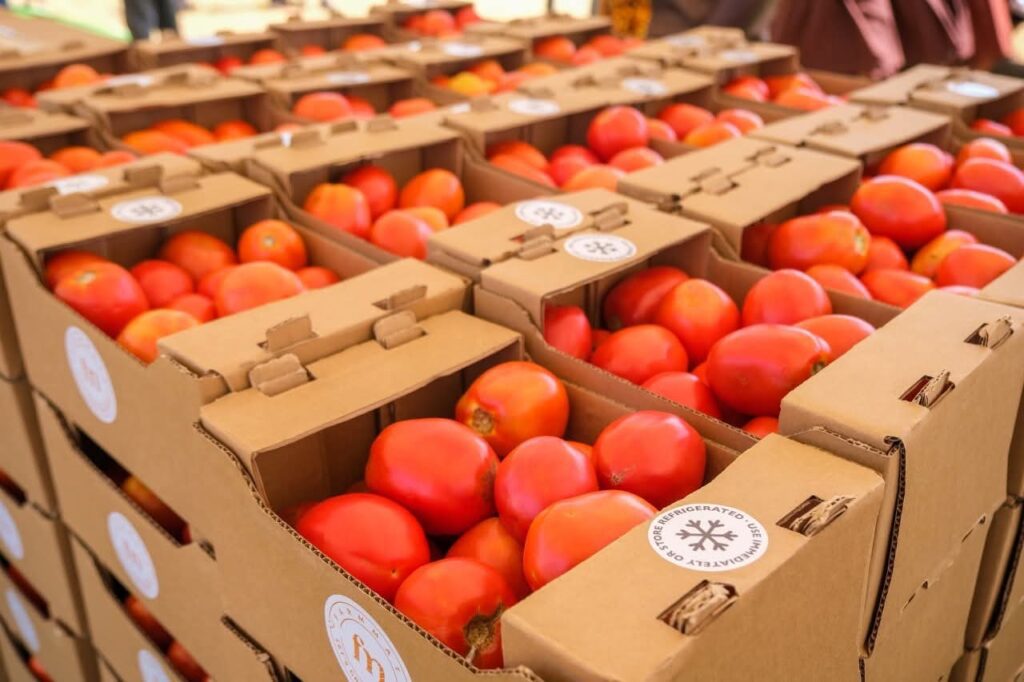
The Ghana National Tomato Traders and Transport Association has given a firm nod of approval to the government’s ambitious blueprint to produce 400,000 tonnes of tomatoes every year, a move designed to finally end the country’s heavy reliance on foreign imports.
Dubbed the Ghana Tomato Self-Sufficiency Initiative (GHATSI), the project seeks to overhaul local agricultural supply chains and build a resilient domestic production base from the ground up.
Under the initial rollout, the first phase targets an output of 100,000 metric tonnes during the 2026/2027 farming cycle. The cultivation drive will cover roughly 10,000 acres across 40 districts in 12 regions, directly touching over 100 rural communities.
Speaking in an exclusive interview on Rainbow Radio’s flagship news program, Nyankonton Mu Nsem, the Head of the Association, Mr Eric Tuffour, highlighted the relief the project could bring to market women and transporters who frequently brave hazardous journeys across borders to secure supply.
“We are fully behind the sector minister on this path, and our prayers are with the ministry for this initiative to succeed,” Mr Tuffour stated. “For far too long, our traders have had to risk their lives and capital travelling long distances just to keep supply stable. If this initiative is executed properly, our people can stay right here in Ghana, expand their businesses, and earn decent profits.”
Mr Tuffour further noted that a successful implementation would transform Ghana from a net importer into a regional agricultural hub.
“Our land is fertile enough,” he added. “If we get the infrastructure and irrigation right this time, Ghana will not only feed its own population but also become a key exporter of quality tomatoes to neighboring West African nations.”
Industry watchers have long pointed out that local production suffers from seasonal shortages, inadequate storage facilities, and limited irrigation infrastructure, forcing traders to source heavily from neighboring countries like Burkina Faso. With GHATSI now taking shape, stakeholders are watching closely to see whether the strategic investment across the designated districts will deliver the long-sought stability to Ghanaian markets.
By: Rainbowradioonline.com/Ghana