The Inter-Governmental Action Group against Money Laundering in West Africa (GIABA) has called on journalists across the sub-region to step up their watchdog role and shine a light on complex economic and financial crimes threatening regional stability.
Speaking at the opening of a three-day regional training workshop on investigative reporting of economic and financial crimes in Accra, Ghana, the Director General of GIABA, Mr Mam Cherno Jallow, described media practitioners as critical partners in exposing illicit financial flows and promoting accountability.
Addressing delegates at The Palms by Eagles Hotel, Mr Jallow highlighted the evolving threats facing West Africa, including high-level corruption—particularly within the extractive sector—drug trafficking, the rise of terrorism, and the misuse of virtual assets.
“Our region continues to face evolving threats related to Money Laundering, Terrorist Financing, and Proliferation Financing. These phenomena undermine the effective implementation of measures,” Mr Jallow stated. “Key vulnerabilities include high-level corruption resulting in illicit financial flows, largely from the extractive sector, the rise of terrorism-related activities, the misuse of virtual assets, drug trafficking, and the weak regulatory oversight of Designated Non-Financial Businesses and Professions.”
He emphasised that the ongoing crusade against illicit financial activities requires deep citizen engagement, noting that the media serves as a vital bridge between oversight bodies and the general public.
“Beyond these challenges, let me remind you that GIABA is not only a witness to, but also the architect of, a major transformation in the fight against money laundering and terrorist financing in West Africa,” he noted. “Indeed, this is a fight that requires serious awareness raising, citizens mobilisation, and collective ownership of the fight. This is where your role as the media is extremely important.”
“The fight against money laundering and terrorist financing will only be won if light prevails over darkness, and you, journalists, are one of our most powerful beacons,” Mr Jallow added.
The Director General, however, expressed concern over instances of weak reporting, a lack of due diligence, and misinformation regarding Anti-Money Laundering and Countering the Financing of Terrorism (AML/CFT) issues, urging journalists to utilise the training to sharpen their investigative techniques and verify facts rigorously.
Delivering a welcome address on behalf of the Financial Intelligence Centre (FIC) of Ghana and the President of the Republic, Mr Benjamin Ofori emphasized that no single institution can defeat financial crime in isolation.
He noted that criminals are increasingly leveraging sophisticated technology, digital financial services, and intricate corporate structures to conceal the proceeds of fraud, tax evasion, and organised crime across borders.
“The modern financial crime reporter must be able to follow the money,” Mr Ofori declared. “This requires an understanding of corporate structures and the ability to examine financial records, identify beneficial owners, analyse procurement information, connect seemingly unrelated transactions and use open-source intelligence. Above all, it requires asking the right questions about who owns and moves assets.”
Highlighting the responsibilities of media professionals in handling financial intelligence, Mr Ofori added: “Investigative journalism, however, is not only about finding information. It also requires journalists to verify information, understand its context, protect sources, maintain professional standards and present evidence accurately and responsibly. Our goal should not simply be to produce more stories about financial crime. It should be to produce well-informed, evidence-based and impactful journalism that explains how financial crime operates, how it affects our communities and economies, and what can be done about it.”
He urged journalists to look beyond basic reporting, advising them to “look for the story behind the transaction, the person behind the company, the ownership behind the asset and the financial trail behind the crime. Above all, follow the evidence.”
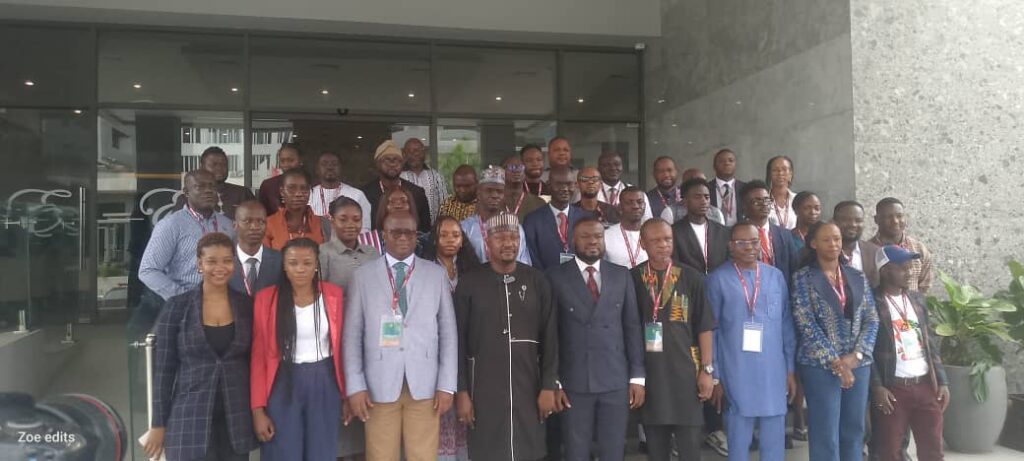
The regional workshop, which runs from September 22 to 24, 2026, brings together journalists and media professionals from across West Africa to deepen their technical capacity and build cross-border collaborative networks.
The core objectives behind the regional training program include sharpening journalists’ technical skills in investigating and reporting complex economic and financial crimes, as well as building a strong strategic alliance between GIABA and media institutions across West Africa to better disseminate information on AML/CFT frameworks.
Additionally, the program aims to share key regional initiatives and policy developments in the ongoing fight against money laundering and terrorist financing.
Media professionals will be equipped with modern investigative techniques—including open-source intelligence and methods for analyzing financial records and beneficial ownership registers—ultimately consolidating a robust, cross-border network of media professionals committed to promoting transparency, good governance, and public accountability across the sub-region.

By: Rainbowradioonline.com/Ghana