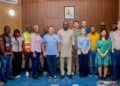
The Dutch Ambassador to Ghana, H.E. Hans Akerboom, has sounded the alarm over Ghana’s heavy reliance on imported poultry, revealing that the nation continues to ship in roughly 80 per cent of its total chicken supply despite a burgeoning domestic market.
Addressing participants at a poultry sector round-table dialogue in Accra on Monday, 26 October 2026, the diplomat disclosed that Ghana imported nearly €18 million worth of poultry products from the Netherlands alone in 2024. He pointed out that shipments from other nations, such as Belgium, Brazil, and the United States, further underscore the country’s huge dependence on foreign produce.
According to him, whilst these statistics remain troubling, they simultaneously highlight an immense opportunity for Ghana to boost domestic processing, generate employment, and uplift local farming communities.
“This is not simply about reducing imports. It is about creating the right conditions for Ghanaian farmers to grow their businesses, supply the market day by day and benefit from the demand that already exists,” he said.
Ambassador Akerboom observed that chicken remains one of the primary protein sources for millions of Ghanaian households, guaranteeing a ready consumer base for local producers. He emphasized, however, that capitalizing on this opportunity will demand coordinated efforts between state agencies, commercial enterprises, financiers, and research bodies.
Detailing the bilateral commitment to the sector, the envoy reaffirmed the Netherlands’ readiness to back Ghana’s local production goals through technical exchange, innovation, and direct investment. He recalled a recent study tour by a Ghanaian delegation to the Netherlands earlier this year, where delegates examined ways to leverage Dutch agricultural expertise.
He noted that the growth of the Dutch poultry industry was built on continuous research, tech-driven practices, and strong partnerships—strategies that could be tailored to suit Ghana’s agricultural landscape. He further mentioned that these collaborative plans complement existing national strategies, including the Feed Ghana initiative and the 24-hour economy vision, both aimed at boosting agricultural productivity.
To formalise this commitment, H.E. Akerboom announced plans to sign an addendum to the Memorandum of Understanding under the Ghana-Netherlands Food and Agriculture Working Group, specifically tailored to the poultry value chain. The agreement is expected to establish a clear framework to convert joint aspirations into actionable results.
As an immediate follow-up, a virtual workshop is slated for 2027 to share the key findings from the Accra dialogue and build networks among industry actors. Expressing strong optimism, the Ambassador voiced confidence that the venture would deliver long-term value for local farmers, agribusiesses, and the broader economy.
By: Rainbowradioonline.com/Ghana