
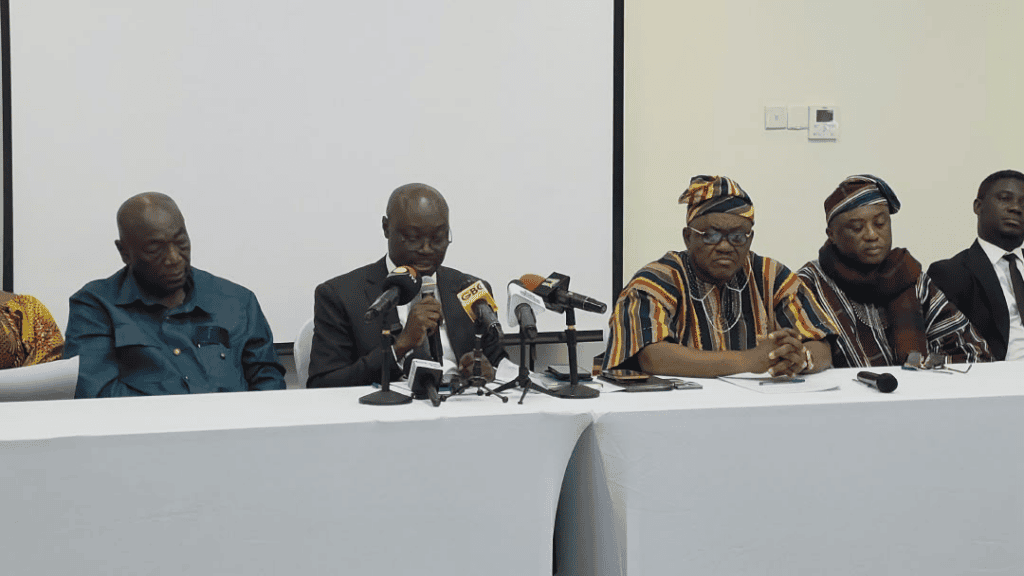
Government and Organised Labour have concluded negotiations under the Public Services Joint Standing Negotiating Committee, agreeing on a multi-year salary package for public sector workers spanning 2027 and 2028.
Under the terms of the deal, public sector employees will receive a 9 per cent increase in total remuneration effective January 1, 2027.
This adjustment consists of an 8 per cent boost to base pay alongside a 1 per cent allocation designated to improve conditions of service and address allowance disparities.
Building on the 2027 agreement, both parties further agreed to a 10 per cent across-the-board pay increase effective January 1, 2028, which will be calculated against the applicable wage bill as of December 31, 2027.
Announcing the agreement on Wednesday, the Secretary-General of the Trades Union Congress (TUC) and Organised Labour, Joshua Ansah, highlighted that the targeted 1 per cent provision in 2027 aims to cushion lower-paid and vulnerable employees while promoting fairness across public service compensation structures.
“Beyond the percentage increases, fairness in the allowances remains a central concern. The additional one per cent provision is intended to help address existing distortions and inequalities in conditions of service, with particular attention to protecting lower-paid and vulnerable workers,” he said.
While conceding that the outcome may fall short of some demands, Mr Ansah described the two-year arrangement as a crucial step toward safeguarding the real income of public employees against economic pressures.
“This agreement may not meet every expectation. It represents progress in our efforts to protect workers’ purchasing power,” he added.
Organised Labour and government are expected to maintain collaborative engagement throughout the implementation period to resolve ongoing pay administration issues, particularly as Ghana prepares to transition from the Fair Wages and Salaries Commission to the Independent Public Emoluments Commission (IPEC).
The agreement remains subject to statutory approval through the applicable legislative process.
By: Rainbowradioonline.com/Ghana