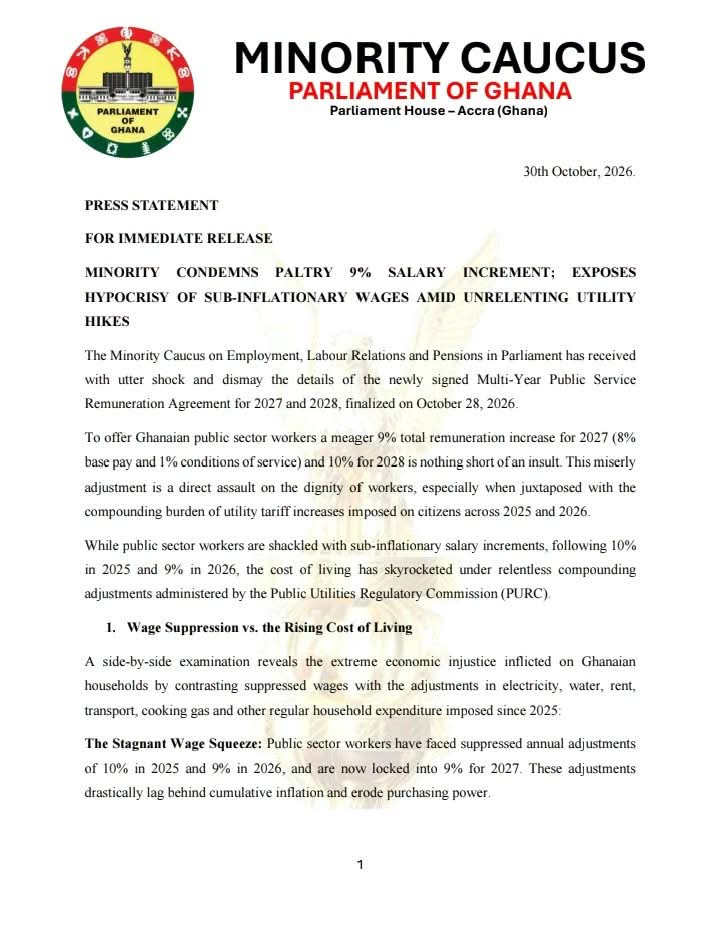
The Minority Caucus on Employment, Labour Relations and Pensions has strongly condemned the newly signed Multi-Year Public Service Remuneration Agreement for 2027 and 2028, describing the 9% wage increase for 2027 as an “insult” and an “assault on the dignity of workers”.
Finalised on October 28, 2026, the agreement grants public sector workers an 8% base pay with a 1% condition of service for 2027, followed by 10% for 2028. However, the Minority argues that these sub-inflationary adjustments pale in comparison to relentless utility hikes and a soaring cost of living.
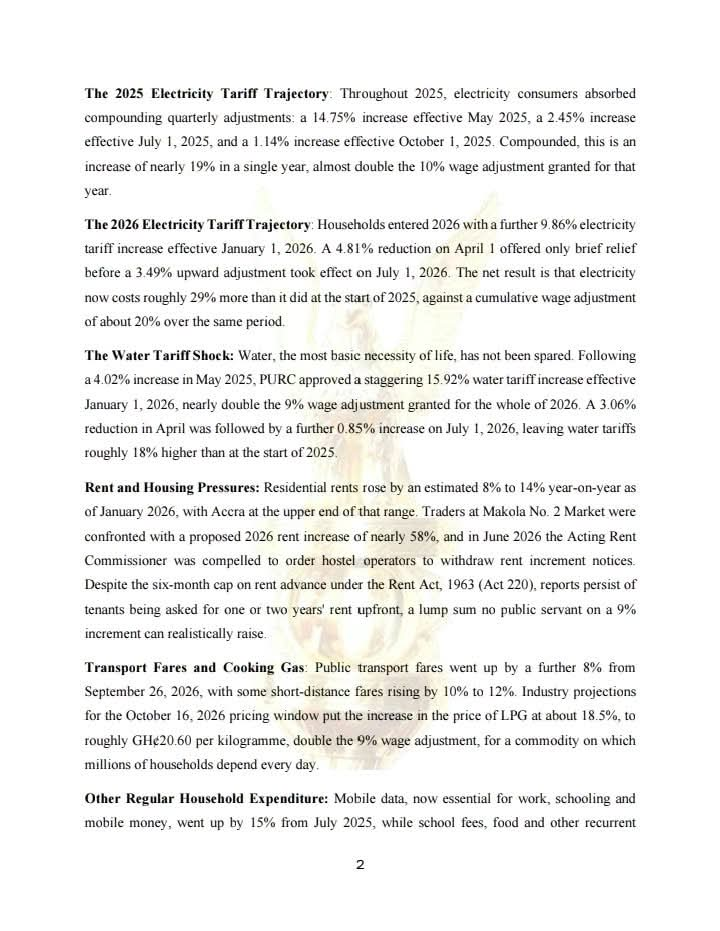
In a strongly worded press statement signed by Hon. Mavis Nkansah Boadu, MP, Ranking Member for the Committee, the Caucus highlighted a stark economic imbalance between stagnant wages and compounding price increases. According to the statement, electricity tariffs have surged roughly 29% since the start of 2025, while water tariffs have jumped by about 18% over the same period. These increases dwarf cumulative salary adjustments of 10% in 2025 and 9% in 2026.
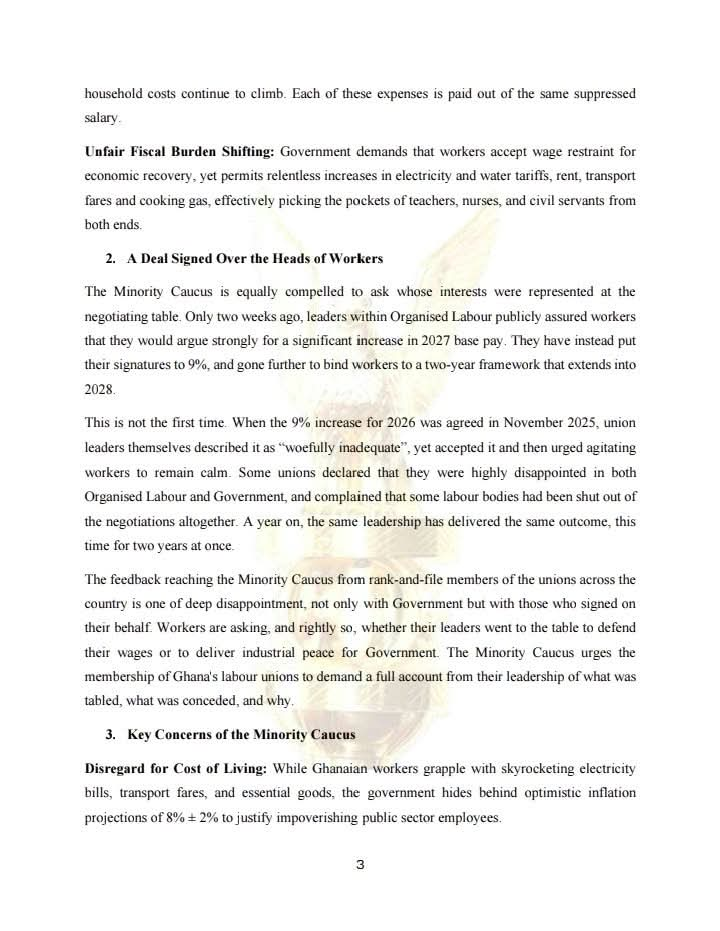
The Minority also trained its sights on Organised Labour leadership, questioning whose interests were truly represented at the negotiating table. Pointing out that union leaders had previously admitted that a 9% increment was “woefully inadequate,” the Caucus expressed dismay that labour representatives had gone ahead to bind workers to a two-year framework.
“Workers are asking, and rightly so, whether their leaders went to the table to defend their wages or to deliver industrial peace for Government,” the statement noted. The Caucus has urged union members across the country to demand full accountability from their leaders regarding what was tabled and conceded.
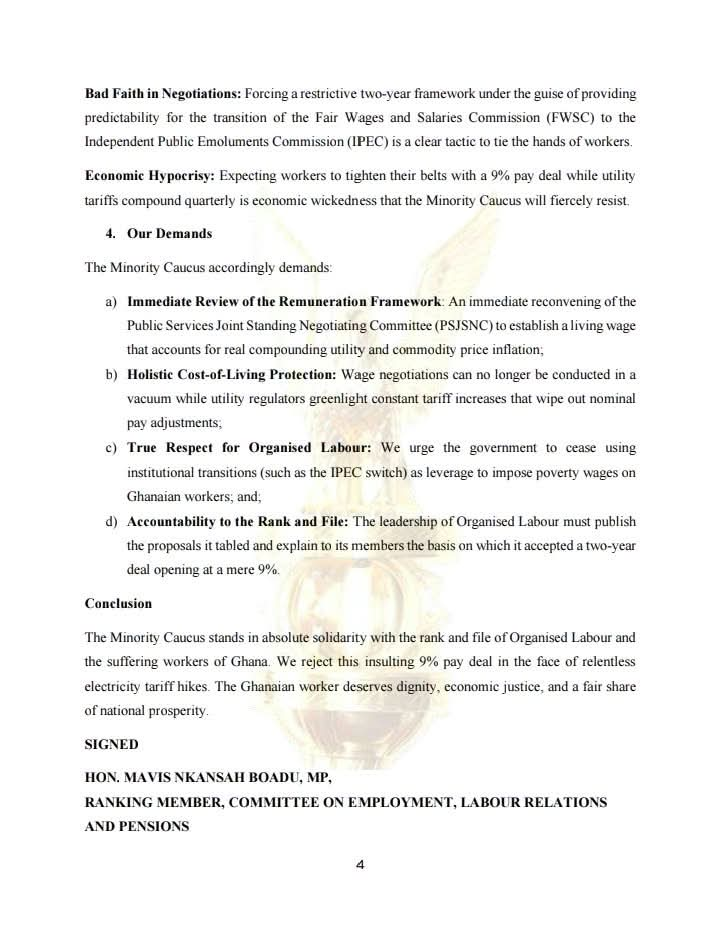
To alleviate the pressure on workers, the Minority has issued four key demands, including an immediate reconvening of the Public Services Joint Standing Negotiating Committee (PSJSNC) to establish a living wage that reflects real commodity and utility inflation. They also called on the government to halt the use of institutional transitions—such as the switch to the Independent Public Emoluments Commission (IPEC)—as leverage to impose poverty wages.
“The Ghanaian worker deserves dignity, economic justice, and a fair share of national prosperity,” Hon. Boadu concluded, declaring the Minority’s absolute solidarity with suffering public servants.
By: Rainbowradioonline.com/Ghana