
The Ghana Water Justice Network has expressed grave concern over the financial consequences of the Teshie-Nungua Desalination Project, calling on the Government of Ghana to immediately halt further water privatisation initiatives pending a comprehensive review of all public-private partnerships in the water sector.
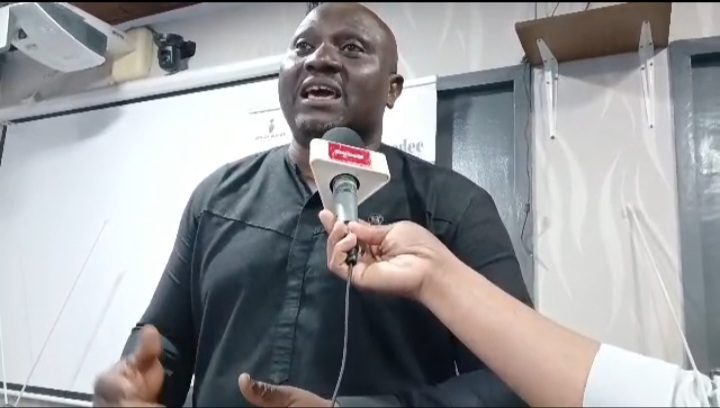
Speaking at a press conference in Accra on Tuesday, 3 November 2026, the Executive Director of Revenue Mobilisation Africa, Mr Geoffrey Kabutey Ocansey, declared that the project demonstrates the severe dangers of contractual arrangements that expose the state and ordinary consumers to massive financial risks without delivering corresponding public value.
Addressing journalists on behalf of the coalition, Mr Ocansey referenced the ongoing water privatisation crisis, highlighting that on 17 September 2026, an International Chamber of Commerce arbitration tribunal awarded approximately US$235 million in termination-related payments to Befesa Desalination Development Ghana Limited and Standard Bank of South Africa Limited following the termination of the Water Purchase Agreement with Ghana Water Company Limited.
A related arbitration under the State Guarantee also held the Republic primarily liable for Ghana Water’s contractual obligations. Although the tribunal dismissed a separate claim of approximately US402 million for alleged unpaid charges because the claims could not be recovered cumulatively, the US235 million judgment remains a staggering termination-related liability for the country.
Official figures from the Ministry of Finance’s 2024 PPP Report indicate that the plant supplied approximately 15.74 million cubic metres of water against a contracted annual capacity of 21.9 million cubic metres. Between 2020 and 2024, government support to Ghana Water for the project reached approximately US57.38 million, with about US9.77 million outstanding at the end of 2024, while approved tax exemptions totalled US72.83 million, of which US31.55 million had been utilised.
Mr Ocansey noted that civil society groups and local community members had raised red flags about the deal and its structural flaws over several years, pointing out that the Teshie Concerned Citizens Association continuously questioned the taste, salinity, and general acceptability of water from the plant, while organisations such as ISODEC, Water Citizens, and the Public Utility Workers’ Union highlighted technical and financial risks, including the reported origin of the project as an unsolicited proposal.
He cautioned that the consequences of flawed water contracts must not be passed on to households through higher utility tariffs, maintaining that water remains an essential human right linked directly to public health, dignity, and livelihoods.
Commenting on ongoing efforts by the government to acquire the desalination facility at a negotiated price below the arbitration figure to restore operations under state ownership, the civil society leader stressed that while securing reliable water supply for eastern Accra is critical, any proposed state acquisition must undergo rigorous independent financial and technical assessments and parliamentary scrutiny to ensure it does not impose another avoidable financial burden on taxpayers.
In its list of primary demands, the coalition called for an immediate suspension of high-risk water sector partnerships, the full public disclosure of the Water Purchase Agreement and arbitration findings, an independent public-interest investigation to hold proven wrongdoing accountable, and explicit guarantees that arbitration liabilities will not be recovered through increased water tariffs.
Mr Ocansey urged the government to directly allocate adequate funds to Ghana Water Limited to enable the state utility to perform its core mandate of producing and distributing affordable, safe, and sustainable drinking water for all Ghanaian citizens.
The press statement was issued under the umbrella of the Ghana Water Justice Network and signed by member organisations including the Water Citizens Network, ISODEC, Africa Water Justice Network, Revenue Mobilisation Africa, HELP Foundation Africa, Fisheries Alliance, Students Workers Solidarity Network, and Free The Citizens.
Below is the full statement
GHANA WATER JUSTICE NETWORK (GWJN) PRESS STATEMENT | FOR IMMEDIATE RELEASE TESHIE-NUNGUA DESALINATION PROJECT: GOVERNMENT MUST HALT WATER PRIVATIZATION AND PROTECT THE PUBLIC INTEREST Accra | 3 November 2026
The Ghana Water Justice Network (GWJN) express grave concern over the financial consequences of the Teshie-Nungua Desalination Project. We call on the Government of Ghana to halt further water privatization initiatives pending a comprehensive review of water-sector Public-Private Partnerships (PPPs). This project demonstrates the danger of arrangements that expose the State and water consumers to substantial financial risks without corresponding public value.
A costly warning from the Teshie-Nungua project
On 17 September 2026, an International Chamber of Commerce arbitration tribunal awarded approximately US235 million in termination-related payments to Befesa Desalination Development Ghana Limited and Standard Bank of South Africa Limited following a termination of the Water Purchase Agreement with Ghana. A related arbitration under the State Guarantee also principally held the Republic liable for Ghana Water’s obligations. The tribunal dismissed a separate claim of approximately US402 million for alleged unpaid charges because the contractual claims could not be recovered cumulatively. The US$235 million award is therefore primarily a termination-related liability.
The Ministry of Finance’s 2024 PPP Report indicates that the plant supplied approximately 15.74 million cubic metres against a contracted annual capacity of 21.9 million cubic metres. Government support to Ghana Water for the project reached approximately US57.38 million between 2020 and 2024, with about US9.77 million outstanding at the end of 2024. Approved tax exemptions totalled US72.83 million, of which US31.55 million had been utilised. These commitments demand scrutiny of the project’s overall value for money.
Warnings ignored; citizens must not bear the cost
Concerns about the project were raised over several years. The Teshie Concerned Citizens Association questioned the taste, salinity and acceptability of water from the plant. ISODEC, Water Citizens and the Public Utility Workers’ Union (PUWU) highlighted financial and technical risks, including the burden on Ghana Water and the need to consider potentially cheaper alternatives. The reported origin of the project as an unsolicited proposal further raises questions about appraisal, procurement and oversight.
The consequences of flawed water-sector contracts must not be passed on to households through higher water tariffs. Water is essential to health, dignity and livelihoods. Its affordability, quality and universal accessibility must take precedence over private financial returns. Accountability for this project should not become a partisan exercise; it must establish what went wrong and prevent recurrence.
Proposed State acquisition requires public scrutiny
Government has announced negotiations to acquire the facility, reportedly at a price significantly below amounts pursued in arbitration, with the aim of restoring operations and securing State ownership. Reliable water supply for eastern Accra is important, but acquisition must not impose another avoidable burden on taxpayers. Independent financial and technical assessments must establish the plant’s condition, rehabilitation costs, realistic operating performance, purchase value and the effect of any agreement on arbitration liabilities.
Our demands
Suspend further water privatization and comparable high-risk PPP commitments pending an independent policy review.
Disclose the Water Purchase Agreement, amendments, State Guarantee and material arbitration findings, subject to legitimate legal limits; commission an independent public-interest investigation and hold proven wrongdoing accountable.
Prevent recovery of the arbitration-related liability through water-tariff increases imposed specifically on consumers.
Publish independent assessments of the proposed acquisition and submit its fiscal implications to Parliament and relevant oversight institutions.
Prioritize public investment, accountable management of Ghana Water, infrastructure maintenance, operational efficiency and meaningful participation by workers, communities and consumers.
Conclusion
The Teshie-Nungua experience is a national warning: the public must not carry disproportionate contractual risks while receiving inadequate benefits. Government must learn from this case, protect consumers, and put publicly accountable, affordable and sustainable water provision at the centre of national policy. Water is a public good and a human right—not merely a commodity for private profit.
WATER IS LIFE. WATER IS A HUMAN RIGHT. WATER MUST REMAIN IN PUBLIC HANDS.
ISSUED BY: GHANA WATER JUSTICE NETWORK (GWJN) Signatories: Water Citizens Network, ISODEC; Africa Water Justice Network; Revenue Mobilisation Africa; HELP Foundation Africa; Fisheries Alliance; Students, Workers Solidarity Network; Free The Citizens. Media: +233 24 230 3423 | +233 24 458 4565 | +233 24 476 6549
By: Rainbowradioonline.com/Ghana