
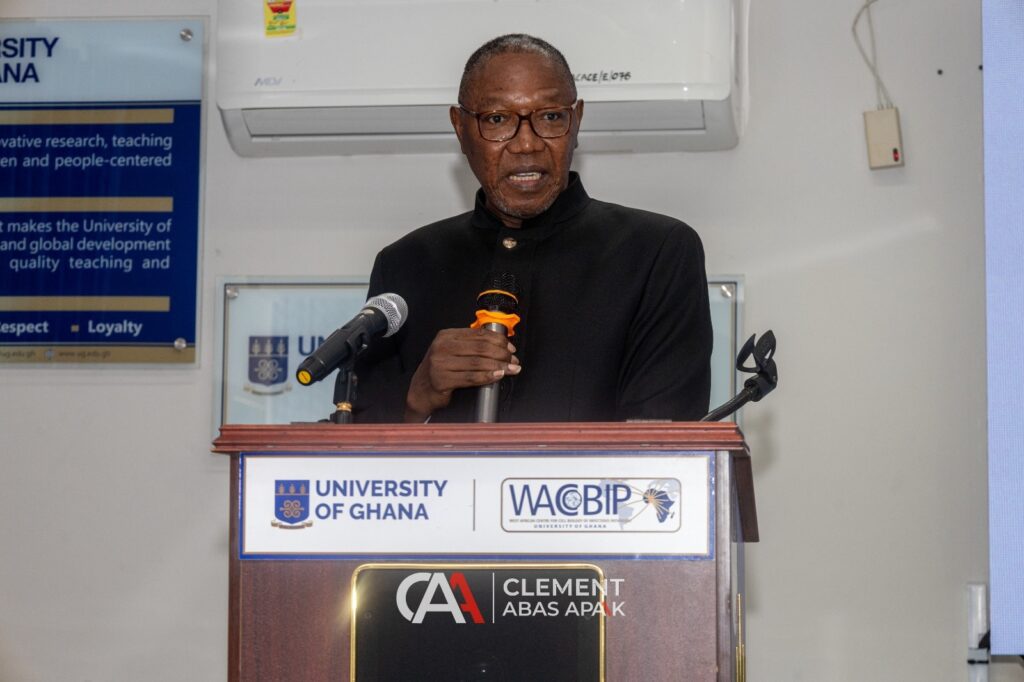
Malaria is continuing to exert a heavy toll that extends far beyond the public health sector, hitting both classroom attendance and family finances across the country.
Deputy Minister for Education, Dr. Clement Abas Apaak, raised the concern when addressing stakeholders at a national workshop on malaria-free mosquito technology in Accra on Wednesday, November 4, 2026.
He explained that young pupils routinely lose crucial learning time when struck down by the disease, while parents and guardians face significant financial strain covering medical care and treatment.
According to Dr. Apaak, the Ministry of Education fully backs ongoing efforts to explore innovative scientific approaches to eradicate the disease, given the severe threat it poses to child welfare and academic progression.
“Malaria remains one of the great threats to children’s health,” he said. “Every child who falls ill is a lesson missed, and every parent who nurses a sick child carries a burden that reaches the household budget.”
Acknowledging the strides Ghana has made over the years, the Deputy Minister pointed out that the country still faces a daunting battle, recording millions of cases each year alongside rising resistance to existing interventions.
“Ghana has made real progress. Yet more than 5.3 million cases were still recorded last year, and insecticide resistance is steadily wearing down the tools we rely on. If we are serious about elimination, we must be serious about new science,” he stated.
The high-level event, dubbed the National Co-Creation Workshop on Malaria-Free Mosquito Technology for Malaria Elimination in Ghana, was organised by the Ghana National Research Fund in partnership with the Gates Foundation and the West African Centre for Cell Biology of Infectious Pathogens. It brought together researchers, scientists, regulators, and key sector stakeholders to evaluate the potential and implications of the novel technology for the nation.
Touching on the role of academia, Dr. Apaak stressed that local universities and research facilities must sit at the center of building the technical expertise required for future implementation. He highlighted that these institutions remain essential for training specialists in entomology, genetics, biotechnology, bioinformatics, regulation, and the social sciences.
Building local research capacity, he argued, would also ensure that home-grown talent remains within the country’s borders to guide public understanding.
“When research of this calibre is anchored at home, our graduates build careers at home, and Ghanaian scientists become the trusted voices that communities listen to,” he said.
He urged participants to maintain an open mind during deliberations, ensuring that any resulting framework aligns with Ghana’s scientific priorities and addresses community concerns.
Malaria-free mosquito technology represents a cutting-edge scientific strategy currently under study as a potential tool for complete malaria eradication. Clarifying its current status, Dr. Apaak noted that the technology has not been deployed anywhere globally and remains restricted to laboratory testing and predictive modelling, underscoring the need for rigorous research before any future rollout.
By: Rainbowradioonline.com/Ghana