
Ghana has etched its name into global climate history as the first country in Africa, and only the third worldwide, to be issued verified forest carbon credits under the Architecture for REDD+ Transactions (ART) through its REDD+ Environmental Excellence Standard (TREES).
The landmark feat, which was officially approved on November 10, 2026, represents roughly 6.5 million tonnes of verified emission reductions covering conservation gains recorded between 2017 and 2021.
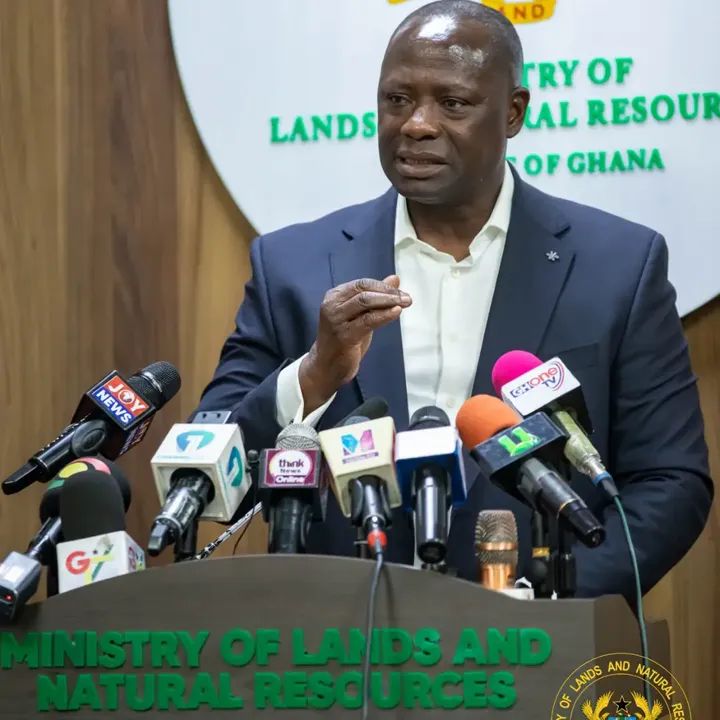
Speaking at a media briefing in Accra on Monday, November 23, 2026, the Minister for Lands and Natural Resources, Emmanuel Armah-Kofi Buah, hailed the issuance as a major breakthrough in Ghana’s battle against climate change and deforestation.
According to the Minister, the milestone is the culmination of almost twenty years of persistent national policy and forest protection initiatives across different administrations.
“We have taken this journey since 2008. Successive Governments have contributed to making sure we continue to protect our forests”, Hon. Buah said.
On the financial front, the credits are poised to unlock significant climate finance for the country. Buyers, including members of the LEAF Coalition, have already committed to purchasing four million tonnes of the credits at between $10 and $13 per tonne, a deal valued at approximately $43 million.
The remaining 2.5 million tonnes are currently open for market transactions and hold the potential to bring in an extra $25 million.
However, the Chief Executive of the Forestry Commission, Dr Hugh C.A. Brown, was quick to clarify that the issuance of the credits does not mean physical cash has hit state accounts yet, noting that Government is still awaiting the actual disbursement of proceeds from the committed buyers.
Dr Brown emphasised that securing the credits required rigorous scientific scrutiny rather than mere diplomatic goodwill.
“These credits were not simply allocated to Ghana. They were earned through results that had to be achieved, measured, reported, independently validated, and verified”, he said.
Once the funds are realised, an approved benefit-sharing framework will ensure that 46 per cent of the revenue goes directly to local communities, farmers and traditional authorities, while 39 per cent will be channelled to state institutions, including the Forestry Commission and district assemblies.
Looking ahead to the next monitoring cycle spanning 2022 to 2026, Dr Brown sounded a note of caution, warning that persistent threats such as illegal mining, illegal logging, bushfires and unsustainable agricultural practices could derail future carbon credit earnings.
He reaffirmed the Commission’s resolve to deepen collaboration with central government, traditional leaders and fringe forest communities to safeguard the country’s forest reserves and protect these hard-won environmental gains.
By: Rainbowradioonline.com/Ghana