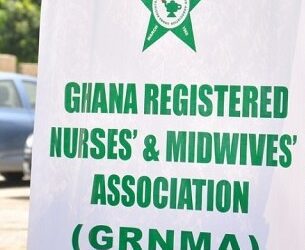
The Assistant National Public Relations Officer of the Ghana Registered Nurses and Midwives Association (GRNMA), Philemon Gyapong, has dismissed suggestions that academically weak health trainees can bypass assessment systems and graduate in Ghana.
According to him, the rigorous academic and regulatory structures governing health training institutions make it virtually impossible for any student who fails their examinations to be pushed through to graduation.
Speaking in an interview on Rainbow Radio 87.5FM’s flagship news programme, Nyankonton Mu Nsem, Mr Gyapong explained that students undergo strict academic vetting long before they reach their final year.
“Before a student even gets to the third year, all their academic records are thoroughly compiled and reviewed by the school. There is simply no way a student can progress to the next level if they fail to perform well academically,” he stated.
He further noted that the licensing examination system is deliberately compartmentalised to prevent manipulation or compromise.
“Even if a student attempts to find their way through the system, they will get stuck along the way. After the Nursing and Midwifery Council sets the examination questions, an entirely different body reviews the process, and another independent body marks the scripts. Because of these checks, nobody can be pushed through if their credentials do not meet the required standard,” Mr Gyapong emphasised.
His remarks follow a stern warning issued by the Deputy Minister of Health, Dr Grace Ayensu-Danquah, who cautioned health training institutions against promoting or graduating nursing students who fail their examinations.
During a working visit to health training institutions on the Korle Bu Teaching Hospital campus in Accra on Thursday, Dr Ayensu-Danquah stressed that compromised training standards directly endanger the lives of patients.
Turning his attention to the growing backlog of unemployed nurses and midwives, Mr Gyapong expressed concern over the large number of qualified health professionals currently sitting at home awaiting posting and financial clearance.
He explained that graduating from a health training institution is only the first hurdle, as trainees must navigate several mandatory regulatory and administrative stages before securing permanent employment.
“The numbers at home waiting for their credentials and postings to start work are simply too high. Completing school as a health professional is not enough because there are several processes one must go through before gaining permanent employment. We are hoping the government will swiftly come to their aid and recruit them into the health sector,” he added.
By: Rainbowradioonline.com/Ghana