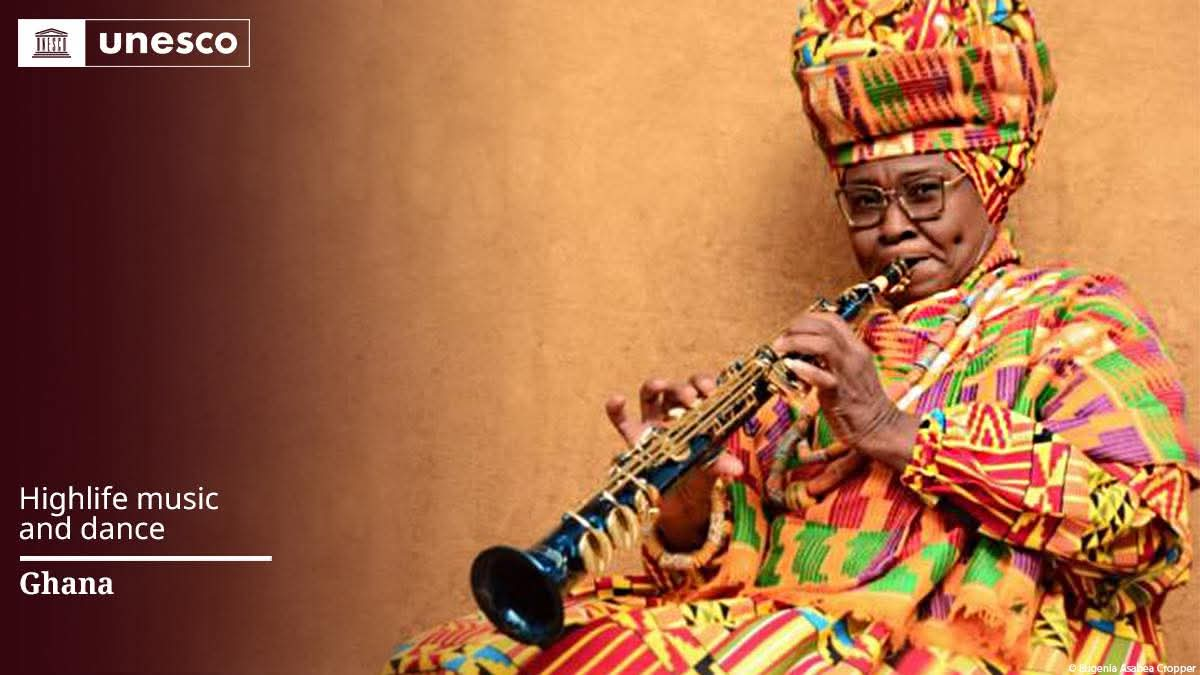
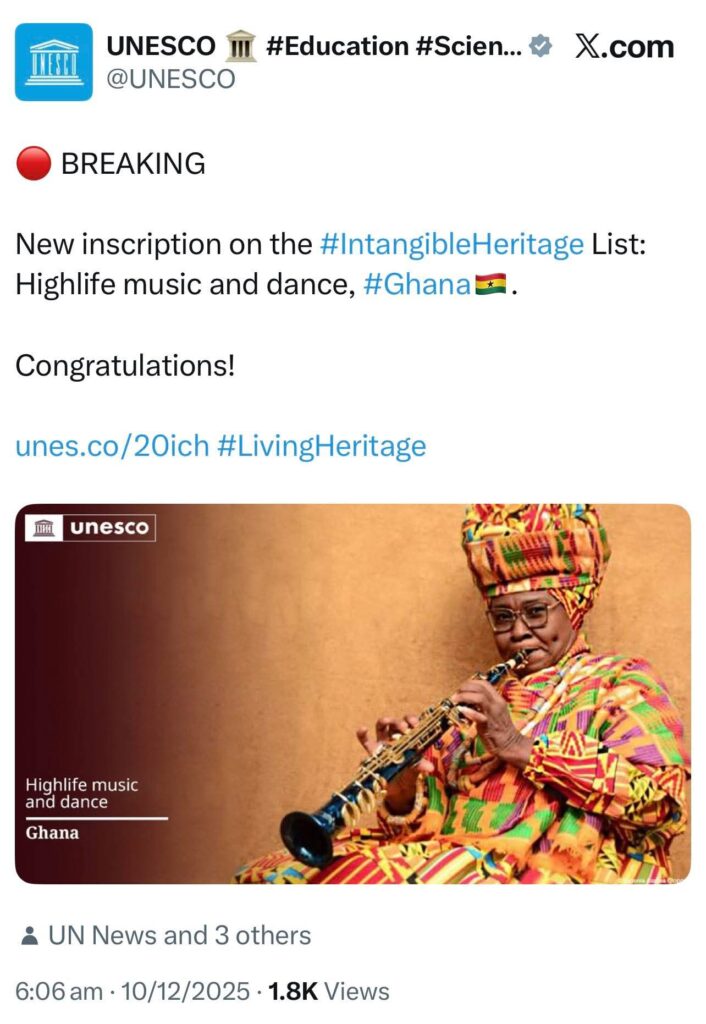
UNESCO has inscribed Ghana’s highlife and dance on its Intangible Heritage list.
The announcement was made on December 10, 2025.
Intangible cultural heritage includes the practices, knowledge, and expressions that communities recognise as part of their cultural identity, along with associated objects and spaces.
These expressions are transmitted through generations; this heritage adapts over time, reinforcing identity and respect for cultural diversity.
According to UNESCO, Highlife music and dance is a popular form of musical expression and storytelling known for its lively rhythms, lyrics and strong connection to everyday life. It features a mix of instruments, including guitars, horns, drums, xylophones and percussion.
The music is often built around call-and-response singing, with the lead singer echoed by a chorus of backup singers, and is performed in many local languages, as well as in English and Pidgin.
It is performed during weddings, funerals, festivals and naming ceremonies, often with lyrics that reflect current social issues such as health, education, relationships and social norms and challenges.
UNESCO’s 2003 Convention for the Safeguarding of the Intangible Cultural Heritage proposes five broad ‘domains’ in which intangible cultural heritage is manifested.
These domains are oral traditions and expressions, including language as a vehicle of the intangible cultural heritage; performing arts such as traditional dance, drama, and theatre; social practices (rituals and festive events); knowledge and practices (concerning nature and the universe); and traditional craftsmanship.
By: Rainbowradioonline.com/Ghana