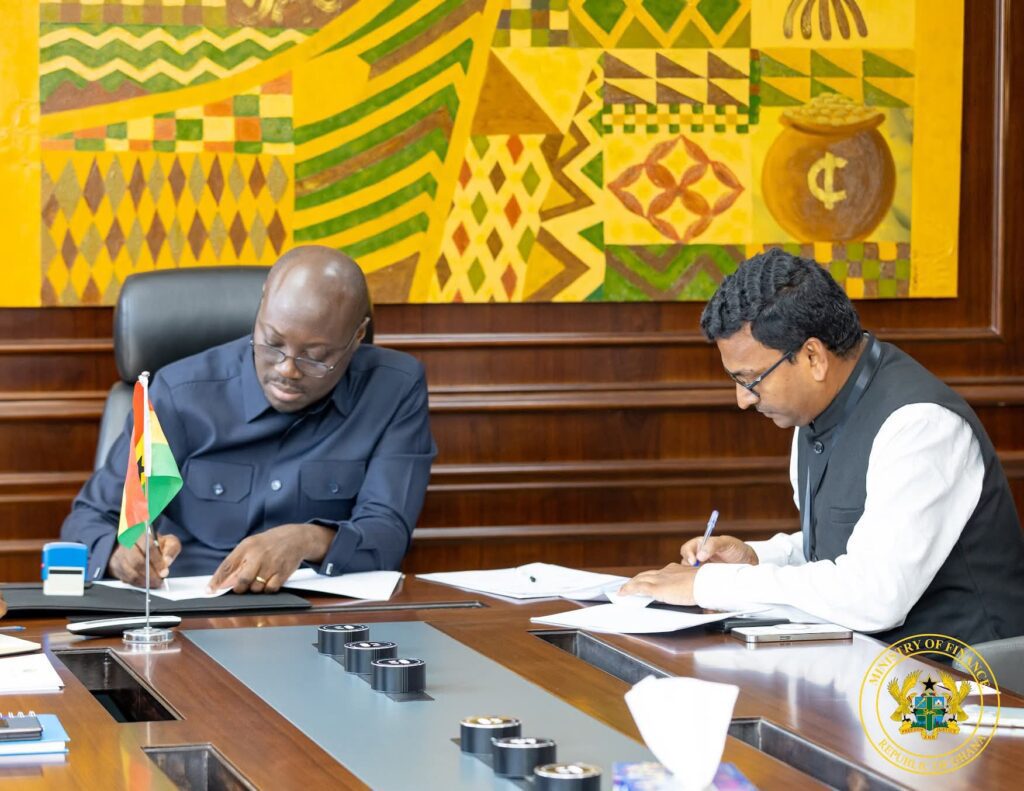
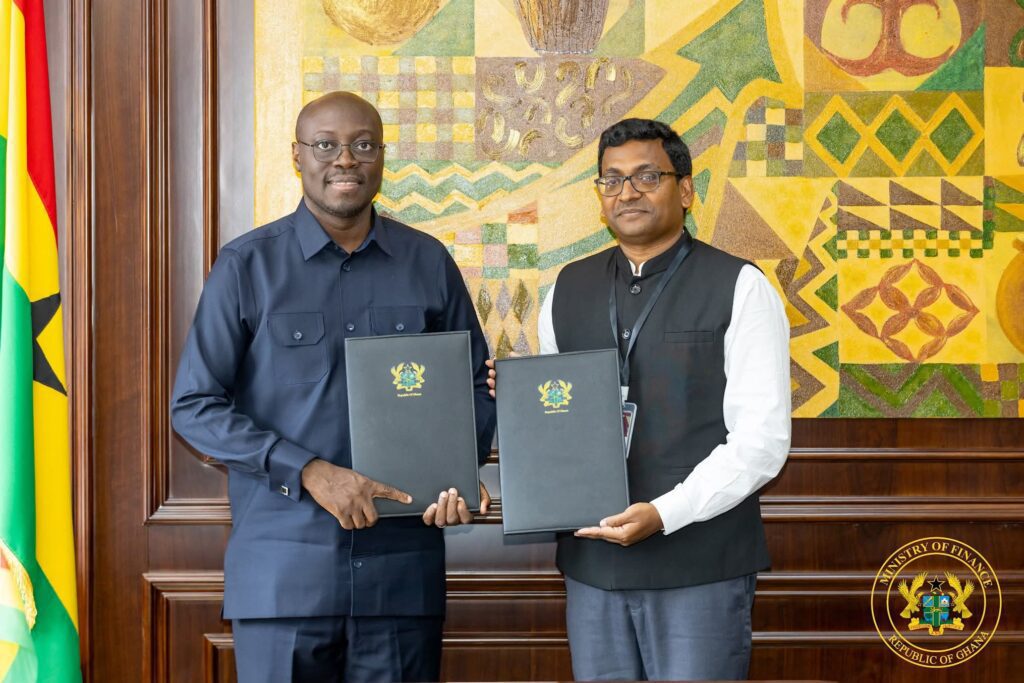
Finance Minister Dr Cassiel Ato Forson has announced the signing of Ghana’s 11th bilateral debt restructuring agreement, this time with EXIM India.
The deal marks a pivotal moment in the government’s “reset” strategy, signalling that the nation is successfully navigating its way out of the economic turbulence that has defined the last few years.
Speaking on this in a Facebook post, Dr Forson expressed confidence that the country is steadily moving toward a low risk of debt distress. He emphasised that the era of fiscal uncertainty is tapering off, backed by clear indicators of stabilisation.

“We are moving steadily towards a low risk of debt distress, with clear indicators that the worst is behind us,” the minister stated. He reaffirmed the government’s commitment to meeting its restructured obligations on time, ensuring that debt sustainability remains the heartbeat of Ghana’s financial policy.
A Legislative Shield: The New Loans Act
Perhaps the most significant takeaway from the minister’s announcement is the introduction of a new Loans Act.
This legislation is designed to be a “hard stop” against the reckless borrowing patterns of the past.
The proposed legislation seeks to fundamentally transform how the nation manages credit by strictly defining the use of borrowed funds, ensuring they are no longer directed toward general budgetary support without specific targets.
Under this new framework, every cedi borrowed must be tied to high-impact, value-for-money investments that guarantee tangible benefits. Ultimately, this approach mandates that all debt-funded projects demonstrate direct and measurable improvements in the lives of the Ghanaian people.
“Ghana will not return to a path of unsustainable borrowing,” Dr Forson declared. “Our guiding principle is simple: whatever we borrow must be worth it.”
The agreement with EXIM India is more than just a signature; it is a signal to international markets that Ghana is serious about its “reset”.
By anchoring future financing in transparency and high-impact investment, the government hopes to restore long-term investor confidence while easing the burden on the taxpayer.

By: Rainbowradioonline.com/Ghana