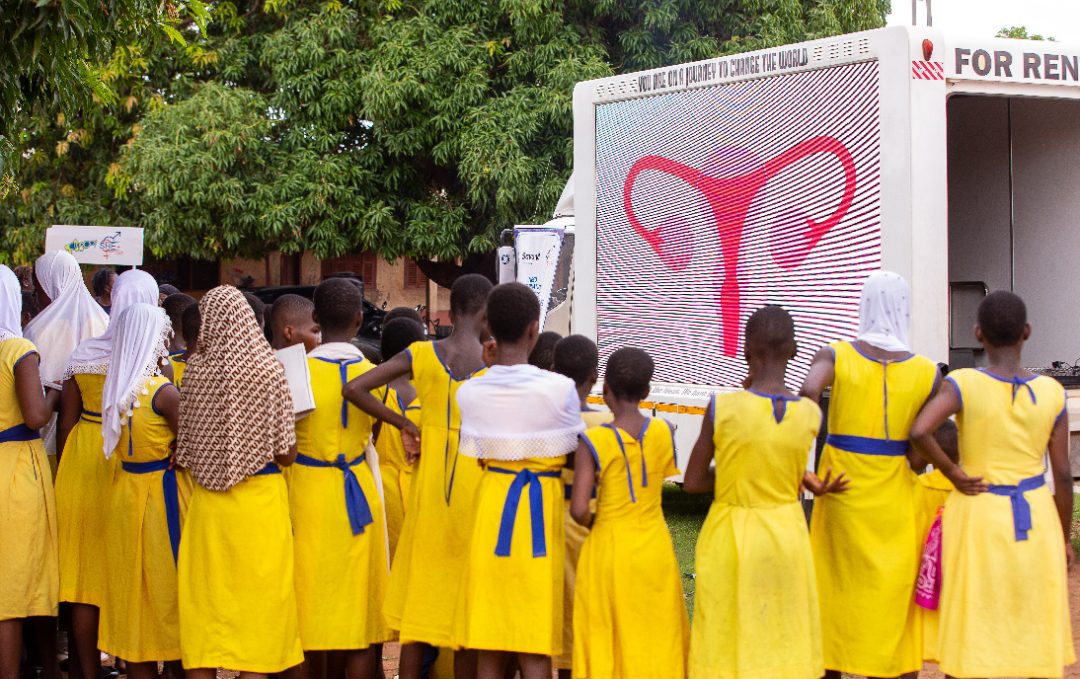
In Ghana’s North East Region, in the grimy village of Yagaba, deep in the Mamprugu Moagduri District, 14-year-old Mariama makes her way to school with a sense of urgency.
Just last year, she narrowly escaped a marriage arrangement her family had made, one that would have ended her education, her freedom, and her girlhood.
“I heard them discussing my bride price,” Mariama whispers. “They said I had finished menstruating, so it was time. But I begged my teacher to help me. I cried for days.”
Yagaba, like many rural communities in Northern Ghana, faces a silent crisis, child marriage. Rooted in poverty, limited access to education, and deep-seated gender norms, it continues to steal childhoods and futures
A Culture Under Pressure
In this farming community, large families are seen as sources of labor and security. Girls are often viewed as economic assets, to be married off early in exchange for cattle or cash. Some parents marry off their daughters as early as 13, believing they are protecting them from shame, especially pregnancy out of wedlock or infertility in adulthood.
“Many believe that if a girl delays marriage, she may end up childless or rebellious,” says Fatimata Jebuni, a local women’s rights advocate in Yagaba. “It’s fear mixed with tradition.”
The consequences are devastating. Young brides face high rates of maternal mortality, school dropout, and domestic abuse. Some are forced to give birth before their bodies are ready, often without medical support.
The Numbers.
According to UNICEF Ghana (2023), approximately 19 percent of girls in Ghana are married before the age of 18, with 4 percent married before 15. The rates are significantly higher in the northern part of the country, especially in the North East Region, where child marriage prevalence stands at 27 percent. These numbers reflect deeply entrenched cultural practices, economic hardship, and inadequate enforcement of child protection laws.
Despite legal frameworks like the Children’s Act (1998), which sets the minimum legal age of marriage at 18, implementation and community awareness remain limited in places like Yagaba.
Education as a Lifeline
For girls like Mariama, education has been the only way out. She now attends JHS 2 and dreams of becoming a nurse. “When I wear my uniform, I feel like I have power,” she says.
Teachers and community volunteers have become unexpected heroes in the fight against child marriage. Through school-based sensitization programs, peer clubs, and family dialogues, they are slowly shifting attitudes in Yagaba.
“When parents see their daughters reading, speaking confidently, and dreaming beyond marriage, it changes something,” explains Iddrisu Bawa, a local headteacher. “It challenges what they’ve always believed.”
Local Leadership Matters
Gladly, Chiefs and Imams are also taking bold steps. In April, the Yagaba Chief’s Palace held its first community forum on early marriage, declaring child marriage a threat to development. Imam Baba Zakaria, a respected Islamic leader in the region, emphasized that Islam promotes education for girls, not forced marriage.
“Marriage should be a choice, not a punishment,” he said. “No religion condones robbing a child of her future.”
These declarations are helping reduce the silence surrounding the issue, empowering girls and giving them a stronger voice.
Still, the Fight Is Not Over
Despite progress, challenges remain, because many cases of child marriage are never reported. Some are disguised as “family decisions” or cloaked in dowry transactions. Others happen during school breaks or under pressure from relatives abroad.
But there is hope. With their mobile cinema van, organizations like Savana Signatures are scaling up interventions in Yagaba and similar communities, combining education with economic empowerment for parents, engaging men and boys, and pushing for policy enforcement.
Mariama, who now leads her school’s girls’ empowerment club, wants others to know that childhood should not be negotiated. “We are not ready for marriage,” she says boldly. “Let us be girls. Let us learn. Let us grow.”
In the heart of Yagaba, the progress to end child marriage is no longer a whisper, it is becoming a roar.
By Prince Kwame Tamakloe/Rainbowradioonline.com/Ghana