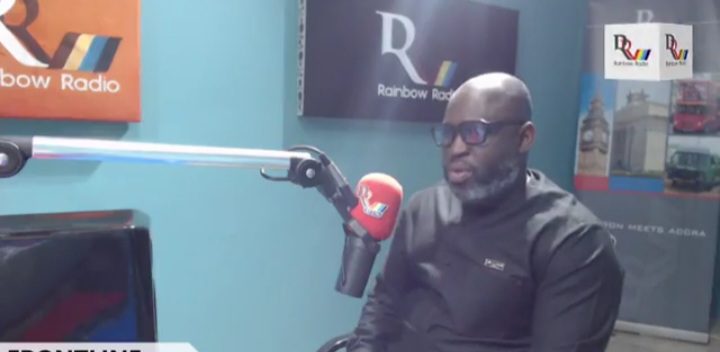
Kpeli Worlase Esq., Member of Parliament for Kwahu Afram Plains North, has posited that Minority Leader Alexander Afenyo-Markin’s latest attacks on the judge presiding over the Kwame Baffoe (alias Abronye DC) case are purely an act of political party propaganda.
Mr Worlase stated that the lawmaker acted as a political leader whose behaviour was intended solely to score cheap political points. He noted that Ghanaians should not forget that Afenyo-Markin’s primary allegiance lies with his party and the individual currently facing prosecution.
Describing his colleague’s approach, he said that Afenyo-Markin is someone who will explore all available means—whether negative or positive—and does not care if these actions run counter to his nationalistic or patriotic instincts.
According to the Kwahu Afram Plains North MP, the Minority Leader was operating entirely in his political element, ignoring his professional ethics as a lawyer when he unleashed his attacks on the judge.
Appearing on Frontline on Rainbow Radio 87.5FM, Mr Worlase opined that the current practice of democracy in the country is appalling because people frequently hide behind the guise of freedom of expression to misbehave.
“As a minority leader, I thought he should be a leader of pragmatic solutions and not a propagandist. That is what he has become. When I look at his character of defence, you can pick some positives from his posture, but his leadership style is terrible.”
When asked if the minority leader should face sanctions for his utterances, Mr Worlase responded that if his actions are in contempt of any of the three arms of government, most especially Parliament and the Judiciary, he can be called to book.
He suggested that if the bench finds his comments to be in contempt of court, action should definitely be taken. He added that, by now, the comments ought to have been thoroughly analysed to identify any specific legal or parliamentary infractions.
To illustrate his point, he referenced the notorious Montie 3 saga, noting that the current situation is reminiscent of that past incident where the court cited three individuals for contempt.
Responding to queries regarding whether the General Legal Council could also take disciplinary action against the minority leader, Mr Worlase asserted that there appears to be a collective silence at this time, including from the Council, the Ghana Bar Association, and other key stakeholders.
“It appears they only find their voice when a certain government is in power, but when others are misbehaving, they find it difficult to say.”
In his concluding remarks, he warned that it remains highly dangerous for citizens to abuse free speech through unsavoury remarks, as such rhetoric has the potential to completely undermine national stability, security, and safety.
By: Rainbowradioonline.com/Ghana