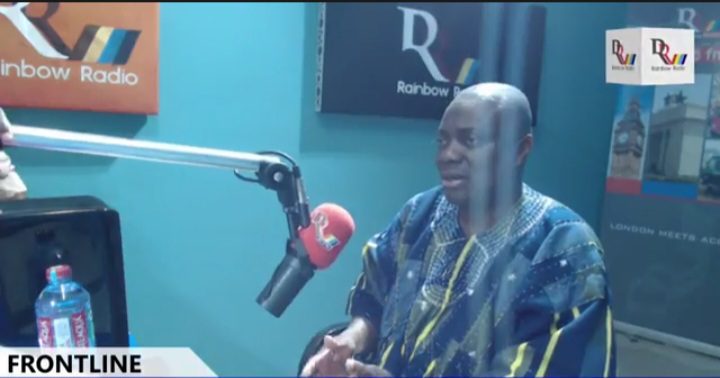
The Chief Executive Officer of Global InfoAnalytics, Mussa Dankwah, has explained the contrasting outcomes between his firm’s recent survey and that of the Institute of Economic Affairs regarding President John Dramani Mahama’s performance.
Speaking in an interview on Frontline on Rainbow Radio 87.5FM, Dankwah noted that the differences are purely scientific, hinging on sample sizes, polling periods, and the specific events influencing respondents at the time.
He argued that while the IEA worked with a nationwide sample of just 1,000 respondents, Global InfoAnalytics deployed a much larger sample, with the Ashanti Region alone accounting for over 1,500 participants.
Recent polling data highlights a distinct divergence in public sentiment toward President Mahama, contrasting broader macroeconomic optimism with immediate household-level concerns.
Global InfoAnalytics reports a strong and rising approval rating of 71% as of June 2026, marking a significant high for the administration.
This positive sentiment is driven by a majority belief, particularly among independent voters and key regional strongholds, that Ghana is moving in the right direction.
Supporters in this poll largely credit the administration with perceived improvements in economic stability, a recovering standard of living, and robust anti-corruption efforts.
However, that of the IEA recorded a lower and declining approval rating of 58.9% during a similar period.
While Mahama still retains majority support in the IEA findings, their report underscores intensifying public frustration over persistent, day-to-day struggles.
Those who rated the President lower in this survey specifically highlight power supply issues, a high cost of living, and a lack of job creation as primary obstacles hindering tangible progress for everyday citizens.
When asked what accounted for these conflicting results, Dankwah stressed that the analytical approaches and methodologies were fundamentally different.
“This is a scientific to address it. Opinion polls are carried out within certain time frame. If you conduct your poll in May and there some issues and did not favour the government, it will certainly drag down the approval ratings of the President. If you conduct in another month and those noise are out there, he will go up again. That is the first one.
Second, the sampling is also key. They interviewed 1,000 respondents nationwide. How many were spread in the Ashanti and Greater Accra Regions? The survey by GlobalInfo had over 1,500 for Ashanti region alone. So we cannot really compare the sampling size. We weigh our samples based on registered voters. Accra has the highest voters than the Ashanti Region. We don’t know how they did theirs.”
He further added that his outfit provided five options for respondents to choose from, noting that their method of capturing responses provides a more objective and fairer way for people to assess the President, which also accounts for the variance in the final data.
By: Rainbowradioonline.com/Ghana