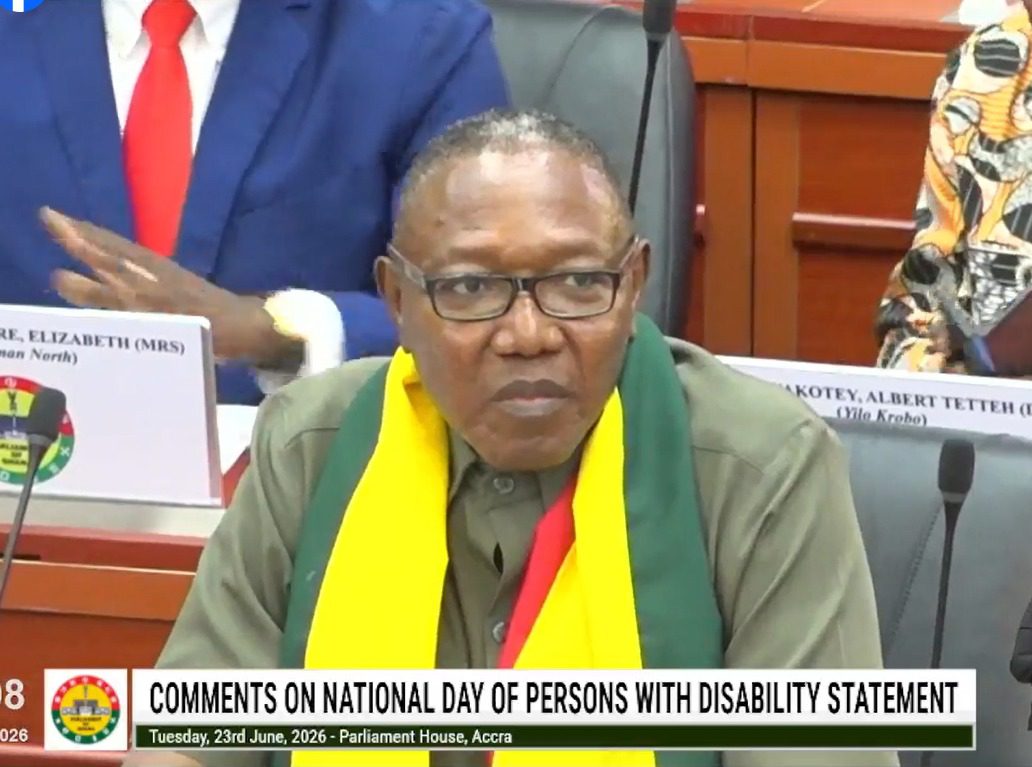
Chairman of Parliament’s Disability Caucus, Dr. Clement Apaak, has called for urgent action to enforce disability rights and remove barriers affecting millions of Ghanaians.
Delivering a commemorative statement on the floor of Parliament on Tuesday to mark the National Day of Persons with Disabilities, Dr. Apaak said the country must move beyond policy declarations and ensure meaningful changes in the lives of persons with disabilities.
The Builsa South Lawmaker described this year’s theme, “From Act to Action: Finalizing Reforms and Enforcing Disability Rights Now,” as a timely reminder that Ghana must prioritise implementation over intentions.
“This occasion is not merely a day of commemoration. It is a national call to reflection, accountability, and action,” he said.
Dr. Apaak noted that more than two million Ghanaians live with one form of disability, according to the 2021 Population and Housing Census, stressing that behind those figures are citizens with talents, aspirations and enormous potential.
He said these individuals are students seeking quality education, entrepreneurs pursuing opportunities and workers contributing to national development, making their inclusion essential to Ghana’s prosperity.
The Deputy Education Minister, however, acknowledged that significant challenges persist despite progress made through the enactment of the Persons with Disabilities Act, 2006 (Act 715), and Ghana’s ratification of the United Nations Convention on the Rights of Persons with Disabilities.
“Many persons with disabilities continue to face barriers in accessing education, healthcare, employment, transportation, public infrastructure, information, and social protection services,” he said.
Dr. Apaak added that accessibility remains inadequate in many public spaces while opportunities for economic participation continue to be limited.
“These realities underscore the urgent need to strengthen implementation, enhance accountability, and accelerate reforms,” he stated.
He also urged policymakers to stop treating disability inclusion as an act of benevolence.
“Disability inclusion must never be viewed as an act of charity or benevolence. It is fundamentally a matter of human rights, equality, and justice,” he said.
Dr. Apaak further called on ministries, departments, agencies, local assemblies, the private sector and civil society organisations to renew their commitment to removing obstacles that hinder the full participation of persons with disabilities.
“Let this occasion serve as a renewed pledge to move decisively from promises to progress, from legislation to implementation, and from recognition to full realization of disability rights,” he added.
By: Rainbowradioonline.com/Ghana