The Member of Parliament for Odododiodoo, Hon. Alfred Ashie Kotey, has strongly criticized the previous New Patriotic Party (NPP) administration, accusing it of collapsing financial institutions and compromising the quality of the country’s education system.
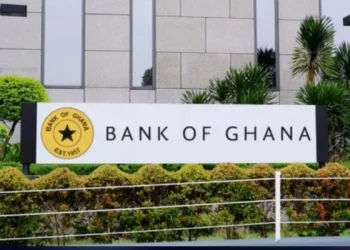
Speaking to the media, the lawmaker contrasted the former government’s handling of the financial sector with current stabilization efforts, noting that the emphasis has now shifted to recapitalizing institutions rather than shutting them down.
“Didn’t they collapse banks? People felt the impact big time. You couldn’t access loans. When demand is high, services and goods become expensive. So yes, it became very expensive to do business in Ghana under the NPP,” he stated.
Hon. Kotey highlighted ongoing interventions to revive key financial institutions across the country:
“We have recapitalized NIB. As a government. We have recapitalized ADB. We have done same to Consolidated Bank, UNB and Prudential Bank. We are here to save this country, not to mess it up. And people are feeling the impact,” he added.
Addressing national fiscal health, the MP cited prudent management as the driving force behind recent growth, disclosing that roughly GH¢15 billion was allocated to the government’s sinking fund as of June, with targets set for GH¢30 billion by year-end 2026.
“As I speak to you this June, the Finance Minister on behalf of His Excellency the President has been able to place about fifteen billion cedis in the sinking fund. We are hoping that by the close of this year 2026 we will get it to 30 billion,” he said. “How could we be doing all of these things if it’s not prudent economic management? And people are feeling the effect of all of these,” he added.
“Free SHS Quality Compromised”
Turning his attention to the education sector, Hon. Kotey slammed the implementation of the Free Senior High School (Free SHS) policy under the previous administration, arguing that expanded access came at the direct expense of educational quality.
“The NPP used the holistic Free SHS policy to compromise the educational system,” he asserted.
He noted that secondary schools currently face severe operational strains—including overcrowding, inadequate infrastructure, and a lack of teaching resources—stemming from a rollout executed without adequate forward planning. According to him, expanding access without matching investments in quality places immense strain on teachers, students, and physical facilities.
Reiterating the government’s commitment to reform, he stated: “We are here to save this country, not to mess it up,” calling for a comprehensive review of the Free SHS policy to ensure it delivers both widespread access and high academic standards.
By: Rainbowradioonline.com/Ghana