
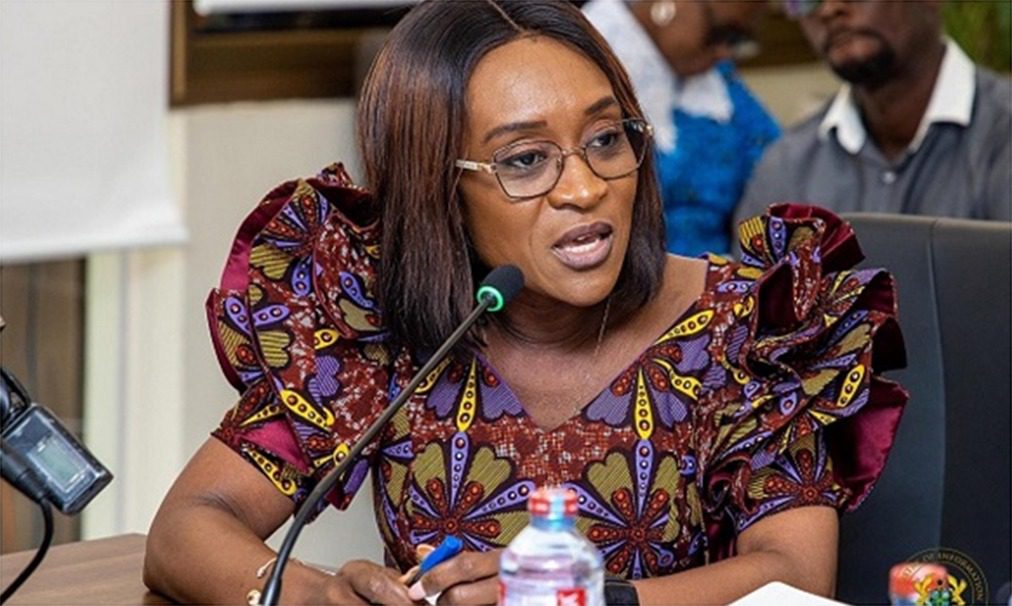
The Member of Parliament (MP) for Atiwa East, Hon. Abena Osei Asare, has revealed that Ghana recorded a revenue shortfall of close to GH¢2 billion in the first half of 2026, attributing the drop to weak economic activity across the country.
Contributing to the debate on the 2026 Mid-Year Budget Review presented to Parliament, the lawmaker noted that total revenue and grants for the period stood at GH¢268 billion, falling short of the targeted figures.
According to her, the deficit was largely driven by underperformance in domestic goods and services taxes, which alone recorded a massive shortfall of GH¢6.8 billion.
She explained that significant drops in Value Added Tax (VAT) and excise duty serve as clear indicators that local businesses are struggling while consumer spending continues to decline.
“When you drill down VAT tells some story. It tells a story that people are not buying, businesses are not flourishing and that is how come you see a fall in VAT and excise duty tax,” she stated.
The Atiwa East MP further indicated that a GH¢2.3 billion drop was recorded specifically for VAT and excise duty, arguing that the numbers reflect the true state of the economy rather than official government slogans.
Reflecting on the previous year, she recalled that the country suffered a GH¢5 billion revenue shortfall in 2025 despite the introduction of eight new taxes.
She questioned why revenue gaps persist despite continuous tax hikes and new revenue-mobilisation measures.
On total expenditure, Hon. Osei Asare highlighted that half-year spending for 2026 was reduced by GH¢31.3 billion, compared to an GH¢18.5 billion drop recorded in the same period in 2025.
Capital Expenditure Slump Stifling Growth
Touching on infrastructure development, the MP raised concerns over a GH¢14.3 billion reduction in capital expenditure during the first six months of the year. She warned that failing to direct funds into critical sectors is actively stifling national economic growth and harming local constituencies.
Citing stalled road works in her own constituency as a prime example, she stressed that the drastic cuts in capital allocation mean crucial infrastructure projects remain uncompleted.
“If spending’s not spending in the right places… capital expenditure saw a downward trend of fourteen point three billion. You not spending on capital expenditure means I am not getting the roads completed. And that is a sad story.”
Hon. Osei Asare concluded that whilst the government may claim it is living within its means through austerity measures, such an approach will fail to develop the national economy if underlying business activity remains stagnant.
By: Rainbowradioonline.com/Ghana