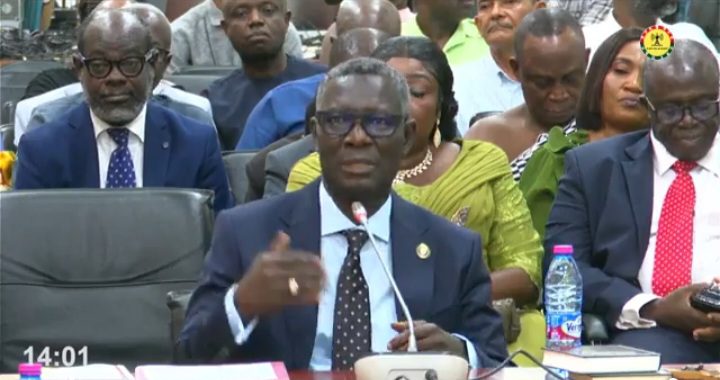
Supreme Court nominee Justice Edward Amoako Asante has detailed his achievements during his six-year stint at the helm of the ECOWAS Court of Justice, highlighting how his leadership revitalised the regional tribunal.
Facing Parliament’s Appointments Committee on Thursday, August 27, 2026, the venerable jurist reflected on his record, noting that he stands alongside a former Nigerian judge as the longest-serving leaders in the court’s history.
“As a President in fact from the initial stages I was made President of the court and I’ve been there, we are two, the longest serving Presidents for six years, myself and the very first President who was a Nigerian lady,” he stated.
Touching on administrative hurdles, Justice Asante explained that his immediate priority upon assuming office was resolving severe career stagnation and low morale among personnel.
“When I entered the court, there was a lot of staff backlog, promotions backlog, over fifty or sixty of them. I had to make sure we did interviews and all that and put it because it raised stagnation and then frustration among the staff, so that staff issues were the first thing I did and we promoted all of them to their levels,” he said.
Beyond staff welfare, the nominee spearheaded a major recruitment drive to fortify the tribunal’s analytical capacity, turning its research wing into a benchmark for judicial support across the continent.
“We made sure we recruited very efficient people so now the research department of the ECOWAS Court is one of the best in West Africa, in Africa actually, so judges don’t find it difficult at all in writing judgements because we have very good people to do the judgements for us,” he explained.
Navigating the global disruption of the COVID-19 outbreak, Justice Asante spearheaded a technological overhaul, investing heavily in state-of-the-art information technology infrastructure to ensure seamless virtual proceedings.
“During COVID, I had to improvise and do online hearing, make sure we bought all the super highway IT equipment and all that that we needed and therefore I can tell you that since COVID time nobody travels to Abuja anymore to have their matter heard,” he stated.
He emphasised that this digital transition completely modernised filing procedures, eliminating prohibitive travel expenses for litigants and legal representatives across the sub-region.
“You just do your documentation, you scan and email them to the court and when the court receives them you also look at it, if it conforms to the rules it is scanned and emailed to the other side and then hearing is done online. So somebody in Senegal, who has sued somebody in Niger, there’s a very good internet facility and everything in the court so we just sit in the court, hear the matters and deliver judgements without buying tickets for themselves and for their lawyers to travel as it used to be and therefore we have saved the citizens lots and lots of money,” he said.
By: Rainbowradioonline.com/Ghana