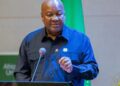
Ghana plans to float 10 state-owned enterprises (SOEs) on the Ghana Stock Exchange (GSE) to enforce financial discipline, lure private capital, and curb long-standing political interference.
speaking at an investment forum in New York, President John Dramani Mahama revealed that turning these entities into public companies will compel them to adhere to strict capital market rules on disclosure, governance, and shareholder accountability.
“They’ll become public companies, one, because we want to improve their governance, and two, because we want to reduce political interference in those state-owned enterprises,” the President stated.
The government is yet to name the selected entities, state the size of the share offerings, or announce a timeline for the listings.
How these details take shape will reveal whether the policy triggers a genuine overhaul of the state enterprise sector or merely sells off minor stakes without disrupting traditional control structures. Still, the initiative marks a major move to deploy market mechanisms for public sector management.
Ghana’s SOEs oversee vital assets across energy, transport, finance, and infrastructure. Because corporate losses, unpaid liabilities, and state-backed guarantees frequently spill over into the national debt, their operational health directly impacts the country’s fiscal stability.
Flotation introduces independent market oversight alongside existing regulation from sector ministries, governing boards, and the State Interests and Governance Authority (SIGA). As public listings, these entities must regularly publish audited accounts, disclose key operational changes, and answer to private investors, while daily share prices offer a real-time gauge of market confidence.
Explaining the necessity of the overhaul, President Mahama highlighted the lack of commercial drive within parts of the public sector.
“There’s this notion of state enterprises where people just go and they’re guaranteed a monthly salary whether they perform well or not,” he noted. “Even when they’re making losses, they’re asking for salary increments and asking for bonuses when you’ve made a loss.”
His remarks point to a structural flaw spanning multiple administrations: a persistent disconnect between staff compensation and actual balance-sheet performance.
By: Rainbowradioonline.com