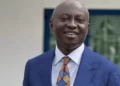
President John Dramani Mahama has addressed the growing public debate surrounding the regulation of social media, particularly TikTok, revealing that personal insults directed at him do not bother him because he has developed a “crocodile skin” over his years in public service.
Speaking to Ghanaians following his participation in the 81st United Nations General Assembly in New York, the President acknowledged the global challenge posed by social media algorithms and the spread of unverified content.
He noted that governments across the world are grappling with how to safeguard information integrity while respecting fundamental rights.
“It’s not only Ghana where people are wondering what to do to regulate TikTok, because in all countries all over the world they are wondering what to do to make sure that we have information integrity even with TikTok,” Mahama said.
He observed that the mechanics of modern smartphones and recommendation algorithms make it easy for users to broadcast whatever they wish, often pushing repetitive content to unsuspecting viewers.
“Anybody who has a phone just puts it in front of him and just says whatever he likes and once they put it out, it has an algorithm that shares it… So, if you don’t want to watch it, sometimes you want to open something else and then it comes,” he added.
Touch on the situation in Ghana, President Mahama expressed concern over the rise of anonymous abuse and vilification online.
“And as usual, Ghanaians, we also have taken it to a new level. Insults and some… I don’t mind if people show their face and own what they are saying, but there are some who are hiding and they just put something there and behind it they say the vilest things,” he remarked.
Despite the harsh criticism directed at his leadership, Mahama stressed that his political journey has hardened him against verbal attacks.
“As a leader, I don’t mind being insulted. I’ve been insulted, I was vilified, I was voted out of office. So for me, this skin is a crocodile skin. So, if you insult me, I don’t mind. You insult me, I don’t mind and indeed I’m doing what I can for my country and my continent. I’m doing what I can for Ghana and Africa and I will do what is right,” he stated.
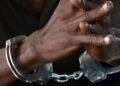
Addressing the role of law enforcement in policing online speech, the President cautioned against over-policing and arbitrary arrests, revealing that he often learns of such police interventions through media reports.
“Really, I don’t mind the insults but all of us have to decide what do we want to do with TikTok. I can tell the IGP, we can go to cabinet and say lay off, let anybody insult anybody, let’s leave it free for all, don’t arrest anybody for anything they say. We can do that but is that what we want?” he asked.
“A lot of these arrests, I don’t even know about them. I also hear them on the media. Somebody has been tracked and arrested and all that and sometimes it worries me because sometimes the reason for which the person has been arrested, really, I mean they say he’s insulted me and you look at the insult and it can’t be quoted for the person to be arrested,” Mahama admitted.
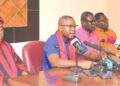
To find a balanced solution, Mahama confirmed that his executive secretary has engaged key media bodies, including the Ghana Journalists Association (GJA) and the Media Foundation for West Africa (MFWA), to organize a national stakeholder forum on digital media regulation.
“Should the police get involved or they shouldn’t get involved? How do we regulate it? You come out and tell us because really for me, sometimes the police can go to the extreme and you never know. Once you start arresting, you don’t know where to stop,” he warned.
Drawing a comparison with international legal standards, President Mahama noted that while speech is protected, death threats against public officials are taken seriously worldwide, whereas local debates in Ghana often conflate security threats with free expression.
“If you take a TikTok and threaten Trump and say that you are coming after him and you are planning to come to the White House and assassinate him, you think you will not be swept off your feet? Yeah, but in Ghana you can say it and when you arrest somebody, they say, oh no, no, no, you are trampling on free expression,” he observed.
He concluded by calling on civil society, media associations, and the general public to collectively agree on standard frameworks to guide speech and policing on digital platforms.
By: Rainbowradioonline.com/Ghana