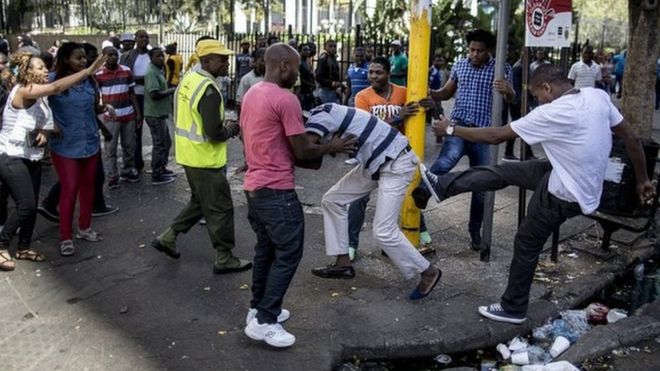
Agya Prince, a Ghanaian national residing in South Africa popularly known as Kontonkyi, has revealed that despite intensified xenophobic attacks targeting African foreign nationals, the majority of Ghanaians are unprepared to return home.
While the Ghanaian government has been advised to facilitate the repatriation of those willing to leave, Kontonkyi maintains that many choose to remain despite the inherent dangers of the renewed violence.
Speaking in an interview on Nyankonton Mu Nsem on Rainbow Radio 87.5FM, he explained that this is not their first experience with such hostility.
He noted that during election years, opposition politicians seeking to unseat the government frequently encourage South African citizens to push foreigners out of the country.
Despite the current tension, he expressed a firm belief that the situation will eventually subside.
The persistence of xenophobic attacks in South Africa is primarily rooted in chronic socio-economic distress. Extreme unemployment and poverty often drive marginalised citizens to scapegoat foreign nationals for a lack of jobs and inadequate service delivery.
This competition for scarce resources is further intensified by a sense of ‘relative deprivation’, as local populations perceive migrants as obstacles to the economic prosperity promised in the post-apartheid era.
Kontonkyi posited that many Ghanaians have established businesses in South Africa; consequently, abandoning these investments to return home is not considered a viable option. He further indicated that many feel there is nothing to return to in Ghana, particularly as they lack information regarding available economic opportunities. Optimistic that they will survive the current unrest, he remains hopeful that life will soon return to normal.
According to him, South African groups have announced plans to extend their attacks to other areas. He observed that the strategy often involves provoking foreigners to elicit a reaction, which is then met with further violence.
To this end, Ghanaians in the region have been advised to remain calm and avoid responding to provocative behaviour.
Beyond the threat of street violence, Kontonkyi noted an increased effort by immigration authorities to arrest and deport undocumented migrants.
Businesses found employing undocumented workers are facing heavy fines, while the individuals involved are being deported to their respective countries.
Despite these mounting pressures, he insisted that the majority of Ghanaians remain steadfast.
He remarked that, currently, only those with South African citizenship or fluency in local languages feel safe enough to move about during these challenging times.
He stated:
“We will not come to Ghana. The only thing we want now is for Ghanaians to pray for us. Additionally, we want the Ghanaian government to use diplomatic intervention and engage authorities in South Africa to address any challenges.”
He also called upon the Nigerian government to engage with its citizens, advising them to desist from unlawful activities such as human trafficking and the illicit drug trade, which further complicate the standing of foreign nationals in the country.
By: Rainbowradioonline.com/Ghana