Ghana’s judiciary and law enforcement agencies are turning the country’s bail system into a punitive tool to suppress political opposition, a prominent civil society leader has warned.
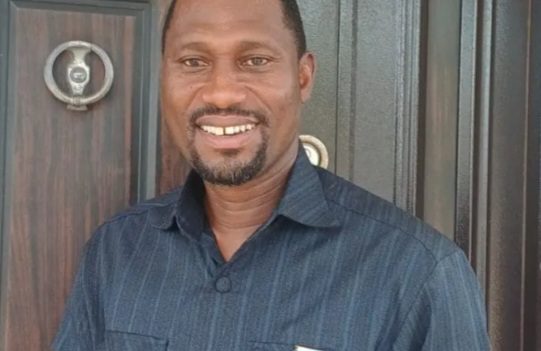
Speaking in an interview on ‘As it is in Ghana’, a show broadcast on Rainbow Radio 87.5FM Ghana and 92.4FM UK, Rev. DK Odei-Appiah, Executive Director of the advocacy group, raised alarms over what he described as a systematic effort by the government of President John Dramani Mahama to silence dissenting voices through arbitrary legal hurdles.
The critique centres on the handling of recent arrests involving officials and affiliates tied to the previous administration.
Under Ghanaian law, bail is designed solely to ensure an accused person returns to stand trial while preserving their constitutional presumption of innocence.
However, human rights advocates argue that the process is being weaponised through the deliberate imposition of excessively harsh, complex, or financially unrealistic conditions.
“The misuse of bail conditions undermines the constitutional principle of the presumption of innocence,” Odei-Appiah stated. “Excessive or unrealistic bail requirements effectively punish individuals before they have been proven guilty by a court of competent jurisdiction.”
He argued that this strategy allows state prosecutors to keep political opponents tied up in legal limbo or detained outright without needing to secure a swift conviction.
To illustrate his point, the clergyman cited the case of a young lady arrested and accused of threatening President Dramani Mahama, who was slapped with bail conditions of GH¢1 million. He contrasted this with the case of the Member of Parliament for Asutifi North, Ebenezer Kwaku Addo, who was granted GH¢150,000 bail by the Accra Circuit Court in connection with a violent clash involving illegal mining (galamsey) task force officers.
The MP faces provisional charges of conspiracy to assault, assault on a public officer, causing unlawful damage, and rioting with weapons following an alleged altercation between local youth and a task force near Hwidiem in the Ahafo Region.
According to Rev. Odei-Appiah, the contrast between these two cases exposes a deeply politicised system operating within an increasingly tense political climate.
He expressed concern that if this trend continues, it will erode the fundamental rights of Ghanaians and reinforce the perception that politicians routinely abuse their power to oppress others.
Rev. DK Odei-Appiah maintained that while individuals who break the law must face justice, their right to a fair trial must be robustly protected throughout the legal process.
By: Rainbowradioonline.com/Ghana