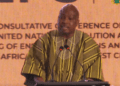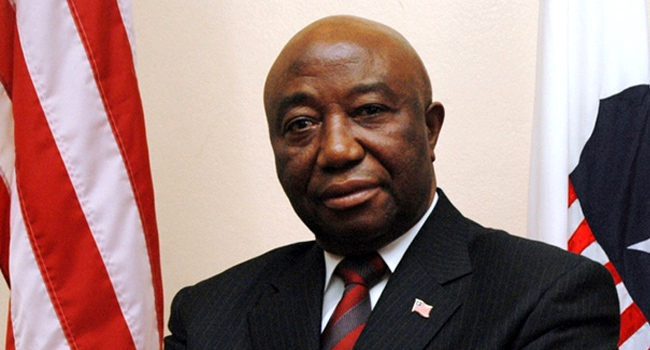
Liberia’s President, His Excellency Joseph Nyuma Boakai, Sr., has proposed recommendations to help drive actionable frameworks for reparations regarding the transatlantic slave trade and colonialism.
He commended former Ghanaian President John Dramani Mahama for hosting the landmark global Next Steps Conference on Reparatory Justice in Accra from June 17 to June 19.
Convened by President Mahama, the event brought together world leaders and policymakers from over 80 countries to advance actionable frameworks for reparations regarding the transatlantic slave trade and colonialism.
The Liberian President noted that the event will allow them to confront one of history’s gravest crimes against humanity.
He asserted that the gathering must allow them to achieve resolutions that will not only be a statement of historic recognition but also a framework for truth, justice, healing, and institutional repairs. President Boakai pledged his country’s support toward achieving these goals.
He said these resolutions carry profound significance because they acknowledge the wrongs of the past and outline what needs to be done.
He indicated that the consequences of slavery cannot only be measured by lost labor, stolen wealth, or economic deprivation, but they also include intergenerational, social, cultural, psychological, and political impacts that can persist for centuries.
He emphasised that if we are to pursue meaningful reparatory justice, our efforts must move beyond financial considerations alone.
He advised that the continent must also embrace historical truth-telling, reconciliation, identity restoration, cultural healing, education, institution building, and the strengthening of our civic cohesion.
He assured that as we consider the next steps following this historic resolution, Liberia offers its experience as evidence that justice, healing, and reconciliation are inseparable from sustainable development and lasting peace.
He added that after the resolutions are adopted, leaders must prioritise specific initiatives for implementation.
He stated that they must develop a common African position and implementation framework in collaboration with Diaspora organizations, supported by a coordinated roadmap with clear priorities, responsibilities, and timelines.
Furthermore, working with the United Nations, they should establish an African Union Expert Commission to design a global reparatory justice mechanism.
He noted that they must confront misinformation, promote education, and advance research by strengthening the teaching of African history, preserving archives, and supporting universities and research institutions across Africa and the Diaspora.
He added that repairing historical wrongs requires the restitution of stolen cultural artifacts and heritage objects, together with developing partnerships that address persistent inequalities rooted in slavery and its aftermath.
The scale and depth of the trafficking of enslaved Africans cannot be fully measured in financial terms alone, yet the transatlantic slave trade, forced labor, and resource extraction generated enormous wealth that shaped the economic foundations of many societies across the world. There is no doubt that the slave trade and its aftermath contributed profoundly to the inequalities and underdevelopment found in Africa and across the Global South.
He stressed that the past has helped shape the inequalities of the present.
He further called for development partnerships and global initiatives that address persistent inequalities and underdevelopment rooted in slavery and its aftermath, founded on shared responsibility and mutual respect.
By: Rainbowradioonline.com/Ghana