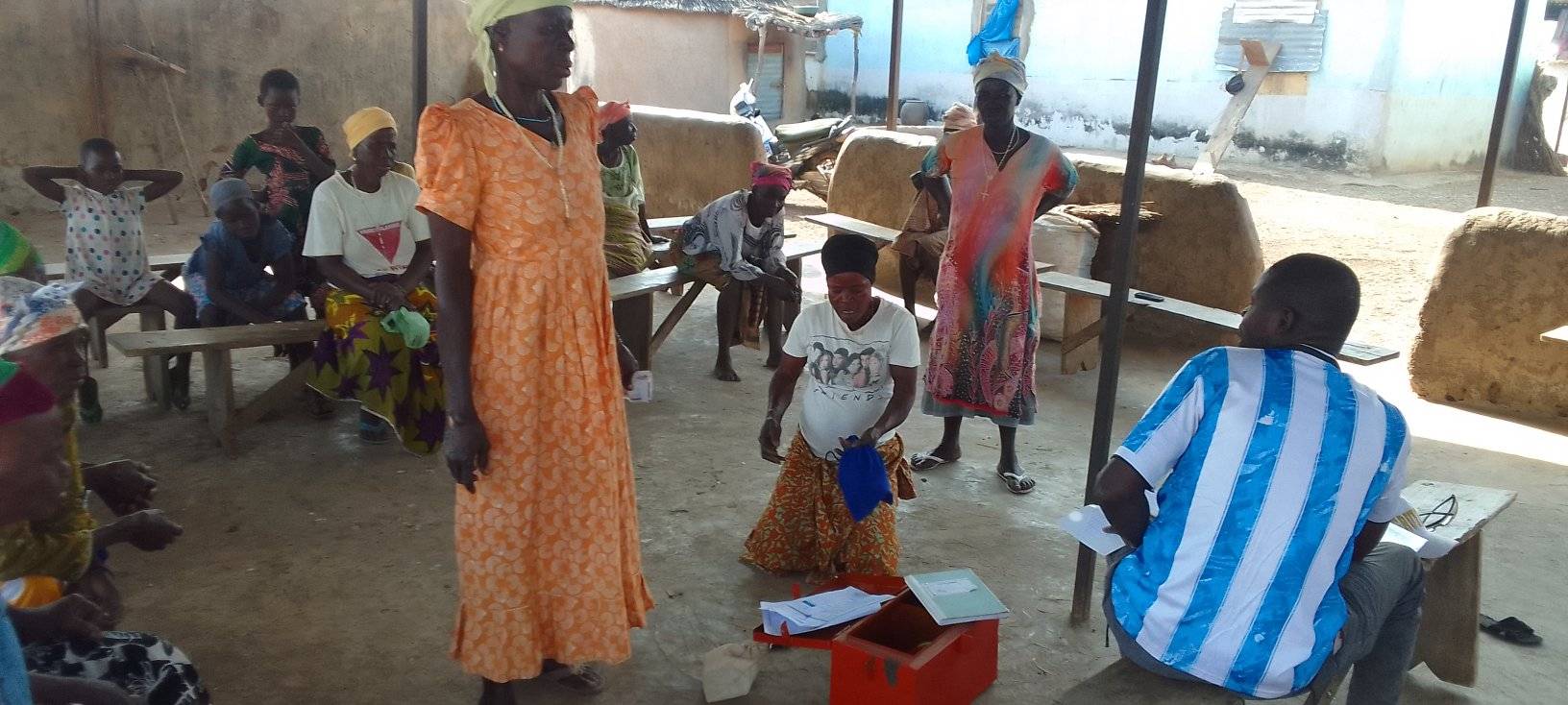
The sun is merciless over Gnani, a settlement just outside Yendi in Ghana’s Northern Region. From a distance, the camp looks like any other rural settlement, with clusters of mud huts, smoke curling from cooking fires, and children chasing chickens. But this is no ordinary community. It is a witches’ camp, one of the few still operating in Ghana. And for many of the women who live here, their only “crime” was not having children.
In huts scattered across the camp are dozens of women accused of witchcraft by their families or neighbours, many from nearby communities like Sambuli, Tasundo and Sabare. Their stories differ in detail, but one theme recurs with painful clarity: infertility.
“I Was Blamed for Everything”
Bagey Uwumborbi, now 53, was sent to Gnani from Sabare after her co-wife lost a child. “They said I had eaten the baby in the spirit,” she says, her voice thin from age and exhaustion. “I’ve never been pregnant since I married, so they say I must be a witch.”
Baagey recounted how she was beaten and paraded before a local traditional priest who declared her “guilty” eleven years ago. Since then, she’s shared a single-room mud hut with two other women, living on the edge of society and hope.
“I didn’t choose to be like this,” she says. “But once you have no child, people see you as incomplete. They think you have evil in you.”
The Unspoken Trigger: Infertility
In many parts of Ghana, infertility remains a taboo. But in rural areas like Tasundo and Sabare, where traditional beliefs run deep and education is low, infertility is more than just a private sorrow; it’s a public stigma.
According to Ghana Health Service reports, 2023, over 20% of women in the Northern Region experience fertility challenges, yet awareness around the medical causes, such as infections, hormonal disorders, or male infertility, is virtually nonexistent.
“Here, they don’t see infertility as a health issue,” explains Hajia Lamnatu Adam, a women’s rights advocate and executive director for Songtaba, an NGO based in Tamale. “They see it as spiritual, a sign that a woman is cursed or has done something wrong in her past.”
And when misfortunes strike, like a child’s death, a poor harvest, or sickness, the childless woman is the easiest to blame.
A Safe Haven or a Life Sentence?
Gnani witches’ camp offers refuge to those at risk of lynching or mob attacks. The camp, established over a century ago, operates under the guardianship of a traditional priest and local elders. Women here live modestly, farming small plots or relying on food aid. It is safer than being hunted, but it is also a life in exile.
“For some women, coming here saved their lives,” says Arafat Abas, a local social worker with Savana Signatures. “But it also means losing everything: your family, your freedom, your future.”
Religion Confronts Culture
Among the voices calling for change is Sheikh Ilyas Anyars, a respected Islamic cleric and Chief Imam for Wurishe. He believes deeply that the practice of exiling women due to witchcraft accusations, especially linked to infertility, has no basis in Islam.
“Allah alone decides who bears children,” he says. “The Prophet Muhammad (peace be upon him) had wives who didn’t bear children, but he treated them with dignity. To label someone a witch for infertility is not just wrong; it is sinful.”
He urges other religious leaders to speak out. “We must correct our people. If not, culture will continue to overshadow compassion.”
Cycles of Silence
In Tasundo, 45-year-old Mariama was accused after three stillbirths in her extended family. Though tests later revealed the causes had nothing to do with her, the damage was done. “People stopped greeting me. I couldn’t sell at the market. My husband was forced to choose between me and his mother.”
He chose his mother.
Mariama fled to Gnani two years ago. She has never returned. “I miss my home, my small millet farm,” she says. “But I fear what they’ll do if I go back.”
What’s Being Done?
Organisations like ActionAid Ghana, Songtaba, Savana Signatures and the Presbyterian Church of Ghana have been pushing for the closure of witches’ camps and the reintegration of victims. But the process is difficult. Reintegration requires community education, access to justice, and addressing root causes like infertility stigma.
“There’s a lot of focus on stopping the accusations,” says Aisha Yakubu, a programme officer with Songtaba. “But we must go deeper. Until we talk openly about infertility and challenge the shame around it, women will continue to suffer in silence, or in exile.”
Toward Dignity and Healing
Back in Gnani, Baagey and Mariama still dream of going home. “I want to walk through Sabare without fear,” says Baagey. “I want them to see I am just a woman, not a witch.”
Their dreams are shared by dozens, banished not by proof or wrongdoing, but by ignorance, fear, and the painful weight of childlessness.
Until communities learn that infertility is not a curse and that womanhood is not defined by the womb, the camps will remain. And so will the whispers.
By: Prince Kwame Tamakloe/Rainbowradioonline.com/Ghana