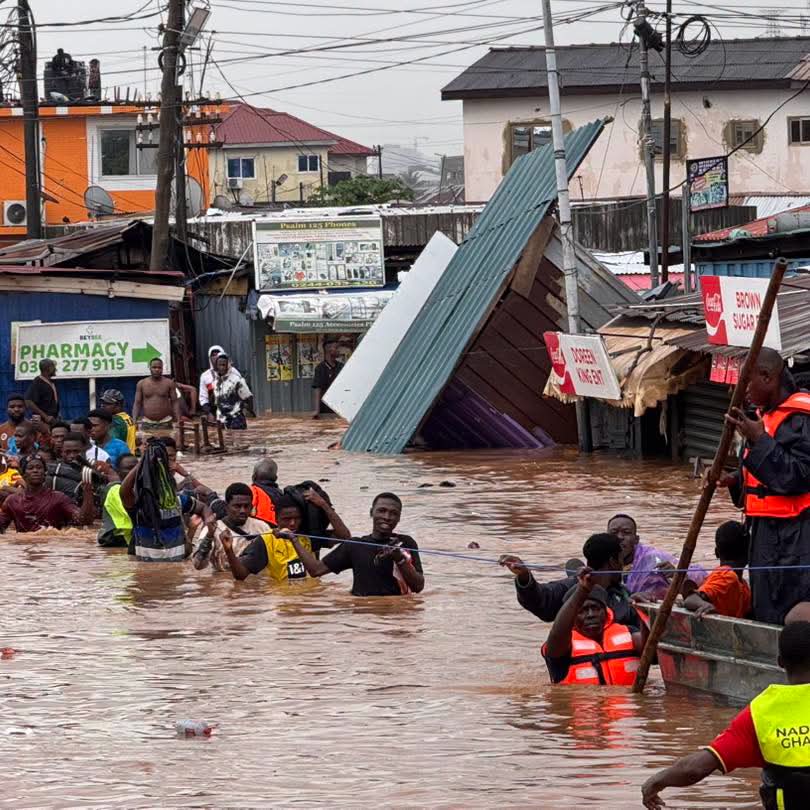
President John Dramani Mahama on Monday, June 29, 2026, joined members of the Anti-Flood Task Force to assess the impact of recent flooding across affected communities in Accra, Tema, and surrounding areas.
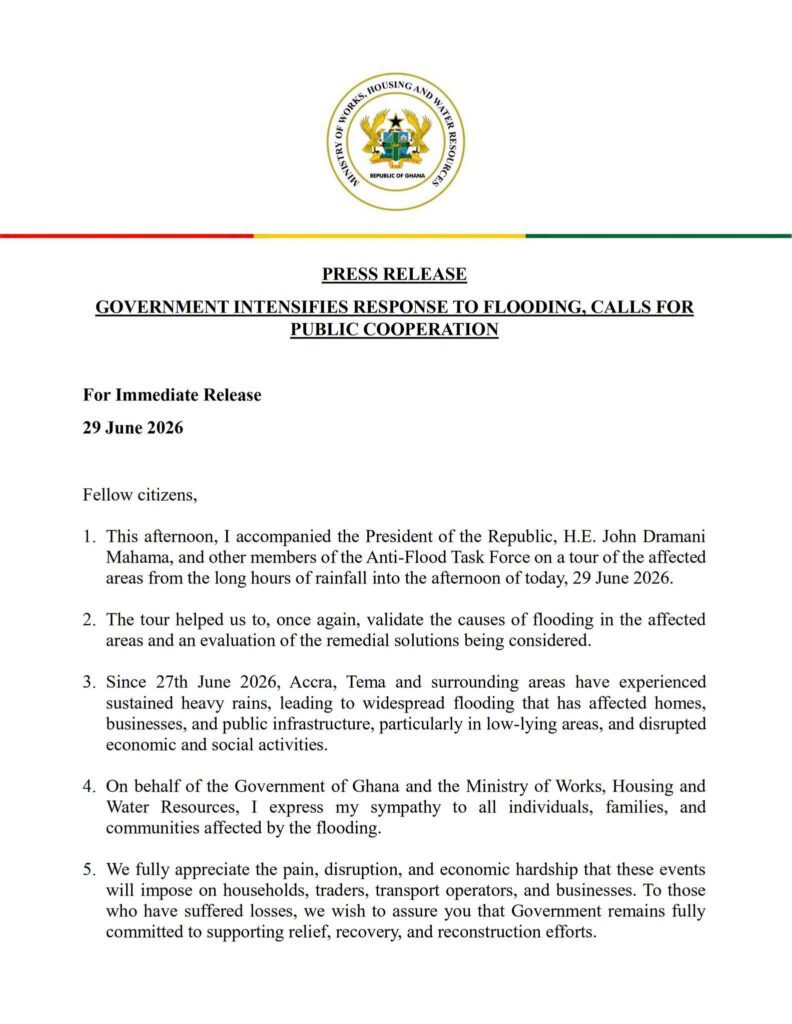
According to a statement issued by the Ministry of Works and Housing, the visit forms part of the Government’s intensified response to the situation. Emergency interventions, relief support, and long-term measures are currently being implemented to protect lives, livelihoods, and critical infrastructure.
The Government extended its deepest sympathies to all affected individuals and families, reassuring the public of its ongoing commitment to supporting recovery efforts while advancing sustainable, long-term solutions to address the root causes of flooding.
The Minister for Works, Housing and Water Resources, Hon. Kenneth Gilbert Adjei, announced an intensification of government operations to counter severe flooding across the capital and its surrounding enclaves, following days of relentless downpours.
Since June 27, 2026, Accra, Tema, and neighboring areas have been battered by sustained heavy rains.
The deluge has caused widespread flooding, submerging homes, crippling local businesses, damaging critical public infrastructure, and severely disrupting daily economic and social activities, particularly within low-lying communities.
According to the Minister, the ground assessment allowed officials to validate the root causes of the recurring drainage failures and evaluate immediate remedial engineering solutions currently under consideration.
“We fully appreciate the pain, disruption, and economic hardship that these events will impose on households, traders, transport operators, and businesses,” Minister Adjei stated, adding an assurance of state intervention.
“To those who have suffered losses, we wish to assure you that Government remains fully committed to supporting relief, recovery, and reconstruction efforts.”
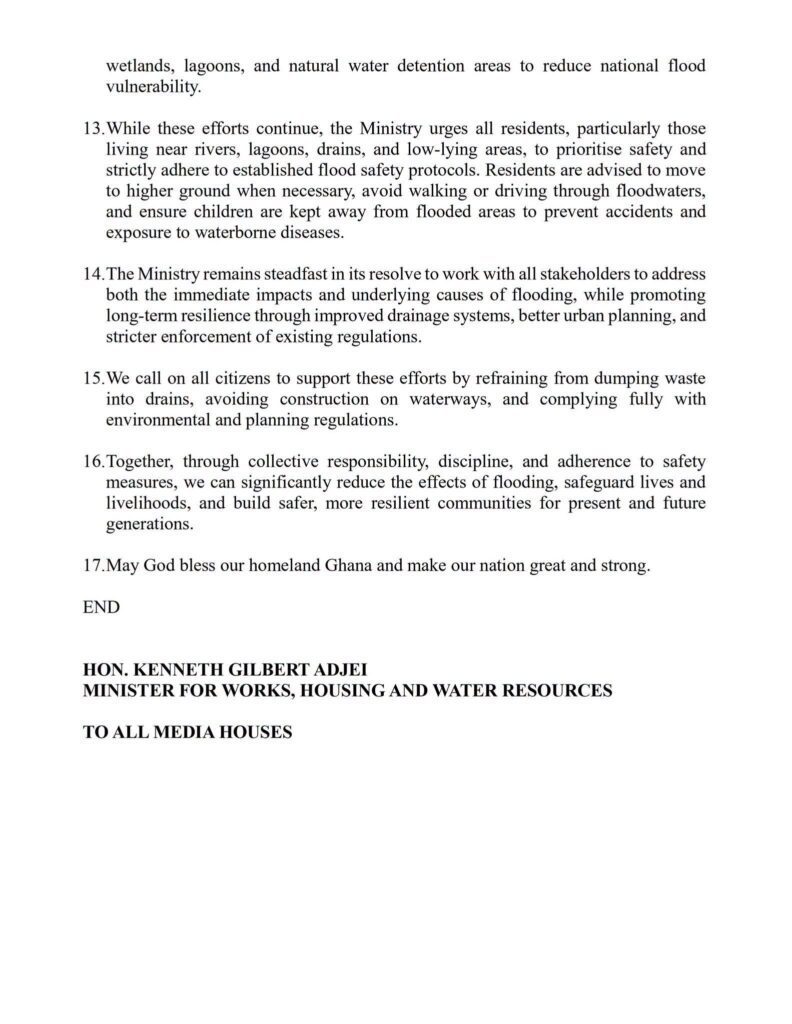
While long-term engineering and urban planning strategies are being accelerated to protect wetlands, lagoons, and natural water retention basins, the sector ministry has issued an urgent directive for heightened public vigilance.
Residents living near vulnerable riverbanks, lagoons, open drains, and low-lying sectors are strongly advised to relocate to higher ground, avoid wading or driving through fast-moving floodwaters, and ensure children are kept clear of flooded spaces to prevent accidental drowning and the spread of waterborne pathogens.
The government has stressed that engineering fixes alone will not suffice without a shift in public discipline regarding environmental management.
The Ministry is appealing directly to the public to halt the dumping of solid waste into open drainage systems, cease unauthorized structural construction along vital waterways, and strictly comply with existing national planning regulations.
Reaffirming the state’s long-term commitment to reshaping urban resilience, the Minister emphasized that authorities remain steadfast in resolving both the immediate fallout and the structural deficiencies plaguing the city’s drainage network.
“Together, through collective responsibility, discipline, and adherence to safety measures, we can significantly reduce the effects of flooding, safeguard lives and livelihoods, and build safer, more resilient communities for present and future generations,” Adjei noted.
By: Rainbowradioonline.com/Ghana